“If you can dance to it, it's dance music.”
For more than three decades, Paul Oakenfold has been a key force in the evolution of electronic music. Producer, DJ, remixerfounder of Perfect Records and collaborator of figures such as Madonna, U2, Britney Spears and many more, his name became synonymous with innovation and that fine line between mainstream and the underground. Back in Mexico City for a show own, Oakenfold He reflects on his career, the current state of the industry, the importance of supporting new generations and why Mexico always allows him to be himself on stage.
Indie Rocks!: Paul, nice to meet you. I feel like we should have met sooner, you've come to Mexico so many times.
Paul Oakenfold: Yes, I have been coming to Mexico for over 20 years. I've done my own shows all over the country, I came with MadonnaI was in EDC…so it's good to be back.
Indie Rocks!: Life is funny, because just before we started talking to you, on the screen behind you we saw first Madonna and then Britney Spears. They have been important figures in your career, especially for your collaborations with pop vocalists. mainstream.
Paul Oakenfold: Over the years I have worked with many artists: pop singers, bands, different genres. From rock with U2 and The Rolling Stonesuntil pop with Rihanna or the remix what did I do for Britney Spears. And of course, Madonna.
In England you can work with many genres because, really, what they want is dance music with their voices. I've been lucky to have people come to me to work in that area.
Indie Rocks!: Talking to you I feel like I'm facing several “Pauls”: the producer, the manager label, the DJ, the remixer…Which one of those Pauls is coming to play this time?
Paul Oakenfold: The DJ, 100%. Something I love about Mexico is that I can play new music and also classics. In England they always want the classics, all the time. But as an artist you make new music and you want to share it. So I will play new music and classics. I'm looking forward to it.
Indie Rocks!: Your last album as such came out in 2022, right?
Paul Oakenfold: Yes, but I won't make any more albums. Three albums and I'm done. It's difficult for me to make long albums, and in today's world people only want singles. So I made my three albums and that's it. Now I work with young artists. I have two Mexican DJs on my label and I worked with them for a long time. Suzie del Vecchio. I'm looking for young talent: we make a single, release it and move on to the next thing.
Indie Rocks!: In electronics that is the most common. There are very few complete albums that really mark an era. But Perfect Records It has been a key label since the 80s.
Paul Oakenfold: Yes. The idea was born because there were no labels in London that made dance music. I had friends doing dance and they asked me if I knew a label… and no, there wasn't one. So I said, “why don't we start one?” We did it, we signed great albums and great artists, already Perfect it went very well.
Indie Rocks!: Was it easier to sign artists before than now?
Paul Oakenfold: Today is very difficult. It's no longer about music, but about social networks.
If you make a track but you don't have followers, there's no point signing your song because there's no vehicle to promote it. 20,000 come out tracks of electronic music a week—80,000 a month—so artists have to do all that networking work. It's hard and a shame, because it should be about how good the record is, not how many followers you have. But that's how things are today.
Indie Rocks!: It must be strong for someone with your background to see how the ecosystem changed.
Paul Oakenfold: Yes, I would never have imagined it would be like this.
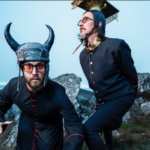
Indie Rocks!: I see that your friend is wearing a metal shirt…
Paul Oakenfold: (Laughs) Yes, but on Friday there will be no metal. Just dance music, very good dance music.
Indie Rocks!: You talk about “dance music”, but your career has included trance, progressive house, psytrance…
Paul Oakenfold: I call it “dance” as a general umbrella. Below are techno, trance, house, progressive, drum & bass… many genres. I like them all. I like drum & bass, I like psytrance. To me, if you can dance to it, it's dance music.
Indie Rocks!: I am a daughter of psytrance.
Paul Oakenfold: Yeah! The psytrance scene in Mexico is huge. In fact, the DJ I recently signed is mainly psytrance, so I'm going to play a couple of tracks of him, and also some of Infected Mushroomwith whom I worked. I don't know exactly what I'll play yet, but there will be a lot of progressive and new things. I started in psytrance, so yes, we are family.
Indie Rocks!: It's not every day you get to play a show own. At festivals you have to adapt to the audience, but here you can be yourself. Does the selection of the set?
Paul Oakenfold: That's a very good question. Because you are absolutely right: If I open for Madonnais a type of set. If I open for U2is another. At festivals you must be more commercial. Also, at festivals people are with their phones in their hands all the time. I dance more than them. You have one hour, you must go fast, change trackskeep it accessible. But in a show like the one on Friday, the set It is longer, deeper, more underground. I tell a musical story. Two hours: a real set. That's why I'm so excited.
Indie Rocks!: We are very happy to have you here again, and on your own show. I remember seeing you in 2005 and I think I speak for many when I say: thank you. Thank you for showing us that it was not necessary to be anonymous to be a respected electronic DJ and underground. You made that crossing naturally and made it look easy, although it is not.
Paul Oakenfold: Thank you so much. Very kind. Nice to meet you.
Stay tuned for Indie Rocks! for more details.
TikTok / Instagram / x / Facebook