The game and music together.
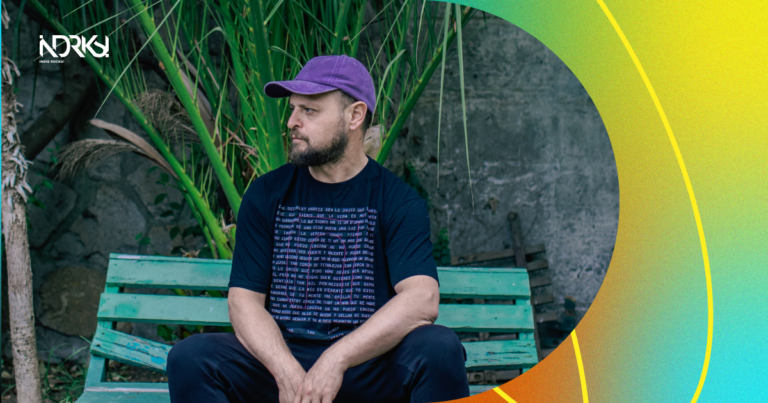
Tunacola It is the project of the Chilean composer Ricardo Luna. For more than a decade this has been a reference within the Chilean scene. It is not for less, Ricardo Luna He has been in charge of moving sounds here and there, questioning classic formulas and taking creative risks. In an interview, we discover more about the person behind Tunacolataking advantage of his time in Mexico and in the middle of a promotional tour where a board game encourages him to create music from scratch.
Indie Rocks! Magazine: We are going to start from a debut a long time ago in 2011, however, we do not want to talk about the origins that we already know, rather about the present… Where is Tunacola currently?
T: The project is in a fifth album, in a fifth creative process. And each of these processes has been super different from the other, both in ambitions and lack of ambitions and in format.
The first album was completely disinterested, without any pretension. Done electronically on a computer and performed live by a trio, basically because of my embarrassment at singing and receiving all the attention by getting on stage alone. That album was a trio out of cowardice… and it worked that way.
Three years later the second arrived. It was already a band, and that is what became known here in Mexico as Tunacola: the band from that second album. Then that band changes; Some members remain, but there is a radical turn towards a third album that is rockier and closer to indie.
The fourth album catches us in a pandemic. I go back to the studio, I go back to doing everything super electronic and alone. We stopped playing live, so the return to the stage was with a new format: Matias Tigre on guitar, which also helps me with compositions.
And the fifth album is also a different process. I realized that I had to fall back in love with the way of making music, because everything was becoming a bit formulaic. I only went with the ideas that I knew worked. It felt like work… and I don't want to work.
So I asked myself: what if I made a card system? Write down all the things that I have in the studio and that I know how to do, and have a card suggest to me step by step what I have to do. I thought about the Oblique Strategies of Brian Eno and in other similar systems, but I wanted to take it further.
One day I came home, threw rice on a pad—because I had seen that throwing rice formed islands—and drew the silhouette that came out. I made boxes for him and said: now, let's do it with cards and a board.
The boxes would be four: Add things, invent things without restrictions, delete, use effects.
I started playing and very cool material quickly started coming out. From there the first songs of this litter were born. There are already six published and they can be identified because each one has an associated day: “Day 64”For example. Day zero was when I started playing. It works like a log.
Then I thought: this cannot remain just an internal process. Let's make it a five-year journey. It will be 1,800 days. I've had about 500, more or less a year and a half. Now the first LP is coming out, but it's not really the full album. The album will be the total corpus when the 1,800 days are closed.
And then it occurred to me that the album as an object is the game itself: a box with the board, the cards and the music inside.
I spoke with Edu Leblancdesigner and illustrator, and I said: “Look at this nonsense and help me turn it into something playable.” We created five islands, each one with a different personality. It is played with a dice: depending on the number that comes up, it is the world in which you work.
For example, if two is rolled, you go to “heaven.” The sky has no rhythm, it is more ambient. If you're in the city, it's more pulses, more arpeggiators, faster BPM. You draw a card and resolve it based on the world you are in.
A card might say: “Sample an acoustic instrument.” What do you have? A guitar, anything non-electronic. The trick is not in the problem, but in how you solve it.
There are also starter cards: “Do everything with one instrument”, “Do it in 15 minutes”, “Do it with one chord”. It's a neat collection of restrictions that, rather than making your life harder, help you finish music faster and put you in creative binds.
And the most curious thing is that, although it might seem experimental, it sounds a lot like Tunacola. But it brought back my love for making music.
GO!: It's incredible. This is not just collection or merch; It literally invites you to create.
T: Exact. It takes you out of your comfort zone and opens you up to others. It is no longer Tunacolait's your project.
It also redefines collaborations. I bring the game to your house, roll the dice, make a fragment according to the restriction. Then you take it and solve it your way. This is how we build together.
GO!: This incredible idea can only come from a gambling mind, which board games are your favorites?
T: I am a big fan of Catan —yes or yes—, which in Chile is called The Great Capitalsomething like Monopoly. I also really like Japanese role-playing games, the games from the first consoles. They are not directly related, but they do restrict your decisions and expand your imagination. They are openly games nerd and they come from there.
GO!: Furthermore, Tunacola has always advanced alongside video games. You've even set some to music.
Tunacola: Completely. Video games were the sound seed of the project. At first we sounded like an 8-bit band. Now I took the game engine and took it to another creative plane.
GO!: And now, for the live project, how do you decide who comes in, who doesn't, and who accompanies you on tour?
T: The first thing is the musical. This is a study project, not jam traditional. But when music started moving towards indie or funk, I needed a band.
I look for human affinity first. People I would have a barbecue with. Then come the practical considerations: touring, logistics. I learned the hard way that seven musicians with brass is a financial nightmare.
Today the project is supported by four good musicians who not only play the records, but also disassemble them live. I prefer composers over perfect performers. If not, I better shoot sequences and lights.
Live risk is entertaining. The music changes concert by concert.
GO!: You come from school, you studied to be a musician. What did you find at the academy?
T: I came in to understand the music. But studying composition is a deformation rather than a formation. One enters free and leaves regulated.
I have had to make real efforts to dismantle those five years of harmonious rules. School music is not exciting; The artists I admire most come from other branches.
Being a musician is not the same as being an artist. At school they train you as a musician, not an artist. And being an artist implies a visual dimension, story, identity. They don't teach you that.
GO!: To close, with so many years of musical career, what would you say is your greatest achievement?
T: I think what has made me feel most proud was being able to cleanse myself of drugs and alcohol 6 years ago. There just began a real and transparent process with music. False ambitions were dispelled: fame, numbers, “breaking it.” When that goes away, you connect with something more substantial.
Now I'm going to Toluca in a van with lifelong Mexican fans. That substance is much richer.
That is my great triumph. This fifth album is about getting back on track, returning to the essence of the first album: without ambitions, just fascinated by what he was producing.
That pure energy, just love for doing it, is what I needed to get back.
That is the great achievement.
Tunacola will present its board game soon since at the time of this note it is still in testing. follow him on instagram to be on the lookout for this release and the new music that will complete the fifth studio material.