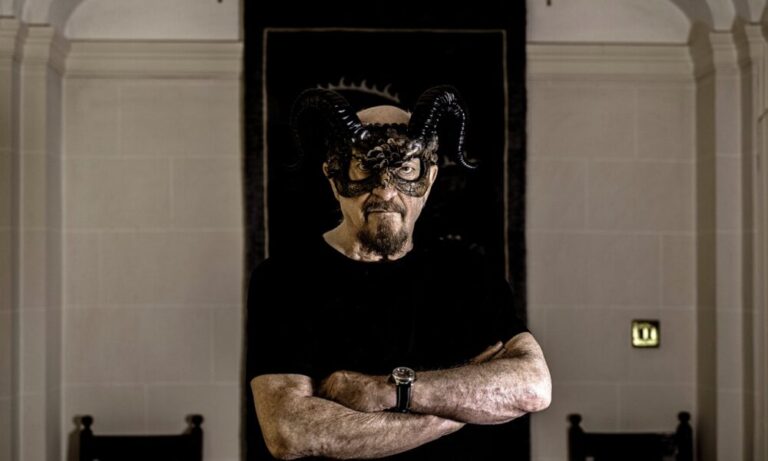
With “Curious Ruminant”, Jethro Tull shows that he is not ready to hang up his gloves, even if his leader Ian Anderson is quick to point out how much he knows that his time is running out.
Were you aware when attacking this new studio album that it would be the 24th with Jethro Tull and the 30th if we add your solo career or did you stop counting a long time ago?
I stopped counting in 1969 (the year Jethro Tull’s second album, Stand Up, was released). In the same way that I stopped listening to other people’s music in the mid-70s. I take things as they come; and, from time to time, the urgency of creativity catches up with me. That’s still three albums over the last four years, which is close to the frequency of the group’s releases at the beginning of the same 70’s.
We might be surprised…
Two things guide me today: despair and enthusiasm. Despair because I am an old man now (78 years old next August) who knows that he will not necessarily be here for much longer and it is therefore a pretty good idea not to miss any of these moments when creativity manifests itself.
Regarding this desire to stay busy, you said last year that you saw it as an “ethical obligation”…
Without pretending that what I think and write is important, every working musician must be aware of the impact on people of what he produces, even if it is small. But also of the importance for him of the reception of his points of view, his ideas, his ideals, and of the way of articulating them. I am not here to preach anything but I have the weakness to think that an artist can stimulate collective interest, without overdoing it and without venturing into what is political or religious. These are more questions than answers that need to be proposed. And it’s a bit of our ethical responsibility to raise these questions, while remaining in our field, namely that of entertainment.
When the name Jethro Tull is mentioned, it is most often the same “old” albums that are referred to: Aqualung, Thick As a Brick, etc. How do we live with it in the long run?
All the groups that emerged in the 70’s or at the end of the 60’s are confronted with it. But if we think about it a little more deeply, it is almost the lot of all artists to see their work reduced to a short period. I thought about it some time ago while going to an exhibition of Van Gogh paintings which are not among his best known. That they were sumptuous will not change the fact that it is always the same three, four or ten paintings by him that we will continue to remember. For an artist there is one or more periods when he becomes famous, and where this celebrity becomes like a snowball, a dynamic. You can only accept it, complaining about it all day long would make no sense. Jethro Tull is classified as a 70’s band? Either. After all, the music I offer today is not that far from it.
Find the rest of this interview with Ian Anderson from Jethro Tull in our weekly n°188, available via our online store.