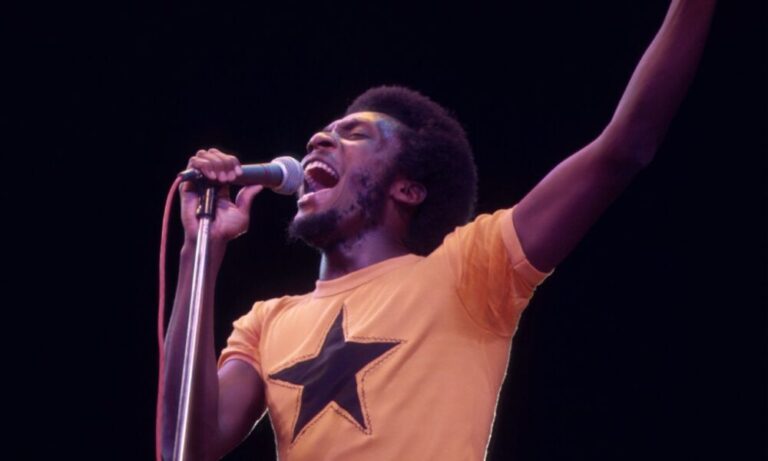
The soul singer and “original rude boy” helped propel the genre from Jamaica to the rest of the world with the film The Harder They Come and hits like “Many Rivers to Cross” And “Wild World”.
Alongside Toots and the Maytals — credited with coining the term “reggae” with their 1968 single “Do the Reggay” — Cliff was among the first Jamaican artists whose music was distributed through a partnership with the Kingston label Beverly's And Island Recordsan Anglo-Jamaican label co-founded by Chris Blackwell with the aim of bringing Jamaican music across the Atlantic.
Thanks to this agreement, Cliff released half a dozen singles in the first half of the sixties, beginning with his 1962 debut “Hurricane Hattie”as well as ska classics like “Miss Jamaica” And “Gold Digger”. In the mid-sixties, Cliff had moved to the UK, befriending future rock legends like Pete Townshend And Robert Plant.
From music to the big screen
In 1967, his first album was released. Cliff at the house of Island, Hard Road to Travel. It was followed two years later by his 1969 self-titled album (later retitled Wonderful World, Beautiful People), which contains two songs that led to the breakthrough of Cliff and made him the first global reggae superstar: the anti-war anthem “Vietnam”and one of the most enduring and widely covered works of Cliff, “Many Rivers to Cross”.
The following year, in 1970, brought two more successes: the interpretation by Cliff of “Wild World” of Cat Stevensthen just released, as well as “You Can Get It If You Really Want”. This overseas success has Cliff in the spotlight in his native Jamaica, where the filmmaker Perry Henzell was working on a crime film about the “rude boys” of Kingston.
Born James Chambers on July 30, 1944 in the parish of St. James near Montego Bay, Cliff was attracted to music from a young age. The son of a very religious father, he was inspired both by the gospel services he attended at church and by American music and pioneering Jamaican artists — from Little Richard has Derrick Morganof Sam Cooke has Ray Charles — who played on AM airwaves, legendary singers who shaped the soulful voice of Cliff.
From modest beginnings to consecration
As told Cliffwhat followed in Kingston was not only the birth of his career, but also that of one of Jamaica's most important labels. One day, coming home from school, Cliff walked into a record store called Beverly'srun by three Jamaican brothers of Chinese origin, the Kong. Cliff offered to play them some songs he was working on — including one called “Dearest Beverley” — but he was told they were a record store, not a label.
THE Kong launched their label Beverly's shortly after, with “Hurricane Hattie” of Cliff (And “Dearest Beverley” on side B) as the first single. The label would soon become the home of reggae greats like DekkerTHE Maytals and the Wailersincluding the first two singles from Peter Tosh And Marley.
Although he never achieved the sustained global fame and cultural legacy of his compatriot Marley, Cliff remained a prolific and revered reggae artist in the years following The Harder They Come. He released albums at an almost annual rate throughout the '70s and '80s. A seven-time Grammy nominee, Cliff won his first award when his 1985 LP Cliff Hanger won the award for Best Reggae Recording.
The rarely heard 1972 single from Cliff, “Trapped”produced by Cat Stevenswould resurface a decade later by becoming a staple of concerts of Bruce Springsteen and the E Street Band in the early 80s. Springsteen had purchased a cassette compilation of the music of Cliff during a European tour and had joined “Trapped” to the group's setlist (where it still appears). The live interpretation of Springsteen was also included on the 1985 charity album We Are the Worldwhile Cliff he himself revisited the track on his own 1989 album, Pictures. (Springsteen And Cliff will later join forces on stage at SXSW 2012. “He’s still great”had declared Steven Van Zandt about Cliff at the time.)
In September 2020, Cliff had delivered the eulogy for his late friend “Toots” Hibbert For WECB in a way that echoed his own heritage. “From our religious background, our concept of when someone crosses over to the other side — we don't say they 'pass away,' we say they 'cross over,' they just go to the other side of existence, there's no such thing as death — and then they go there and they vibrate for a certain number of days before they go to a higher height.”had declared Cliff. “But Toots, the way Toots lived his life, I'm sure his soul was able to move forward. The soul can reincarnate 24 to 24,000 times, depending on how you have lived your life. But with Toots, I don't see Toots coming back to this planet. He has evolved. He completed the task he had to do on this planet. »