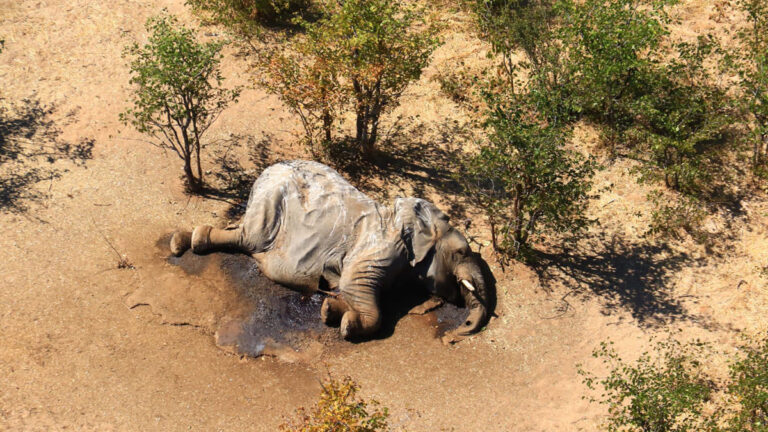
In 2020, the Okavango Delta in Botswana witnessed a heartbreaking mystery: hundreds of elephants, from the young to the old, began walking in circles before collapsing and dying. Over 350 of these majestic animals perished under baffling circumstances, leaving wildlife experts and conservationists scrambling for answers. The tragedy raised numerous theories, but now, thanks to a new study, the cause behind these mysterious elephant deaths may finally be understood.
What Was the Cause of These Mysterious Elephant Deaths?
Recent research published in the Science of the Total Environment journal suggests that the mass deaths were linked to a form of poisoning caused by cyanobacteria blooms—more commonly known as blue-green algae. This potentially deadly microorganism thrives in water when environmental conditions, such as heat and stagnation, are just right. In 2020, it appears that the elephants unknowingly drank from water sources contaminated by these toxins, which led to their untimely deaths.
Researchers found that many of the elephant carcasses were concentrated near certain waterholes that had experienced significant cyanobacteria blooms. By analyzing the distribution of the bodies, they determined that these animals likely consumed toxic water, leading to the fatal poisoning.
Davide Lomeo, a PhD student in Geography at King’s College London, who was part of the research team, explained that while the larger elephant bodies were easier to spot, other smaller animals may have also been affected, though their bodies were likely scavenged by predators before being detected during aerial surveys.
A Global Trend of Climate-Induced Wildlife Diseases
This mass death of elephants is not an isolated incident. The researchers note that climate change is causing sudden disease outbreaks among wildlife across the globe. In the same year, 35 elephants in Zimbabwe also died from bacterial infections triggered by extended droughts, while in Kazakhstan, 200,000 saiga antelopes succumbed to hemorrhagic septicemia—yet another case linked to climate change.
Niall McCann, director of conservation at National Park Rescue, highlighted how climate change is contributing to these outbreaks, noting that it has far-reaching effects on wildlife. From altering water availability to creating environments where harmful bacteria and algae can flourish, the consequences are devastating for animal populations. As global temperatures rise and weather patterns shift, more such incidents are expected to occur.
Climate Change and Its Deadly Effects on Wildlife
The tragedy in Botswana underscores the wider impact of climate change on ecosystems and the animals that depend on them. The changing climate is not just about rising temperatures and melting ice caps; it’s also about how these changes disrupt ecosystems, creating new conditions for harmful organisms to thrive.
This incident also sheds light on the vulnerability of wildlife to environmental changes. In this case, the elephants’ water sources were contaminated in a way they couldn’t avoid, leading to their deaths. It’s a harsh reminder of the interconnectedness of nature and how shifts in one aspect of the environment can have cascading effects on wildlife and biodiversity.
What Does This Mean for Conservation Efforts?
As climate change continues to reshape ecosystems around the world, wildlife conservationists are facing new challenges. The situation in Botswana is a wake-up call for the importance of monitoring environmental changes and protecting wildlife from the effects of pollution, diseases, and changing climate conditions. As we see from the elephant deaths and other incidents, the rapid spread of harmful organisms like cyanobacteria can quickly devastate entire species.
Moving forward, addressing climate change and its impact on wildlife will require global cooperation and immediate action. Conservationists and environmental scientists are already working to better understand the links between climate change and wildlife disease, but the fight is far from over.
In the end, the deaths of these elephants are a tragic but important reminder of the urgent need to protect our planet and its creatures from the growing threat of climate change. We must act before more species are lost, and before tragedies like this one become more common.