Radio Silence Over Clermont-Ferrand: The Spark for Maximum Readiness
On October 3, a private jet suddenly stopped responding to air traffic controllers while flying over Clermont-Ferrand in central France. As reported by midilibre.fr, there was nothing but radio silence for four long minutes—an eternity for those monitoring the skies. The control center in Bordeaux quickly flagged the situation. Standard safety protocols kicked in: any unexplained loss of contact demands an urgent check.
Rafale Scramble: Interception Mode Engaged
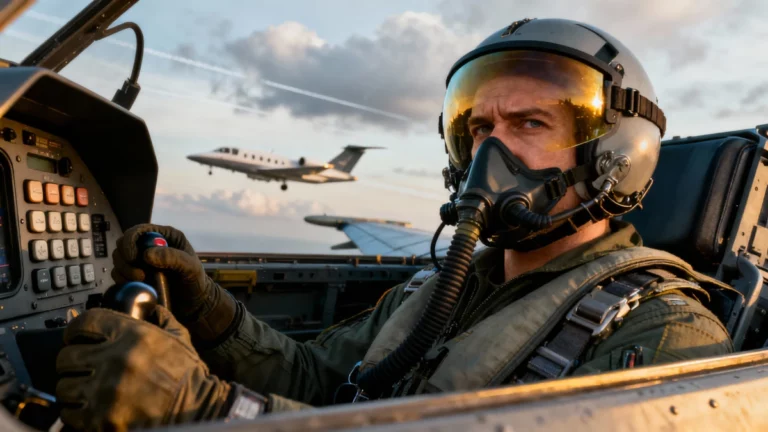
The French Air and Space Force posted the alert on Facebook, then triggered interception procedures. A Rafale (yes, the same high-tech jet you’ve admired at airshows or heard causing a supersonic ‘bang’) scrambled from Air Base 118 in Mont-de-Marsan, southwestern France. Time was of the essence, but every action followed precise rules. Civilian controllers and military personnel worked in tandem, plotting a safe trajectory for the fighter to close in—without disrupting other air traffic.
As the distance shrank, procedures stayed tight. The Rafale pilot maintained separation, all senses locked on monitoring and listening for any hint from the missing jet. In these moments, even the tiniest detail could tip the balance. The mission was clear: assess the situation without endangering anyone. No rushing in; just methodical, professional interception. Rest assured—Rafales never appear by accident!
A Technical Glitch, Not a Threat: What Really Happened Up There?
Contact was finally re-established between the Ventoux and Luberon sectors—a picturesque patch of southern France, more accustomed to peaceful hot air balloons than fighter jets. The private jet was stable, showing no sign of hostility. A few spoken exchanges, a frequency adjustment, and the uncertainty melted away. Teams on the ground confirmed this was just a technical glitch, not a malicious act.
It turned out the issue was as simple as a misconfigured radio frequency. The crew onboard thought they were transmitting, but—oops—the microphone stayed silent. This rare but possible scenario can happen when attention is focused on other cockpit tasks. Controllers soon confirmed that normal radio contact had resumed and gradually downgraded the alert status.
Procedure, Preparedness, and Public Transparency
Events like these show why strict radio phraseology is key: it leaves no room for ambiguity. Controllers check every fact—no unnecessary panic, no brushing things off. Once communication was restored, the classic priorities returned: heading, altitude, separation. The skies kept running smoothly because protocol clicks into place—like clockwork. The Rafale resumed its patrol, ready for the next potential call.
This incident shines a light on the effectiveness of France’s Permanent Air Security Posture (Posture Permanente de Sûreté Aérienne), overseen by the CDAOA (Commandement de la Défense Aérienne et des Opérations Aériennes). French controllers know a fighter jet can be airborne at a moment’s notice. Such vigilance keeps civilian routes safe and helps prevent human errors, especially during critical control phases.
Coordination between Bordeaux, the relevant sectors, and the Air Force is a well-drilled routine. Everyone knows their part, speeding up response times. Experience feedback continually refines procedures. The crews benefit from a clear framework, especially helpful in moments of overload, fatigue, or the odd cockpit distraction.
And there’s an extra layer: public transparency. Posting updates on Facebook gives residents clarity about those surprise overflights or unfamiliar sonic booms above. The Air Force states the facts, without revealing sensitive details. This candid communication builds trust and drives home the main priority: safety. A Rafale interceptor is reassuring precisely because it’s on guard—even, sometimes, for little more than a radio mishap.
Ultimately, the incident confirmed the strength of the French system. A single mis-set frequency might cause a stir, but the response is rapid and coordinated. Controllers, crews, and military teams operate within a shared, effective framework. And when there’s doubt in the air, a Rafale gets dispatched, restoring safety for everyone under the vast French sky.