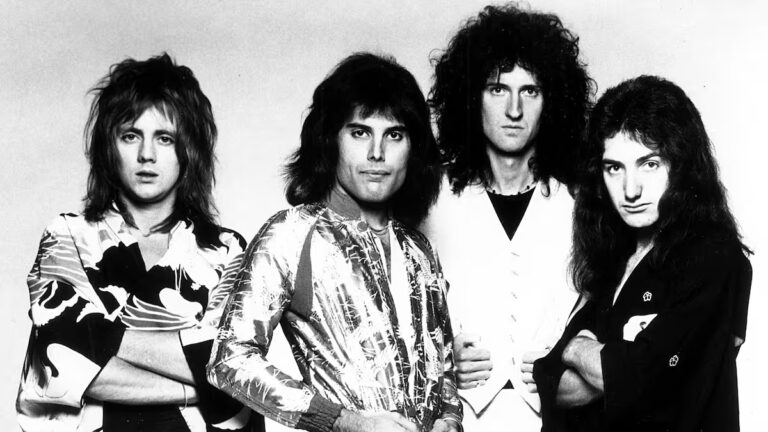
Before the solemn piano of “Bohemian Rhapsody” opened one of the most famous songs in history, Queen was in a much less glorious situation. They had three albums published, a handful of hits and growing fame, yes, but also contractual problems and money problems: at the beginning of 1975, according to what they have said Brian May and Roger Taylorthe band was almost in the red despite touring non-stop. In that context, A night at the opera It wasn't just a new album: it was all or nothing.
The group came from Queen, Queen II and sheer heart attackworks that already showed his peculiar mix of hard rock, theatricality and almost music hall melodies. “Killer Queen” had given them their first big hit, but they were still missing that album that would place them in the league of the untouchables. The bet for the fourth album was clear: go all out. They recorded in several studios, used multitrack techniques to the limit and built a repertoire that ranged from hard-hitting rock to ballads, from vaudeville to almost operatic epics. The budget skyrocketed – there is talk of around £40,000, an outrage for the time – but the group and producer Roy Thomas Baker were convinced that the risk was worth it.
The result, published on November 28, 1975, was A night at the opera: an album that sounded like everything Queen had wanted to be from the beginning. Sharp guitars, impossible vocal harmonies, constant rhythm changes and a sense of spectacle that didn't need a stage to work. Within the album, the almost progressive rock of “The prophet's song”, the delicacy of “Love of my life”, the perfect pop of “You're my best friend” or the nod to music hall of “Lazing on a Sunday afternoon” coexisted. It was as if the band had decided to put in 43 minutes all his musical obsessions and see what happened. And, of course, there was “Bohemian rhapsody.”
WECB Classic
WECB Classic
The main single of the album was, on paper, crazy: almost six minutes long, without a recognizable chorus, divided into blocks (ballad, operatic passage, hard rock section and final coda) and with enigmatic lyrics that are still discussed today. Composed by Freddie Mercury and built in the studio like a small Frankenstein of tapes, layers of voices and guitars, “Bohemian rhapsody” broke all the norms of commercial radio at the time. The record company thought it was too long, too strange, too risky… and yet it became an immediate phenomenon.

The song reached number one on the British charts and it stayed there for nine consecutive weeks, becoming Queen's most successful single in its country. Years later it would return to number one after Mercury's death, and today it is among the best-selling and most listened to songs on streaming of the 20th century. With its impossible structure, its pioneering video and that operatic stretch that half the planet knows by heart, “Bohemian rhapsody” not only defined the album: it redefined what a rock song could be.
The impact on the album was immediate. A night at the opera became Queen's first number one on the UK Albums Chart, where it remained at the top for four non-consecutive weeks. In the United States it reached number four on Billboard and was the group's first work to achieve platinum certification there. Over time, it has accumulated millions of copies sold and usually appears on practically every list of “best albums in rock history.”
But beyond the numbers, the important thing is what it meant for the band's career. A night at the opera definitively consolidated Queen's personality: an unrepeatable mix of rhard ock, pop sensibility, British humor, sonorous baroqueism and a touch of theatrical self-confidence that no one else could imitate without looking like a copy. From then on, the band stopped being “promising” and became a benchmark. The album gave them economic stability, completely opened the international market and allowed them to continue taking risks in subsequent work.
It also established something fundamental in their relationship with the public: the idea that with Queen you never knew exactly what was going to come on the next album, but it would be ambitious. The group dared to launch as their flagship a piece that looked like an opera compressed into six minutes, and the public embraced it. That pact of trust—you do whatever you want, we listen—explains a good part of its validity.
“Bohemian rhapsody” has become an intergenerational anthem, “Love of my life” thrills at every concert, “You're my best friend” remains one of the great declarations of friendship in pop, and the album as a whole preserves that mix of risk and fun that made it unique. It was the moment Queen stopped looking up and started looking ahead, knowing that they were already at the top.