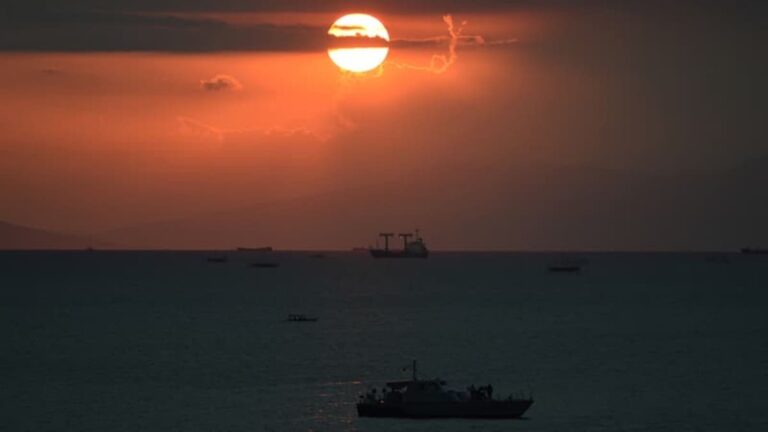
For more than a week, a shipment no country wants to claim has been drifting just outside Manila Bay—23 containers flagged for radioactive contamination. What began as a routine industrial export has spiraled into a diplomatic dispute between the Philippines and Indonesia, raising urgent questions about safety, responsibility, and how to properly dispose of hazardous waste.
A Shipment No One Wants
The standoff began when Indonesian authorities detected traces of Cesium-137, a radioactive isotope, in containers of zinc dust arriving from the Philippines. Jakarta immediately rejected the cargo and sent it back, sparking a tug-of-war between the two neighbors over who must take responsibility for the contaminated shipment.
The containers have been anchored off Manila since October 20. Officials in Manila argue the shipment originated with a private company, Zannwann International Trading Corp., while Indonesian authorities insist the Philippines must reclaim it. Meanwhile, the containers sit in limbo, awaiting instructions that no one seems eager to give.
Carlo Arcilla, director of the Philippine Nuclear Research Institute (PNRI), admitted the situation is “a puzzle,” but emphasized that radiation levels detected so far are low. “This is not a national emergency,” he told reporters, adding that what’s urgently needed now is “a proper disposal site.”
Where Did the Contamination Come From?
The zinc dust—normally a by-product of steel production—was exported by Zannwann after being sourced from the steel recycler SteelAsia. But the company rejects the findings outright, calling the PNRI’s conclusions “unfounded and unscientific.” SteelAsia has even temporarily shut down its scrap-processing facility as investigations continue.
Repeated attempts to reach Zannwann for comment have gone unanswered.
The issue took on an additional layer of complexity when Indonesia recently faced its own scandal involving radioactive contamination in locally sold food products. Authorities suspect certain imported scrap metal shipments may be the source of that contamination.
A Broader Food Safety Warning
The controversy surrounding Cesium-137 isn’t limited to industrial waste. The U.S. Food and Drug Administration (FDA) recently recalled frozen shrimp and cloves imported from Indonesia after detecting the same isotope. According to the FDA, prolonged exposure to Cesium-137—even at low levels—can increase the risk of cancer.
Cesium-137 is widely used in medical devices and industrial gauges, meaning contamination can accidentally occur if such equipment enters the scrap metal chain.
What Comes Next?
For now, the containers remain stranded at sea, a floating symbol of bureaucratic deadlock. Both countries agree the waste must be managed safely, but neither wants to pay the environmental and political cost of accepting it.
The PNRI says identifying a secure burial site is the next necessary step, but the clock is ticking—and each passing day increases public concern.
This radioactive standoff highlights a growing global problem: as trade in recycled materials expands, so do the risks of contamination slipping through the cracks. And until systems for monitoring, transparency, and accountability improve, more such stories may be just over the horizon.