The anatomy of the Italian record market in 2025 is not just a mere question of figures, but an authentic sociological diagnosis of an asymmetry that borders on pathology and cultural backwardness.
If we look at the Top of the Music 2025 by FIMI/NIQ published today, we find ourselves faced with a lunar landscape, dominated by a male hegemony that seems to have come out of a mid-twentieth century dystopian novel, if not for some flashes of chromatic resistance that come from individuals.
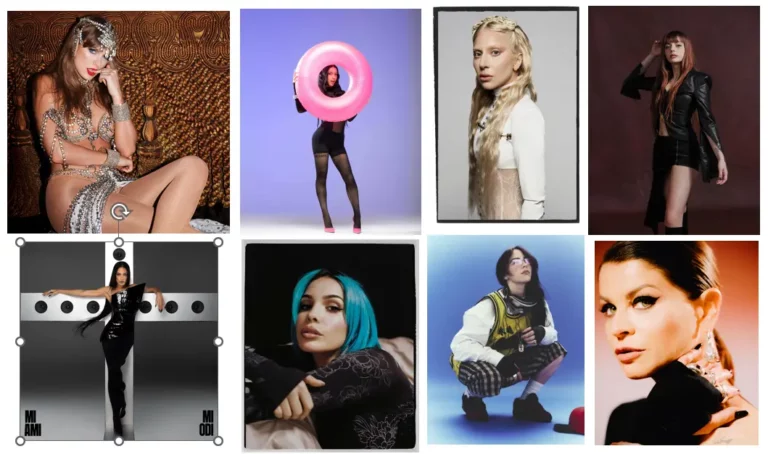
The figure is chilling: only 8 women in the top 100 positions: ANNA the first woman in the rankings only at number twelve, TAYLOR SWIFT world record smasher here only at twenty-nine, ELODIE at thirty-two and eighty-six, LADY GAGA at thirty-five, ROSE VILLAIN at thirty-seven ninety-eight, BILLIE EILISH at forty-nine, ALESSANDRA AMOROSO at fifty, ANNALISA at sixty-seven and seventy-three.
Getting into the Top 50 albums today requires not only talent, but the ability to survive an algorithm that chews up and spits out urban testosterone.
The only true female mass phenomenon capable of playing in the same heavyweight championship (Marracash, Sfera Ebbasta, Olly) is Anna with “Real Baddie”. Behind her, solid brands such as Annalisa, Elodie and perhaps the nostalgia-quality effect of a Giorgia are holding their own.
The album format in Italy has become the fiefdom of the “urban-trap bloc”. A genre which, due to narrative construction and user bases, tends to self-reproduce through almost exclusively male cross-collaborations (the infamous featuring).
The woman, in this scenario, is often relegated to the role of luxury guest or “melodic ornament”, struggling to impose an organic project of 12-15 tracks that undermines the dominance of the various Geoliers or Lazzas.
BETWEEN INDIVIDUALS
Among individuals the situation appears less claustrophobic, but not therefore balanced. Here the woman is no longer a fugitive, but a nomad of the catchphrase.
With the exception of Giorga which positions itself with its Sanremo hit The Cure for me at number two on the chart, the rest sees Anna at twenty and ninety and the ubiquity of Annalisa and Elodie which work because they understood before others how to express Italian pop. The rest is the paradox of featuring: Many of the positions occupied by women in singles are, in reality, co-habitations. We see Rose Villain or Angelina Mango often shine alongside male giants. It's a survival strategy: to enter the bloodstream of the “Hot Hits” playlists, the pink quota often has to pass through the filter of male urban credibility.
PHYSICAL SIZES
The situation does not change with physical formats, the territory of an apparently more adult but increasingly growing audience of kids who buy vinyl more as posters than to listen to it.
Here only two women in the top 20: Taylor Swift at number two and Annalisa at nineteen.
Criticism cannot limit itself to counting heads; he must ask himself why. Italian industry is suffering from hyper-sectoralisation. On the one hand we have cultured and precious songwriting (I'm thinking of La Niña or Joan Thiele), acclaimed by critics but invisible in the sales charts; on the other, a pop that, to compete, must come to terms with an aggressive aesthetic that does not always belong to the female universe.
2025 tells us that the Italian public “buys” the woman as an event (the single), but struggles to recognize her as a cultural authority (the album). It is a gap that cannot be filled with quotas for women, but with a revolution in narrative: as long as the “coolness factor” is dictated by a purely male street rhetoric, women will remain the splendid guests at a party organized by others.
ABROAD
While we are embarrassed to count the “survivors” in the Italian chart, the global markets of 2025 celebrate what we could define as an enlightened dictatorship of female talent.
In the US and UK, 2025 was the year of “The Life of a Showgirl”. Taylor Swift it doesn't just sell; she colonizes the collective imagination.
On the Billboard 200, her hegemony is such that it makes her male colleagues appear as mere supporting actors in a film of which she is the director, producer and absolute protagonist.
But it's not just Taylor. The global rankings at the end of the year see a top ten split 50% with men. Sabrina Carpenter, Sza and Billie Eilish they permanently occupy the top, transforming the album into a transgenerational cult object. Added to these is the meteoric rise of Chappell Roanwhich turned queer pop into a stadium phenomenon.
In the UK, 2025 has been declared the golden year of women. Beyond Taylor Swift which is before without discussion and behind her Sabrina Carpenter well consolidated, artists like Olivia Dean, Raye and Lola Young they don't just occupy the top positions, they dictate the cultural agenda. Here, the “pink quota” does not exist because the average quality of female productions is so high as to make any gender discussion superfluous.
Why is Italy the Anomaly? If in London or New York a woman's album is a political, aesthetic and social manifesto, in Italy it still seems like an entrepreneurial risk that the majors prefer not to take, taking refuge in the safe haven of bedroom rap.
This discrepancy tells us that the Italian market is culturally isolated. As the world celebrates the complexity of Gracie Abrams or the cutting irony of Charli XCX or the large class of ROSALIAwe remain stuck in a discographic machismo that smells old.
The truth is biting: abroad, women sell albums because they build worlds. In Italy, until we allow our artists to be “unpleasant”, authoritarian and free from the clichés of radio pop, we will continue to watch the tops of the world charts from the sidelines.