A dishwasher finishing its cycle feels like a small domestic victory. The plates are clean, the glasses sparkle and you can tick one more job off the list. Yet what you do next, in the very first minutes after that final beep, can make a surprising difference to how clean your dishes look and how long your machine lasts.
The moment everyone hesitates
Picture the scene. Dinner is done, the dishwasher hums its last note and you are left wondering whether to open the door straight away or leave everything to cool down. I used to wait. In my head, hot plates plus cold air sounded like trouble. So I left the door shut, sometimes for hours, until the whole thing felt safe to touch.
It turns out that instinct is not helping your dishwasher at all.
Why timing really matters
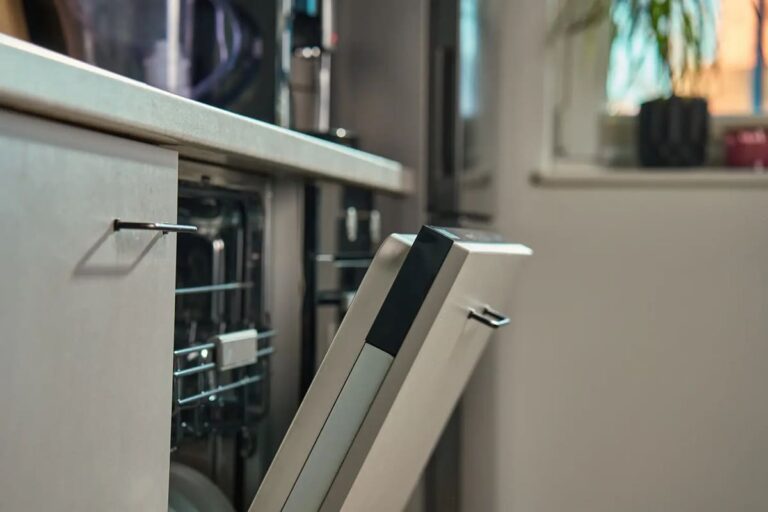
The best moment to act is immediately after the cycle ends. Not flinging the door wide open, but gently opening it a few centimetres. That small gap lets the rush of hot steam escape before it has time to turn back into water droplets on your plates and cutlery.
When steam is trapped inside a closed dishwasher, it cools and condenses. That is when you start seeing those familiar chalky marks on glasses and puddles sitting in the base of mugs. By letting the steam out straight away, dishes dry more quickly and far more evenly.
There is another benefit that anyone who has ever opened a dishwasher to a musty smell will appreciate. Warm, damp air is exactly what lingering odours and mould love. A quick release of steam lowers the humidity inside the machine, making it much harder for unpleasant smells to take hold. Appliance engineers often point out that moisture left sitting inside a hot machine is one of the main reasons seals and internal parts age faster than they should.
A small habit with big results
I started doing this after a particularly stubborn smell refused to disappear, no matter how many cleaning cycles I ran. Opening the door straight away felt almost too simple to work, but within a week the difference was obvious. The interior smelled fresher and my glasses no longer needed a quick polish before going back in the cupboard.
Consumer advice groups such as Which? regularly stress that good ventilation is key to appliance hygiene. This is one of those rare cases where the advice costs nothing and takes seconds to follow.
When your dishwasher does it for you
If you have bought a newer built in model in the last few years, your machine may already have this covered. Several well known manufacturers now include an automatic door opening feature. At the end of the cycle, the door pops open just enough to let air circulate, without any effort from you.
It is a clever bit of design that removes the risk of forgetting altogether. The principle is exactly the same as doing it manually, just more convenient, especially if the dishwasher finishes while you are out or asleep.
The final finishing touches
Once the door is ajar, it helps to ventilate the kitchen for a few minutes so the remaining moisture can disperse. What you should avoid is leaving the dishwasher door wide open for hours on end. That can invite dust, crumbs or the occasional adventurous insect inside.
For best results, leave the door slightly open, wait around half an hour to an hour, then unload and close it again. It is a small window of time, but it is enough to protect both your dishes and the machine that cleans them.
In the end, this clever dishwasher trick is about working with heat and steam rather than against them. Open the door at the right moment and you get cleaner results, a fresher smelling kitchen and an appliance that quietly does its job for years longer. Sometimes, the smartest household habits really are the simplest ones.