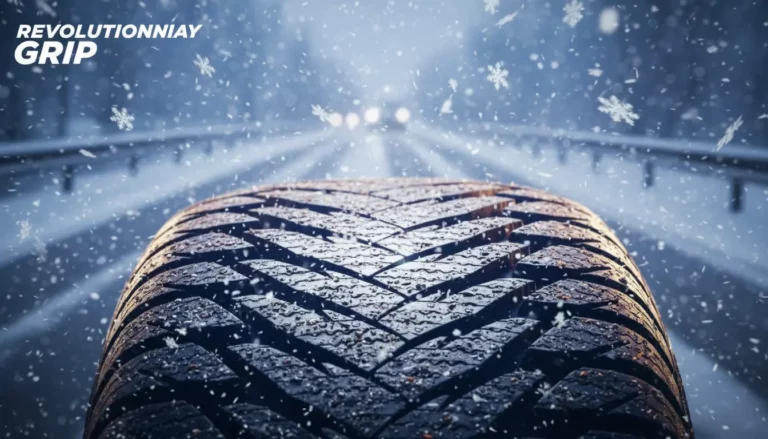
Back to Black: Current Rules for Winter Driving
Starting this Saturday, November 1st, motorists will need to start paying closer attention to their tires—at least in certain French regions. As of this date, the so-called “Loi Montagne” (“Mountain Law”) swings back into effect, requiring, for four months, all vehicles in the 34 affected départements—think of these as counties or administrative regions—to be equipped with either snow tires or to carry snow chains or tire socks.
- This obligation covers essentially every kind of four-wheeled (and larger) motor vehicle: standard passenger cars, vans, campers, coaches, buses, and of course, heavy goods trucks.
That means, for a huge swath of drivers, switching tires twice each year—fitting the winter set in November and swapping them back out in April—remains an annual hassle. But, help may be on the way…
A Tire Revolution: A Sneak Peek into the Future
As revealed by Anicet Mbida on the French morning show “Bonjour ! La Matinale TF1,” a new generation of tires is gearing up to make life a lot easier for everyday road users.
“The tire is having its revolution. No more socks, no more chains, no more snow tires, rain tires, autumn, summer, winter… Soon we’ll have tires that change shape to guarantee the best possible grip,” the journalist explains. The idea: tires that scan the condition of the road and transform themselves to provide optimal adherence whatever the weather may throw at you.
Imagine: tires that detect rain and slim their profile to avoid hydroplaning. Or, as the expert puts it:
“The tires can switch into ‘rain mode,’ so we’ll reduce their width to prevent aquaplaning. In fact, these are variable-geometry tires, tires that can widen or shrink.”
From Rain to Ice: Built-in Adaptation
Rainy days are just the beginning. If these futuristic tires can contract for wet conditions, they’ll also be able to adapt to icy or snowy roads. Here’s where things get even cleverer: tiny telescopic studs will pop out of the tire, providing extra grip when you’re facing slippery ice or packed snow.
“When you’re on black ice, the studs come out for better traction, so you can keep moving forward more easily. And as soon as grip returns to normal, the studs retract,” Anicet Mbida elaborates.
Sounds like science fiction? Maybe. But the technology is under development, even if for now, the precise launch date—and, let’s be real, the price tag—remain a closely guarded secret. For the moment, drivers will need to be patient before bidding farewell to those finicky socks and chains—yes, the ones that sometimes seem impossible to install, especially with cold fingers and limited daylight!
When Will This Dream Become Reality?
Unfortunately, as of now, these shape-shifting tires aren’t available for purchase. We don’t know when they’ll hit the market—nor how much they’ll cost when they do. So for this winter (and probably a few more), it’s best to keep your chains handy and brush up on your tire-changing skills. But take heart: a future free from seasonal tire stress may be just around the corner.