Tired of hearing that modern appliances are built to break? One veteran repair expert begs to differ—and says our own bad habits might be to blame. After more than two decades fixing everything from dishwashers to dryers, he insists that so-called “planned obsolescence” is mostly a myth.
“It’s not the machines—it’s how we use them”
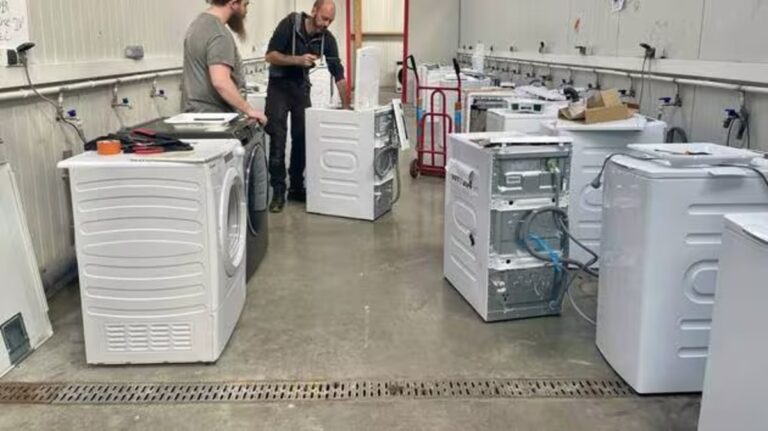
For Jérôme Vallée, who has spent over 20 years reconditioning large appliances at his company in Normandy, France, the real problem isn’t manufacturers—it’s consumers. “People talk about built-in obsolescence as if machines were programmed to fail,” he explains. “In reality, most breakdowns come from misuse or neglect.”
Vallée should know. Over his career, he’s taken apart more than 400,000 appliances, many of them less than two years old. The patterns he’s seen are strikingly consistent: small mistakes that quietly shorten a machine’s life. Here are his three top rules for keeping your washing machines, dishwashers, and fridges running for the long haul.
1. Don’t overuse “eco” programs
Energy labels and eco settings were designed to reduce water and electricity use—a noble goal. But Vallée warns that constantly using low-temperature cycles can do more harm than good. “Running your dishwasher or washing machine at 30 or 40 degrees all the time prevents them from self-cleaning,” he says. “Grease and detergent residue build up, clogging pipes and overworking motors.”
His advice? Give your appliances an occasional “hot wash.” Modern machines are far more efficient than those from 20 years ago, so running a hotter cycle every so often won’t make a big dent in your energy bill—but it could save your appliance from an early death.

2. Read the manual (really)
It sounds simple, but how many of us actually do it? Vallée says skipping the user guide is one of the biggest mistakes he sees. “If people read the instructions, they’d avoid half the repairs we do,” he laughs.
Take dishwashers, for instance. “We often find stainless steel tanks corroded by salt because users filled the salt compartment at the wrong time,” he explains. “It’s written clearly in the manual—add the salt just before starting a wash, not hours before.”
He’s also seen countless appliances damaged during installation by overzealous DIYers. “Sometimes a single misplaced screw or drilled hole ruins the machine before it’s ever used,” he says. A few minutes spent reading could prevent hundreds of euros in damage.
3. Be patient before replacing parts—or the whole machine
Another modern issue, Vallée argues, is impatience. “People expect repairs to be instant,” he says. “If a part takes a few days to arrive, they’d rather replace the whole appliance.”
But he urges consumers to resist the throwaway reflex. “A fuse or a belt wearing out isn’t failure—it’s maintenance. Just like a car tyre, parts are meant to be replaced.” Too often, he adds, after-sales services bow to customer pressure and swap out whole units unnecessarily.
Repairing rather than replacing doesn’t just save money—it’s better for the environment too. Manufacturing new appliances consumes metals, plastics, and energy that could easily be spared with a little patience.
A shared responsibility
Vallée doesn’t let manufacturers off the hook entirely. “Of course, companies must design durable, repairable products,” he says. “But consumers have a role too. Take care of your machines, and they’ll take care of you.”
In an age where convenience often wins over common sense, his advice feels refreshingly practical: run hot washes occasionally, read the manual, and be patient with repairs.
Because, as Vallée likes to remind his customers with a smile, “Most appliances don’t die of old age—they die of neglect.”