The power dynamics of global economics are shifting, and according to renowned economist Thomas Piketty, the United States is losing its grip. While President Biden and his administration hope to maintain the dominance of the American economy through global influence and strategic policies, the reality, as Piketty explains, is that the U.S. is facing an era of decline. This marks the end of an economic era—one where America, without a doubt, led the world in economic, financial, and political power. But how did we get here, and what does this shift mean for the future?
The Decline of American Influence
For years, many have pointed to the United States’ military interventions as a sign of overreach and hubris. The Iraq War, launched in 2003, highlighted the consequences of unchecked American power, resulting in widespread devastation and geopolitical destabilization. However, the current crisis is different. Piketty argues that this isn’t just a political failure but one rooted in economic weakness. Under the surface, the U.S. has been losing control of its economic might for years.
The U.S. economy, once untouchable, now finds itself in a precarious position. In terms of purchasing power parity, the Chinese economy surpassed that of the United States in 2016. As of now, China’s GDP is 30% higher than that of the U.S., and by 2035, it is expected to be twice the size of America’s. This is a monumental shift in the global balance of power, one that suggests the U.S. is no longer the world’s economic leader.
The Growing National Debt and Global Implications
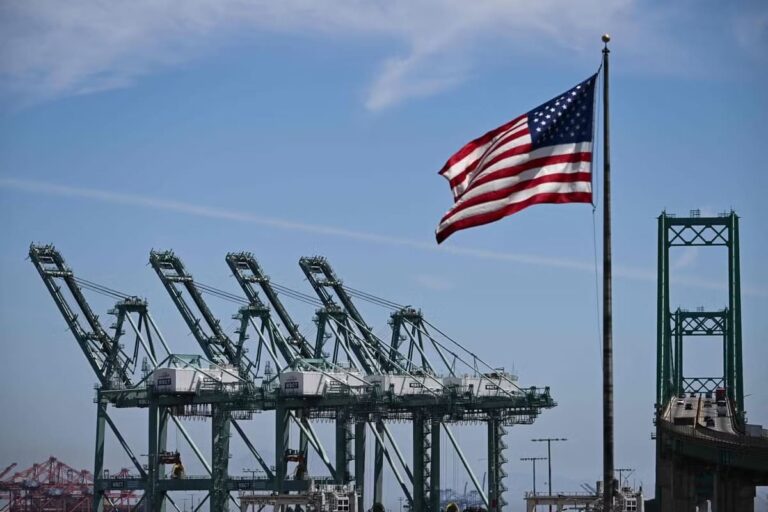
The U.S. has also been dealing with a growing issue: the national debt. The accumulation of trade deficits has led to unprecedented levels of debt, with projections that the U.S.‘s public and private debt could reach 70% of GDP by 2025. This is a critical issue because the U.S. has long managed to avoid major interest payments by dominating the global financial system. However, with the rise in interest rates and the shift in global financial dynamics, the country may soon find itself owing substantial amounts to foreign creditors, a burden it hasn’t faced in the past.
This has prompted some Trump-era economists to suggest a radical solution: taxing the interest paid to foreign holders of U.S. debt. This proposal, however, only underscores the fact that the U.S. may no longer be in a position to rely on its economic power as it once did.
Historical Context: A Modern Colonial Paradox
Piketty draws a striking historical parallel between the U.S.‘s current economic situation and that of European colonial powers in the late 19th and early 20th centuries. The United Kingdom, France, and Germany, among other colonial powers, ran similar trade deficits throughout their colonial empires. However, they were able to fund these deficits through profits from their vast overseas holdings—assets that generated substantial interest and dividends. This allowed them to maintain their global influence while also running up considerable debts.
In contrast, the U.S., despite having some degree of global influence, doesn’t have the same vast array of foreign assets to draw upon. The economic system of the 21st century has shifted in ways that make it harder for the U.S. to maintain its dominance.
The Future: A New World Order
What does this mean for the future? The U.S. must adapt to a world where it is no longer the dominant economic power. This doesn’t mean the country will lose its place in the global economy, but it does mean that China, along with other rising powers, will play a more significant role in shaping the future.
Piketty’s perspective is a wake-up call for Americans to reassess the country’s approach to both domestic policy and international relations. As the world moves away from the pax americana, America will have to adjust to new realities—acknowledging the shift in power and recalibrating its strategies for economic, political, and diplomatic engagement.
In conclusion, Thomas Piketty’s analysis paints a stark picture of a changing world. The U.S., once the unquestioned leader of the global economy, is now struggling to maintain that position as economic power shifts to other parts of the world. It’s a time of transition, and how the U.S. adapts will determine its role in the future of the global economy.