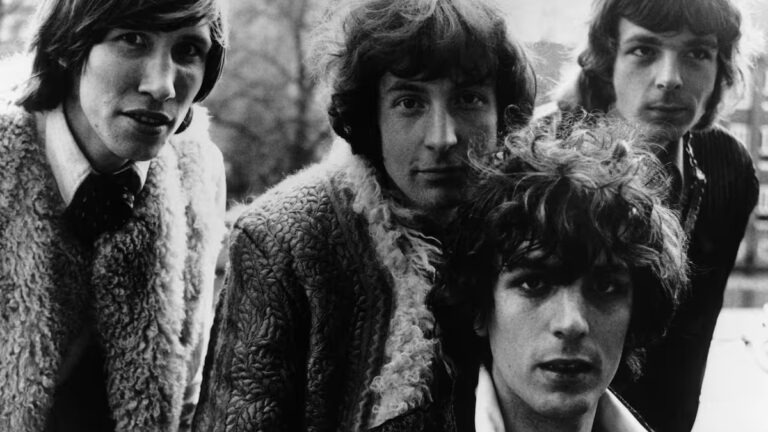
While recording Wish You Were Here, In 1975, an obese man appeared in the studio, completely shaved, with shaved eyebrows and a lost look that disconcerted everyone. No one recognized him immediately. When someone asked who he was, the answer fell like a stone: Syd Barrett. The same Syd who had founded Pink Floyd, the brilliant composer who had put lyrics, melodies and controlled madness to the group's first steps. This January 6, 2026, Barrett would have turned 80, and few rock stories illustrate so well the blurred border between genius, excess and disappearance.
Barrett—Roger Keith Barrettborn in Cambridge in 1946—was the creative engine of the original Pink Floyd, of the psychedelic clubs of London, of the plays of liquid lights and the songs that seemed to be written by Lewis Carroll after a too-long night. His imagination marked The Piper at the Gates of Dawn (1967), one of the founding albums of British psychedelia, with songs like “Arnold Layne” or “See Emily Play” that mixed pop, childish surrealism and a disturbing feeling that something could go wrong at any moment. The problem is that it wasn't just an artistic sensation: Syd's head really started to twist.
The intensive use of LSD, together with a fragile personality and possible previous mental problems, turned the musician into a ticking time bomb. Live, he could stare into space, play a single note for minutes, or simply not appear. In the studio, he was unpredictable: great one day, completely off the next. While the group began to become more professional and fill rooms, Barrett was left behind, trapped in his own labyrinth. The solution was as painful as it was practical: incorporate David Gilmour to cover his absences… and, shortly after, get rid of Syd without even telling her clearly. One day they stopped picking him up for rehearsals. This is how his time in Pink Floyd ended, almost without farewell.
WECB Classic
WECB Classic

Barrett recorded two solo albums —The Madcap Laughs and Barrettboth from 1970—that today are considered works of worship: beautiful, fragile songs, sometimes unstructured, as if someone had left the recorder on while the artist collapsed in front of the microphone. Afterwards, it practically disappeared. He returned to Cambridge, lived with his mother, painted pictures, avoided interviews and became a ghostly figure, cited in songs and interviews but absent from the real world. Meanwhile, Pink Floyd grew to become one of the biggest bands on the planet, always carrying the shadow of their lost friend.
That shadow definitively materialized in Wish You Were Here (1975), an album crossed by absence, alienation and the question of what happens when someone is no longer there, even if they are still alive. The homonymous song, explicitly dedicated to Barrettis one of the most exciting in rock history precisely because it doesn't need to explain anything: just listen to it. The anecdote of his appearance at Abbey Road during the sessions – unrecognizable, silent, like a ghost – ended up turning Syd into a tragic myth. Nobody knew quite what to say to him. Nobody knew how to help him. And, somehow, all that guilt was pressed into the vinyl.
Barrett's end was as discreet as his disappearance from the spotlight. He died in 2006, at age 60, from complications resulting from diabetes.. No farewell tours, no massive tributes, no public reconciliations. But its influence is still there, beating under every story of geniuses who couldn't stand the pressure, of artists who fell by the wayside. Syd Barrett was not a typical superstar, he did not even get to see what the group he helped create became. It was, rather, the uncomfortable reminder that talent does not always come with an instruction manual.
Eighty years after his birth, his figure continues to provoke fascination and vertigo in equal measure. Because, in the end, Syd Barrett's story is not just about drugs or madness, but about something much more uncomfortable: what happens when The price of creativity is losing yourself. And that, as far away as it may seem, remains a dangerously current question.