It’s not every day that a routine water check turns into a moment straight out of a nature documentary. But that’s exactly what happened in Hong Kong, where a team of researchers stumbled upon a tiny, venomous jellyfish—square-shaped and equipped with a staggering 24 eyes.
A box-shaped surprise in murky waters
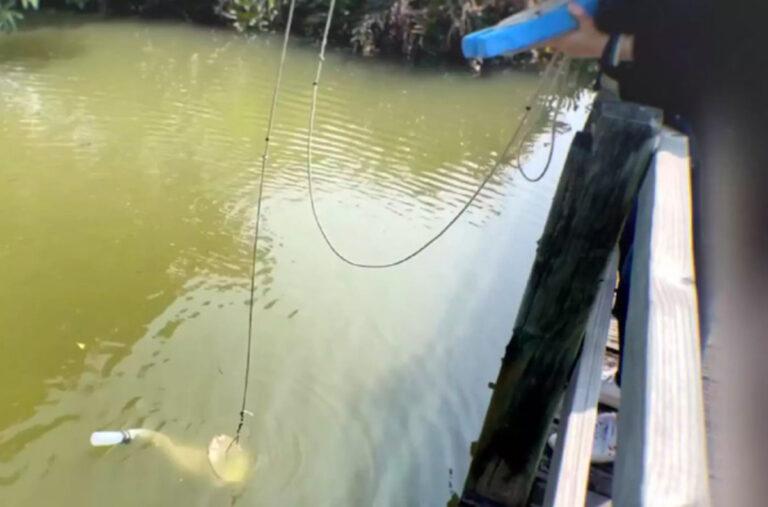
While studying water quality in a quiet, green-tinted pond at the Mai Po Nature Reserve, scientists dipped in a net expecting the usual suspects—algae, maybe a few tadpoles. Instead, they pulled up a near-transparent jellyfish, less than a centimeter long, with a cube-shaped body and eyes on every side.
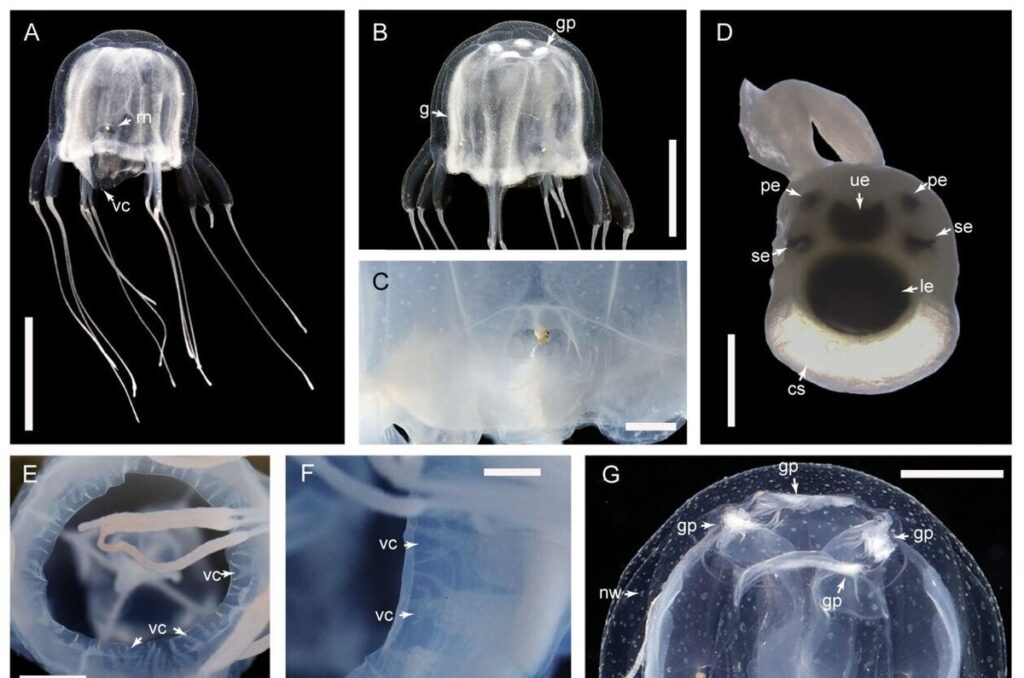
And not just a couple of eyes—24 of them, arranged in clusters of six. Two in each set are capable of forming images, while the others detect changes in light. It’s like evolution gave this tiny creature a built-in surveillance system.
Meet Tripedalia maipoensis
The discovery turned out to be more than just unusual—it was entirely new. Genetic and physical analysis revealed this was a never-before-seen species of box jellyfish, now officially named Tripedalia maipoensis, in honor of the Mai Po region.
If the phrase “box jellyfish” rings a bell, it should. This group includes some of the most venomous sea creatures on the planet. Though this new species is tiny, its biology packs a punch. It’s fast, too—thanks to paddle-like structures at the base of its tentacles that help it zip through water with surprising agility.
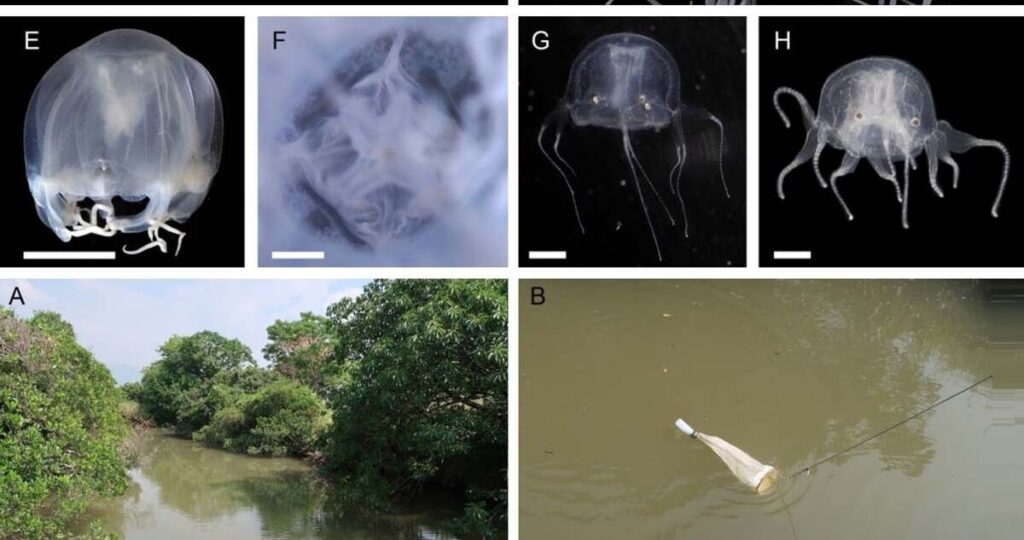
Each of its four corners sprouts three long tentacles, giving it twelve in total. Combined with its eye clusters and sleek, transparent body, Tripedalia maipoensis feels like something nature engineered for speed and sensory precision.
A first in Chinese waters
This is the first time a box jellyfish has been identified in Chinese waters, and that alone is significant. Marine biologists point out that such discoveries highlight just how much is still unknown about aquatic life in this region.
Beyond the novelty, this tiny jellyfish could provide clues about biodiversity shifts, particularly as climate change continues to affect marine ecosystems. It’s a reminder that even the smallest creatures can make the biggest waves in science.
Why this matters
It’s easy to be dazzled by the 24 eyes and exotic name, but the real impact lies in what this discovery tells us about the world beneath the surface. The oceans—and even ponds—still hold countless undiscovered species, many with unique traits that could teach us more about evolution, adaptation, and survival.
So next time you’re near a quiet pond, take a moment. Who knows what tiny, translucent wonders might be watching you back?