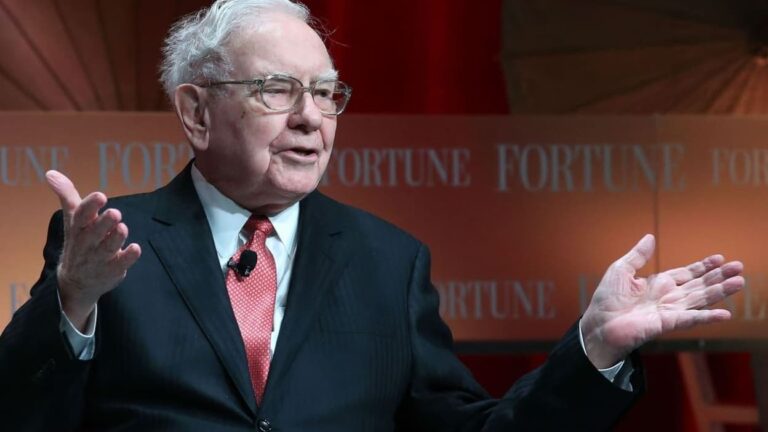
At an age when most people have long stepped away from major decisions, the legendary investor is once again making headlines—not for what he’s buying, but for how deliberately he’s choosing to give back.
A billionaire thinking ahead, not holding back
At 95, Warren Buffett is still doing what he’s done best for decades: planning carefully, thinking long term, and staying remarkably clear-headed about money. This time, though, the focus isn’t on investments—it’s on giving his wealth away, and doing it sooner rather than later.
In a recent letter to shareholders, the legendary investor explained that he wants to accelerate the transfer of his $149 billion fortune to charitable foundations run by his children. His reasoning is simple and pragmatic: he wants them to be fully in charge while they are still actively involved, rather than leaving decisions to future trustees.
Passing the torch—financially and strategically
Buffett also used the letter to address succession at Berkshire Hathaway, the conglomerate he transformed from a struggling textile company into a business valued at around $1 trillion. While he plans to step down as CEO at the end of the year, he will remain chairman, with longtime executive Greg Abel set to take over day-to-day leadership.
Buffett wrote that he intends to keep a significant number of Berkshire’s high-value Class A shares until shareholders develop the same level of trust in Abel that he and his late partner Charlie Munger once commanded. According to CNBC, Buffett has already converted 1,800 Class A shares into roughly 2.7 million Class B shares, donating them—worth more than $1.3 billion—to four family foundations.
A philosophy of wealth with purpose
This move fits neatly into Buffett’s long-standing views on money. He has repeatedly said that enormous fortunes should not be inherited outright, but instead used to benefit society. Organizations such as the Giving Pledge, which Buffett co-founded with Bill and Melinda Gates, reflect this belief that wealth carries responsibility.
In his letter, Buffett reassured investors about both his health—saying he feels “generally well”—and Berkshire’s future. He acknowledged that the company’s sheer size limits explosive growth but emphasized its stability, diverse businesses, and resilience. He even reminded shareholders that Berkshire stock has dropped by around 50% on several occasions over the past 60 years—and recovered each time.
Still optimistic, still Buffett
Perhaps most striking is Buffett’s tone. There’s no drama, no grand farewell. Just calm confidence. He warned that markets will remain unpredictable but urged patience, adding that American capitalism has repeatedly proven its strength—and will again.
For someone who built his reputation on long-term thinking, this final chapter feels consistent. Buffett isn’t waiting for history to decide what happens to his fortune. He’s making those decisions himself, carefully, transparently, and with purpose.
At 95, the world’s most famous investor is reminding us that legacy isn’t just about how much you accumulate—but how thoughtfully you let go.