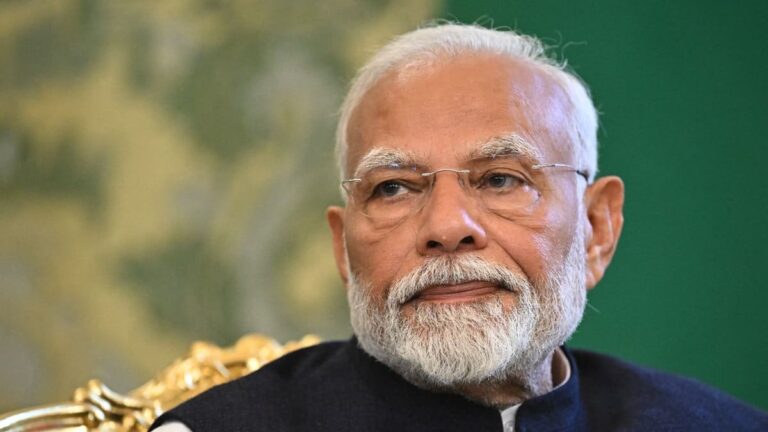
As headlines across Europe and the United States focus on diplomatic freezes and public criticism of Israel, another reality is quietly taking shape thousands of kilometers away. India and Israel, two nations with very different histories but increasingly aligned interests, are deepening a partnership built on strategy, technology, and shared political instincts. And while much of the West distances itself, New Delhi is signing contracts worth billions — reshaping regional power balances along the way.
India Doubles Down on Defense Cooperation
Over the span of just a few weeks, India approved an extraordinary series of military contracts with Israel:
– $3.3 billion for assault rifles
– Nearly $900 million for refueling aircraft
– Another $4 billion for rockets and missile systems
For Prime Minister Narendra Modi, these purchases serve two purposes. First, they strengthen India’s military in its long-standing rivalry with Pakistan. Second, they align with the core of his Make in India strategy, which pushes foreign partners to manufacture directly on Indian soil. Israel has eagerly complied, creating subsidiaries and local production hubs to secure access to one of the world’s fastest-growing defense markets.
As a result, Israel has become one of India’s most essential arms suppliers — a dramatic shift from just a decade ago.
Israel Finds a Strategic Lifeline
The partnership isn’t just lucrative; it’s timely. Since the war in Gaza, Israel has experienced increased political isolation, especially from parts of Europe. India, however, offers something rare in this moment: a reliable, discreet, and politically aligned customer.
According to defense analysts cited by the Stockholm International Peace Research Institute (SIPRI), India now accounts for roughly one-third of Israel’s arms exports. That revenue provides crucial funding for Israel’s high-tech defense research, especially as it faces restrictions in several Western markets.
For Jerusalem, it’s more than a business opportunity — it’s a financial and diplomatic anchoring point.
Beyond Weapons: A Broadening Alliance
The cooperation between New Delhi and Tel Aviv now spans far beyond defense. Trade between the two nations surpassed $6.5 billion in 2024 — quadruple the volume of ten years prior. Last month, the two governments signed a flagship agreement to triple trade by 2030.
The logic is simple: the countries are highly complementary.
- India, with its 1.4 billion citizens, needs agricultural security and water management solutions.
- Israel, a global leader in precision irrigation, agri-tech, and cybersecurity, offers exactly that.
In return, Israel gains access to a massive, fast-expanding market hungry for innovation.
A Diplomatic Gamble — and a Calculated One
While many Western nations suspended or froze cooperation with Israel amid ongoing accusations of war crimes, India chose the opposite path. Modi has repeatedly welcomed Benjamin Netanyahu with full honors, a gesture that has raised eyebrows in European capitals but reflects New Delhi’s doctrine of strategic autonomy.
India’s message is clear: it will not let Western pressure dictate its foreign policy.
Shared Ideological Ground
The alliance is also ideological. Historically, India championed the Palestinian cause under Nehru. Today, under Modi, the tone has shifted dramatically.
Both India and Israel are majority-religion states navigating tensions with large Muslim minorities. For many within India’s Hindu nationalist movement, Israel’s hardline security posture is seen as a model. On social media, hashtags like #HindusWithIsrael underscore this cultural and political alignment.
It’s not just business binding the two nations — it’s a shared worldview.
A Quiet but Powerful Partnership
While the West debates sanctions, diplomatic pressure, and disengagement, India and Israel are building one of the most significant — and least publicized — strategic relationships of the decade. Defense, technology, trade, ideology: all the building blocks of a long-term alliance are now in place.
In the shadows of global politics, two countries are quietly redrawing the map of influence — and they’re doing it on their own terms.