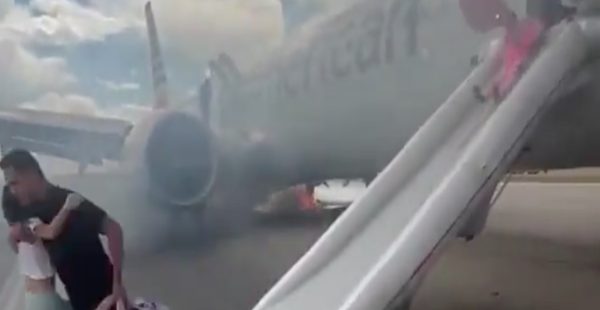
Most frequent flyers can recite the safety briefing by heart, yet when panic strikes, instinct often takes over. Aviation authorities are now sounding the alarm over one habit that keeps reappearing in emergencies and it is far from harmless. A new push aims to remind passengers that in a crisis, seconds matter more than possessions.
A Safety Message Too Often Ignored
The issue is disarmingly simple. During an emergency evacuation, passengers must leave their carry on bags behind. According to the Federal Aviation Administration, this rule is still widely ignored, despite being repeated on safety cards and in cabin announcements.
In September 2025, the agency released a new safety alert urging US airlines to sharpen how they communicate this message. Investigators have documented repeated cases of travellers reaching for overhead lockers while smoke fills the cabin or alarms are sounding. In real terms, this behaviour leads to blocked aisles, damaged evacuation slides, and dangerous delays.
Anyone who has ever tried to exit a packed train knows how quickly movement slows when people stop to retrieve belongings. In an aircraft, the consequences are far more serious.
Why Carry On Bags Put Lives At Risk
Aviation safety experts are blunt about the danger. When passengers pull luggage from overhead bins, bags can fall, injuring others. Worse still, wheeled cases can puncture inflatable slides, rendering an exit unusable.
International standards set by the International Civil Aviation Organization require that an aircraft be evacuated within 90 seconds, even if only half the exits are available. In controlled tests this target is challenging. In real emergencies, with fear, smoke, and confusion, it becomes even harder to achieve.
Investigations into past accidents worldwide show a clear pattern. When passengers pause to collect personal items, evacuation times increase and injury rates climb. One widely discussed case in 2019 involved passengers photographed clutching suitcases during an evacuation in Moscow. Similar scenes have since been documented across Europe, Asia, and North America, underlining that this is a global safety issue, not a cultural quirk.
How Airlines Are Being Asked To Respond
The FAA’s alert does not introduce new laws, but it carries significant weight. Safety alerts are routinely used by inspectors when assessing airline procedures, making them hard to ignore.
Airlines are being encouraged to revisit several areas at once. Cabin crew training is high on the list, with a stronger emphasis on assertive commands during evacuations. Safety demonstrations and briefing cards may be redesigned to make the message unmistakable. Simulation exercises are also expected to include scenarios where passengers attempt to take bags, so crews can practise stopping them quickly.
Beyond the aircraft cabin, airports may also play a role. Clear signage, short video messages, and universally understood pictograms are among the tools recommended to reinforce the idea before passengers even board.
A Rule Worth Remembering Before You Fly
From a passenger perspective, the psychology is understandable. In stressful moments, people cling to passports, phones, and medication. I once watched a fellow traveller hesitate at an exit during a minor onboard incident, torn between leaving and grabbing a laptop bag. A flight attendant’s sharp command cut through the moment and kept the line moving.
Safety organisations consistently stress that personal belongings are replaceable. Lives are not. Groups such as the National Transportation Safety Board have long highlighted that small delays can have fatal consequences in fires or smoke filled cabins.
The renewed focus from regulators is ultimately about clarity. When alarms sound and adrenaline surges, passengers should not be making judgement calls. The instruction must already be clear in their minds.
Leave everything behind. Move fast. Help the flow. It is a simple rule, but one that can make the difference between chaos and survival.