Troubled Waters: A Radioactive Puzzle in Manila Bay
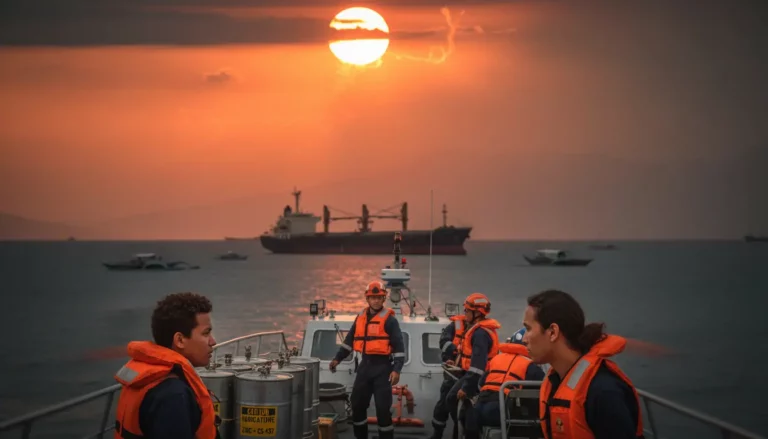
On Friday, October 31, a Philippine nuclear official announced that more than 20 containers of radioactive zinc have been stuck offshore for over a week. No one, it seems, is eager to take them in. During a press briefing, the official urged for a quick solution regarding their disposal, nodding to the awkward stand-off that has left shipping and environmental authorities scratching their heads.
It all started when traces of Cesium 137, a radioactive isotope, were detected in 23 containers while they were in Indonesia. According to a Jakarta official, Indonesian authorities promptly “rejected and re-exported” the containers, sending them back to the Philippines—their original point of departure.
Since October 20, the containers have remained anchored in Manila Bay. As if the radioactive standoff wasn’t enough, a legal dispute has broken out between local authorities and Zannwann International Trading Corp, the company accused of being behind the shipment.
Radioactive Fallout: Who’s Responsible?
The situation, according to one official, is a real “puzzle”—but not, he assured, something worth panicking about. “This is not a national emergency. It’s a problem that can probably be solved,” he said, emphasizing that the detected radiation levels weren’t very high.
The contaminated zinc dust at the center of the dispute is a by-product of steel production. Zannwann International Trading Corp exported it after purchasing it from the metals recycler Steel Asia, explained Mr. Arcilla. The whole episode has now led to Steel Asia temporarily suspending operations at its scrap recycling plant.
But Steel Asia is not taking the blame lying down. The company has dismissed the conclusions of the Philippine Nuclear Research Institute (PNRI) as “baseless and unscientific”, insisting the shipment does not belong to them. AFP attempted to reach Zannwann International Trading Corp, but the company has not responded.
Regional Repercussions and Recent Scandals
Indonesia, for its part, rejected the containers last month during an especially sensitive time—amid a scandal involving radioactive contamination in several food products. Suspicion quickly fell on imported scrap metal as a potential culprit behind the pollution.
The radioactive cargo controversy comes on the heels of other food safety scares. The United States Food and Drug Administration (FDA) recently announced recalls of frozen shrimp and cloves imported from Indonesia, after finding traces of Cesium 137 in those products.
Cesium 137: Risks and Everyday Uses
- The FDA warns that prolonged exposure to Cesium 137, even at low doses, increases the risk of cancer.
- Despite its notoriety, Cesium 137 is also used in a range of medical and industrial applications.
This unusual journey for a radioactive shipment has left authorities, companies, and the public alike awaiting answers—and hoping, perhaps, that those containers find a safe resting place sooner rather than later. Until then, Manila Bay hosts one of the world’s more peculiar maritime standoffs—one where no port wants to roll out the welcome mat.