
Hydrogen has long been described as one of the most promising energy carriers for a low-carbon future. Yet in everyday conversations about cleaner cars, the spotlight often falls on batteries rather than engines.
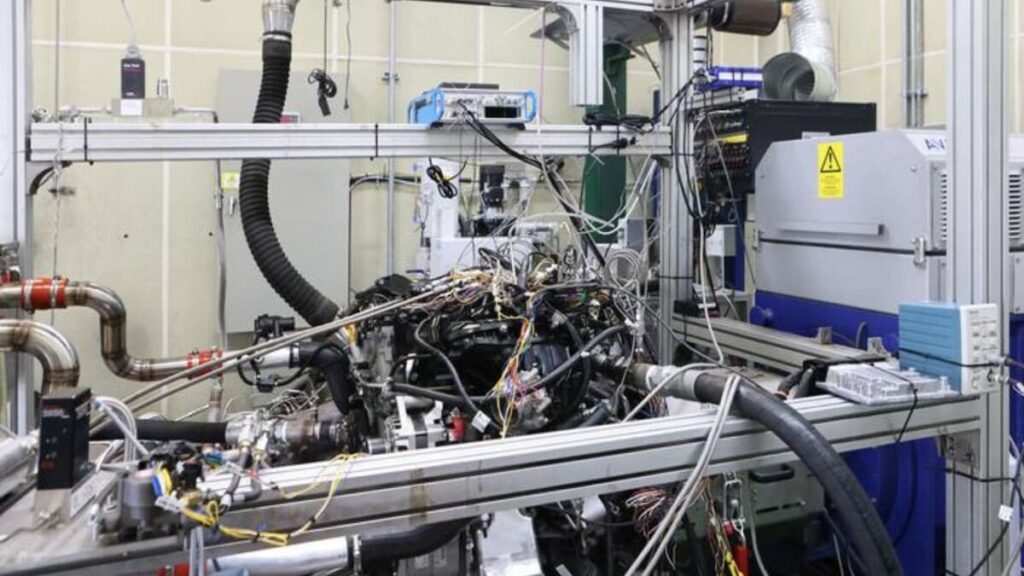
The key innovation lies in the combustion strategy used by the engine. Researchers describe the system as relying on a pre-mixed combustion process, which allows hydrogen and air to mix efficiently before ignition.
In simplified terms, the process helps achieve ultra-lean combustion—meaning the fuel burns with a large amount of air. The advantage is that the engine can regulate power output by adjusting the amount of hydrogen injected rather than restricting incoming air.
For drivers unfamiliar with engine mechanics, think of it like breathing through a wide-open airway rather than a partially blocked one. Because the intake airflow is not throttled, the engine avoids a phenomenon known as “pumping loss,” which can reduce efficiency in traditional engines.
This design principle is widely discussed in engine research and is considered one way to improve overall thermal efficiency.
According to the study describing the system, the engine reaches a thermal efficiency of around 40%, a level comparable to some of the most advanced gasoline engines currently used in passenger cars.
Dramatic reductions in carbon and particle emissions
One of the most compelling aspects of hydrogen combustion is its potential to reduce certain emissions associated with fossil fuels.
Because hydrogen contains no carbon, its combustion does not produce carbon dioxide in the same way gasoline or diesel does. However, hydrogen engines can still generate small amounts of nitrogen oxides (NOx) due to the high temperatures involved in combustion.
The research team reports that the new system dramatically lowers pollutants compared with conventional petrol engines. Their results indicate reductions of approximately 98% in carbon dioxide emissions and 90% in fine particles when compared with standard gasoline engines.
Nitrogen oxide levels were also reported to remain below 15 parts per million (ppm), even without additional exhaust after-treatment systems.
For context, “ppm” stands for parts per million, a unit used in scientific measurements to describe extremely small concentrations—essentially one unit of substance for every million units of mixture.
The European Environment Agency (EEA) notes that reducing fine particles and nitrogen oxides remains a key goal for improving air quality in urban areas, where transport emissions are a major contributor.
Could hydrogen combustion become a realistic alternative?
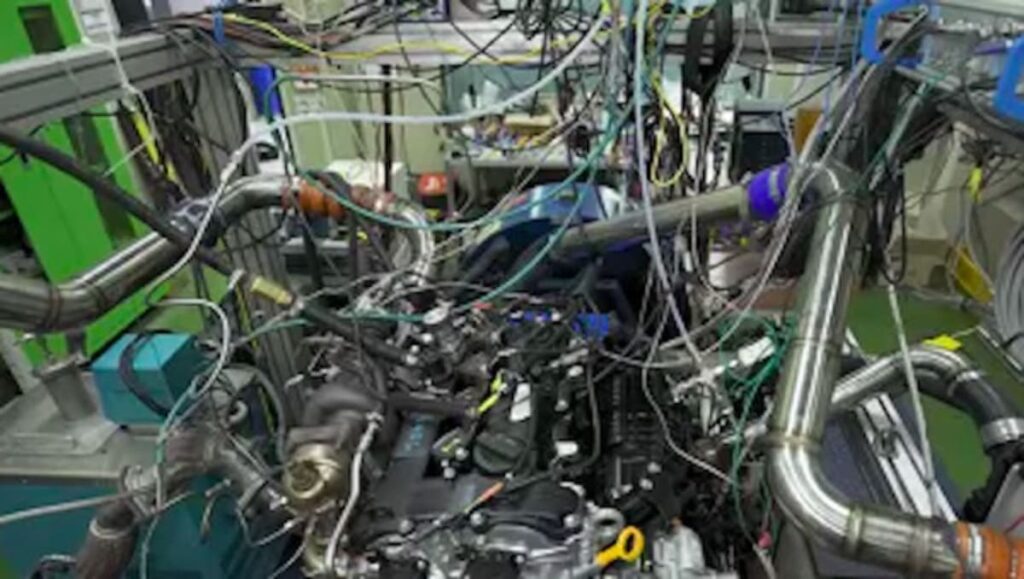
Hydrogen vehicles are not a new concept. Automakers have already experimented with two main approaches: hydrogen fuel cells, which convert hydrogen into electricity, and hydrogen internal combustion engines, which burn the gas directly.
Fuel-cell vehicles such as the Toyota Mirai have already reached limited commercial production, but they rely on entirely different vehicle architectures compared with traditional engines.
By contrast, a hydrogen combustion engine could potentially allow carmakers to reuse decades of engineering knowledge and manufacturing infrastructure.
Still, significant challenges remain before such engines could become widespread.
The biggest obstacle is the hydrogen supply chain. Producing hydrogen in a climate-friendly way typically requires renewable electricity and electrolysis, which currently remains more expensive than conventional fuel production.
The International Renewable Energy Agency (IRENA) estimates that the cost of green hydrogen could fall substantially over the next decade as renewable power becomes cheaper and electrolysis technology scales up.
A technology that still needs to prove itself
For now, the new hydrogen-powered engine remains primarily a research achievement. Laboratory performance and real-world durability can be very different things, especially in the automotive sector.
Automakers will likely need years of testing before committing to large-scale production. Engineers must evaluate how the engine behaves over hundreds of thousands of kilometers, under extreme temperatures, and in everyday driving conditions.
Still, the concept highlights something important: the transition to cleaner mobility may not rely on a single technology. Batteries, hydrogen fuel cells, and hydrogen combustion engines could all play roles depending on the vehicle type and infrastructure available.
If this South Korean design proves scalable, it might offer a fascinating bridge between the past and the future of transportation—combining the familiar mechanics of internal combustion with the promise of zero-carbon fuels.
For now, the race toward sustainable mobility continues, and hydrogen may yet carve out a surprising place under the hood.