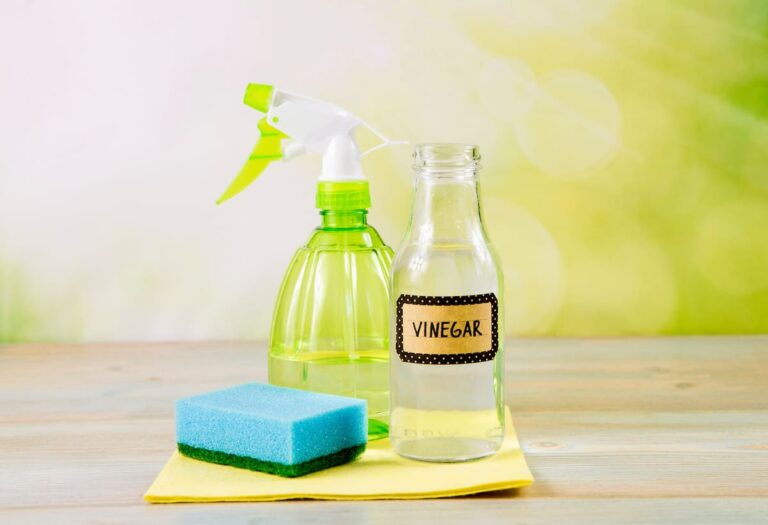
White vinegar has long been celebrated as a simple household miracle. Many people keep a bottle under the sink because it is cheap, natural, and surprisingly effective for everyday cleaning tasks.
Still, as useful as it is, vinegar is not suitable for everything. Professional cleaners and material specialists often warn that its acidity can damage certain surfaces and finishes. Knowing when white vinegar cleaning works – and when it does not – can save you from costly mistakes at home.
Wood surfaces
Wood furniture and countertops can suffer when cleaned with vinegar. The acetic acid in vinegar may gradually strip away protective finishes, leaving the surface dull or patchy.
Over time, repeated use can also dry out the wood fibres themselves. I once watched a friend repeatedly wipe a wooden dining table with vinegar solution – after a few months, the varnish looked noticeably faded. For wooden surfaces, specialists usually recommend mild soaps designed for wood care instead of acidic cleaners.
Stainless steel surfaces
Stainless steel may appear indestructible, but its protective coating can be sensitive to acids. Vinegar can weaken this layer, especially if used frequently or left sitting on the surface.
According to cleaning guidance from appliance manufacturers and organisations such as the American Cleaning Institute, harsh or acidic products can reduce the protective qualities of stainless steel finishes. A dedicated stainless steel cleaner is generally a safer option.
Stone surfaces
Natural stone – including granite, marble, and limestone – is particularly vulnerable to vinegar. The acidity reacts with minerals like calcium carbonate, potentially causing etching or dull spots.
The Natural Stone Institute warns that acidic cleaners are one of the most common causes of surface damage in stone countertops. If you have engineered stone, testing a small hidden area first is always wise before applying any cleaner.
Glass with special coatings
Vinegar can work on standard glass, but caution is needed with specialised glass surfaces. Tinted, treated, or textured glass may react poorly to acidic cleaning agents.
Some window manufacturers note that certain coatings designed to improve insulation or glare resistance can degrade when exposed to strong acidic solutions. In those cases, a gentle glass cleaner is safer than relying on vinegar alone.
Fragile materials
Delicate materials often react badly to vinegar. Fabrics, leather, and silk can stain or lose their finish when exposed to acidic solutions.
Plastics, ceramics, and porcelain may also suffer gradual wear if vinegar is used repeatedly. Cleaning experts frequently recommend testing any product on a small hidden spot first, particularly when dealing with fragile materials.
Electronic devices
One place where vinegar should never be used is electronics. Liquid cleaners can seep into sensitive components, and the acidity may damage internal circuits.
Consumer safety organisations regularly warn against using household liquids on devices such as keyboards, phones, or laptops. Instead, manufacturers typically recommend microfiber cloths or specialised electronics cleaning products designed to avoid moisture damage.
Wood floors
Hardwood floors require careful maintenance, and vinegar is often too harsh for their protective finish. Repeated exposure can break down sealants and dull the natural colour of the wood.
The National Wood Flooring Association advises avoiding acidic cleaners for routine maintenance. Dedicated wood floor solutions are formulated to clean without degrading the protective coating.
Jewellery with gemstones
Many people use vinegar to restore shine to metal jewellery. However, pieces that contain gemstones should be handled with extra care.
Certain stones – especially porous or softer varieties – can become dull or damaged when exposed to acidic solutions. A safer method is to use warm water and mild soap, particularly for delicate jewellery.
Copper surfaces
Copper sometimes appears on cleaning lists that include vinegar because the acid can remove tarnish. However, this method can be risky if the copper has a protective coating.
The acidity may strip that coating, leading to long-term discoloration. When in doubt, it is better to use a cleaner specifically designed for copper care.
Brass surfaces
Brass reacts similarly to copper. Vinegar may temporarily brighten the metal, but it can also weaken the surface and cause dullness over time.
Professional metal restorers usually recommend cleaners formulated specifically for brass. These products remove tarnish without compromising the integrity of the metal.
Conclusion
White vinegar remains one of the most versatile products in household cleaning. It can tackle limescale, odours, and many everyday surfaces with impressive efficiency.
However, because vinegar is acidic, it should be used thoughtfully. Materials like wood, natural stone, delicate fabrics, electronics, and certain metals can be damaged by it. When in doubt, test a small hidden area first or choose a product designed for the specific material you are cleaning.
Used wisely, natural household cleaners like vinegar can simplify your routine – but understanding their limits is just as important as knowing their strengths.