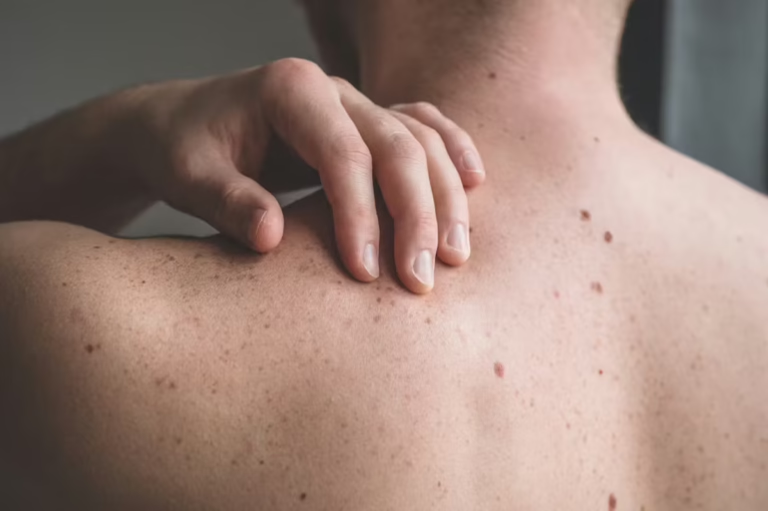
Moles are so common that most of us barely notice them, until a new one appears on an arm, back, or shoulder and suddenly becomes the star of the bathroom mirror inspection. These tiny skin marks are usually harmless, but they can also tell us when it is time to pay closer attention. Understanding where they come from, why they appear, and when to get them checked can make skin health feel far less mysterious.
What exactly is a mole?
A mole, also called a nevus, is a small cluster of pigment producing cells known as melanocytes. Instead of spreading evenly through the skin, these cells gather together, creating a spot that may be brown, black, tan, pink, or close to skin color.
Some moles are flat, others are raised, and a few seem to have a personality of their own. Most are benign, meaning they are not dangerous. Still, as the American Academy of Dermatology advises, you should ‘consult your dermatologist immediately’ if a mole shows warning signs.
Why do moles appear?
Moles can be present at birth, though this is less common, or they can develop during childhood, the teen years, and early adulthood. Many people continue noticing new ones into their 30s.
Several factors can influence how many moles you have. Genetics plays a big role, so if your parents have plenty, you may too. Sun exposure is another major factor, because ultraviolet rays can stimulate pigment cells. The American Cancer Society lists UV exposure, lighter skin, and family history among melanoma risk factors.
Hormonal changes may also affect moles, which is why some people notice changes during pregnancy or puberty.
Do moles actually serve a purpose?
Medically speaking, moles do not seem to have a clear job. They are not little skin shields or secret beauty buttons, charming as that idea might be.
Their real usefulness is more practical: they can act as visible markers. When you know what your usual moles look like, it becomes easier to spot a change. That matters because Mayo Clinic notes that melanoma may first appear as a changing mole or a new unusual looking growth.
Mole, skin tag, or wart?
Not every bump is a mole. Skin tags are soft, harmless growths often found around the neck, eyelids, or underarms. Warts are usually caused by a virus and often appear on hands or feet.
Moles are different because they come from pigment cells. A quick rule of thumb: if it is pigmented and stable, it may be a mole. If it grows quickly, changes shape, itches, bleeds, or looks unlike the others, do not guess. Get it checked.
When should you worry?
Most moles are harmless, but the ABCDE rule is worth remembering:
A is for asymmetry.
B is for irregular border.
C is for changing or uneven color.
D is for diameter, especially larger than a pencil eraser.
E is for evolving, meaning any change in size, shape, color, height, or sensation.
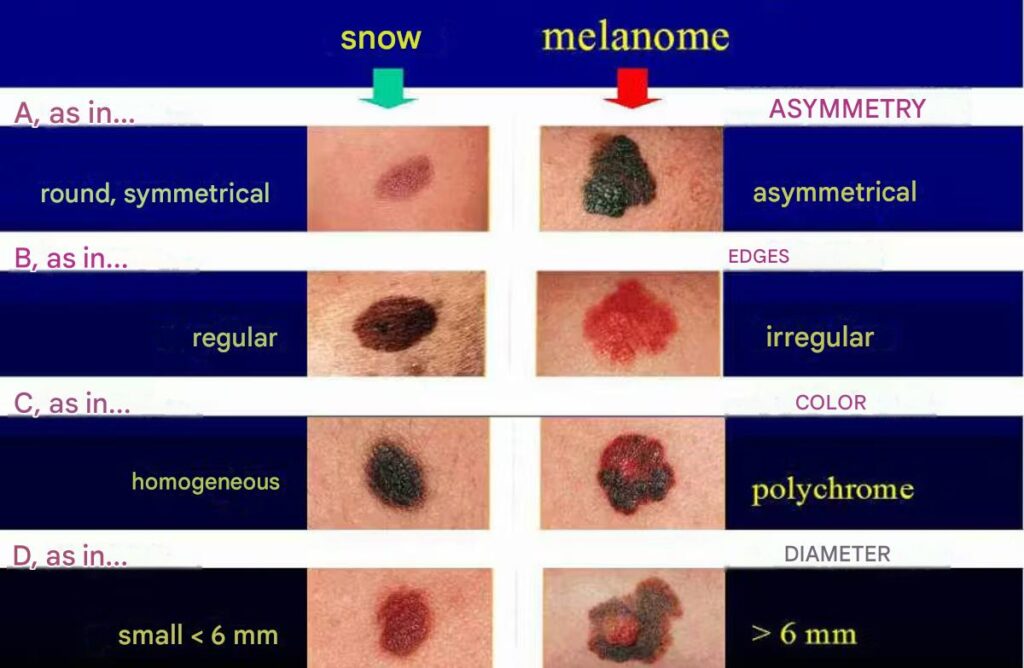
The AAD uses this same ABCDE guide to help people recognize possible melanoma warning signs.
Can moles disappear?
Yes, some moles fade or disappear naturally over time. Others may be damaged by injury. But a mole changing suddenly is not something to ignore.
The best habit is simple: check your skin every month, use daily sunscreen, and book a dermatologist visit if something looks new, odd, or different. Your skin has a long memory, so it is worth treating it like the useful little record keeper it is.