Return to the origin without living off nostalgia.
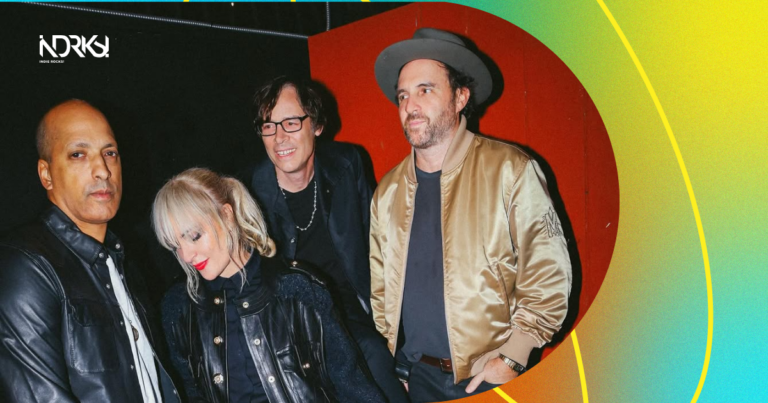
The Canadian band talks about their tenth album, the search for the essence of MetricSG guitars, romanticizing the past and the desire to return to Mexico.
More than two decades after its history began, Metric continues to redefine his own legacy. With a sound that marked an entire generation within the indie rock of the 2000s and a discography that has managed to evolve without losing identity, the Canadian band has just released its tenth studio album: a conscious return to the essence they built during the era of fantasies and Synthetica. In conversation with James Shaw, He spoke about the process of revisiting his past without falling into nostalgia, the construction of his characteristic sound between synthesizers and SG guitars, the challenges of creating a setlist after 10 albums and the possibilities of returning to Mexico soon. Between musical romanticism, obsessions geek and memories of the golden years of indie sleaze, Metric It shows that some bands not only survive the passage of time: they transform it into part of their narrative.
Indie Rocks!: I want to start by talking a little about this new album you released. I was listening to it this morning and I thought it was a beautiful album. I liked it very much.
I want to ask you a little about the process of making this album, what the studio part was like and tell me a little about the behind-the-scenes of this new material.
Metric: Well, first of all, thank you very much. I really appreciate that you listened to it and that you liked it. This is our tenth album, which is crazy. I think when you start a band you never think: “yeah, I'm going to do this for 40 years.” Rather you say: “ok, let's make an album.” And then suddenly decades passed and you're making your tenth album.
It's pretty incredible. And I think for us this album was about embracing the idea of trying to capture the purest possible essence of Metric. We had conversations at the beginning of the process that perhaps the time when we best achieved that was between 2009 and 2012, when we did Fantasies and Synthetica.
So we decided to reunite the same team that made those albums and work together again. We had not collaborated with Gavin Brown nor with John O'Mahony in a long time, so returning to that ethic and that stage of Metric It was a very conscious decision. And while we were making the album, we realized that that was also precisely the theme of the album: looking back and reviewing our entire history, everything we discovered, everything we experienced culturally and what we were a part of.
That's why the album starts with “let me take you back”. Because that's really what we're talking about. And the funny thing is that we ended up talking about it because we literally took ourselves back to that time.
GO!: I love that you mention that because I was just thinking before this interview that if someone did a playlist generational for people in their mid-twenties or early thirties, there was bound to be at least one Metric song in there. I feel that you are part of the soundtrack of an entire generation.
M: Thank you, really. It's funny because when we started talking about these topics, we were also talking about how this doesn't necessarily have to do with nostalgia. That's why we end up using the word romanticize.
Nostalgia is looking back at a memory you experienced. But romanticizing something is different: it can even be something you never really experienced. When we moved to New York in the late '90s, we were romanticizing New York in the '70s. We hadn't even been there, but we imagined it in this beautiful sepia light. And I think that now there are younger generations romanticizing the time when we made records in the 2000s. Maybe they didn't even really live it, but they observe it from that same idealized perspective.
And there is something very special about that.
GO!: I want to go a little into the most nerd of the band. I have an incredible memory of when I saw them in the Metropolitan Theater in 2023. I was just starting to play guitar and the first guitar I saw and wanted to buy was yours. I remember they were using several beautiful SGs on that tour. So I want to ask you a little bit about that part more. geek of the band: the instruments, the sound, all that.
M: I love talking about this. It doesn't happen very often that someone asks me things like that. When we were in Los Angeles in 2002 doing a residency show, we played at the Silver Lake Loungewhich was like this little epicenter of indie sleaze at that time. After the show a guy named Michael Andrews and he told me: “I think you should come to my studio and let me produce your first album.”
He ended up getting us a record deal and produced Old World Underground, Where Are You Now? And I perfectly remember a conversation we had at the beginning. He said that something that made us different was that Emily I had a monosynth completely in front of the stage. At that time bands like Interpol, The Walkmen, The Strokes either Yeah Yeah Yeahs they didn't have a monosynth leading the stage. We do.
AND Mike told us, “they should exploit that because it's what separates them from everyone else. Plus it makes them sound a little like The Cars“We thought it was incredible and we started to go more in that direction. In the first years I played a lot with Fendersbut when I found this old destroyed SG and it started making that sound so “Metric” with her, something clicked.
Since there is only one guitarist in the band and there aren't too many instruments occupying the midrange, the SG filled that frequency perfectly and let the monosynth take the lead. And that's how our sound became.
GO!: What year did you start using the SG?
M: I think it was around 2006 or 2007. I was definitely already using it in the era of fantasiesalthough it still alternated with some Fenders. But I remember someone coming up to me after a show and saying, “that SG sounds amazing, you should use it more.” And little by little it became my main guitar.
Then around 2015 I found the gold SG. And since I found that guitar… I never looked back. I've never played a guitar that felt like this.
GO!: I just want you to know that you are the reason I am obsessed with SG.
M: You should absolutely receive a commission Gibson.
GO!: They should make you one signature.
M: Did you know? I'm going to write to them to see if they want to make a signature gold SG.
GO!: It would be beautiful.
M: Yes, totally.
GO!: Talking a little more about the tour, they are about to start a tour huge in North America. What can we expect from these shows?
M: I think we're still figuring it out. I know what a show will look like Metricand I also know what it will be like stars either Broken Social Sceneand that is already something very exciting in itself. But I think the really interesting thing will start after one or two shows, when we all stop being tense and the collaborations between bands start to emerge naturally.
That's where the magic can really happen. When we started talking about this tour it was like: “yeah, everyone is going to play with everyone all the time.” And then we realized we couldn't play four hours a night because literally someone was going to die. So you also have to respect physical health and leave room for special things to just happen. I think it will be something of a lifetime.
GO!: And how do you make a setlist having 10 discs?
M: Difficult. Very difficult.
I have a spreadsheet that I've been working on for months. All the time I think things like “maybe this song would go better here” or “we could change this one for another one.” But in the end there are songs that, although they are very important for the history of Metricdo not necessarily represent what we are trying to communicate at this specific stage.
So some are automatically left out. And we also know that this will not be the last tour of Metric. There will always be time to return to certain songs.
GO!: Are there plans to return to Mexico?
M: I was literally talking an hour ago with stars and Broken Social Scene and everyone said: “ok, we're going to do 40 shows… but I don't see the word Mexico anywhere. What are we doing?” And I told them: “you're right, we have to solve that.” So yes, we are working on it.
GO!: To close, if you were a fighter entering the ring, What song would you enter with?
M: Great question. I think I would go in with “The Rat” of The Walkmen.
GO!: Would you be a good fighter or a villain?
M: With that song… maybe I would be a villain.
GO!: For someone who has never listened to Metric and wants to get into your discography, what song should I start with?
M: I would say that with “Help I'm Alive”. I think it's probably the most “Metric” what we have done. If you like it, then you have 10 entire albums to explore. It's like when someone tells you: “have you seen this series?” and you say no, and they answer: “you should watch it, because if you like it there are five seasons.”
GO!: And for someone who will go see them live? In what mindset Would you recommend entering the show?
M: With an open heart and ready to party.
GO!: And finally: if you could describe Metric in just three words, what would they be?
M: An energetic release of love.
GO!: I love it. Thank you very much for your time. I am a big fan and I hope to see you soon in Mexico. And I'm also hoping for that SG signature.
M: If I can do it, I owe you one.
GO!: Deal done.
M: Deal done. Thanks, brother. Have a great day.
Stay tuned for Indie Rocks! for more details.
TikTok / Instagram / x / Facebook