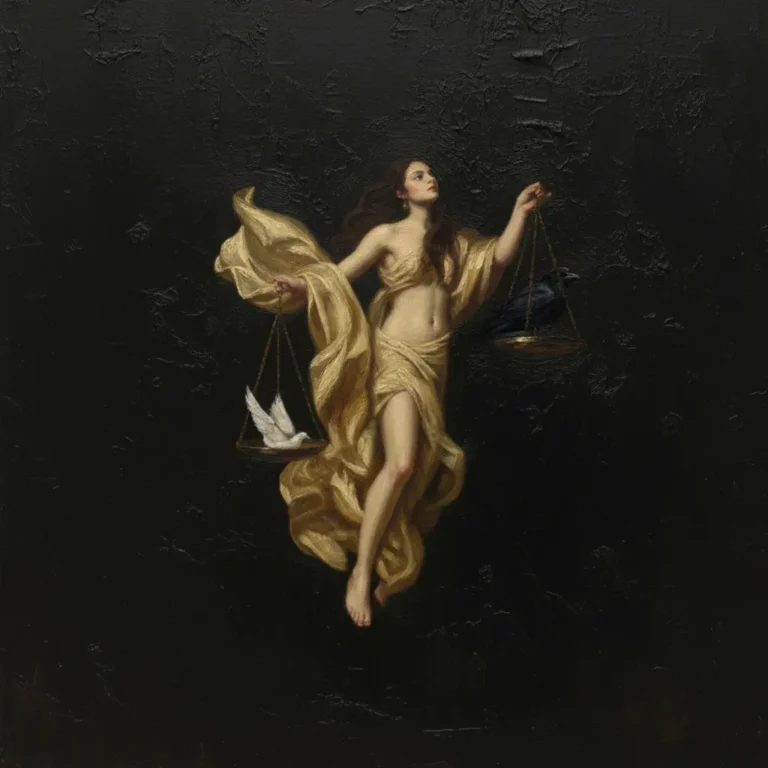
Listening to the first singles of “White Magic”, Francesca Michielin's new album, I felt disoriented.
It's not a necessarily bad feeling, but in this case it was: the kind of disorientation that arises not from complexity but from an excess of intention. Then I read about the conceptual project around which it was built, and the disorientation became clearer.
Francesca has built a concept album around a medieval female imaginary: witches, moons, rituals, popular legends, unconventional figures. All crossed by irony, darkness, esoteric symbolism, desire for escape. A personal narrative universe, suspended between reality and fantasy. On paper it works. In practice, the sensation is that of an identity frantically sought rather than found, of an updating of the medieval romantic imagination which at times appears forced, almost anachronistic in the way in which it tries to graft that lexicon onto contemporary narratives.
Part of the album was born from a trip to London and a meeting with David Kosten, a producer who worked with Bat for Lashes. Francesca said it was a match she had dreamed of since the beginning of her career. You can hear: the sounds of White Magic they move between dungeon synth, fantasy suggestions and pop from the 1980s, with references to Kate Bush, Enya, but also to Elisa of the most ambitious albums. A recognizable sound perimeter, perhaps too much so.
I listened to the record three times, as I always do. At the first one I was ready to bring out the “critical cleaver”. By the third time I had changed my mind, at least partially.
The disc remains an ambiguous object. Francesca is looking for a new identity and hasn't found it yet, or at least not completely. White Magic it resembles a stage more than an arrival, an episode of a journey still in progress. But it's a worthwhile episode. Getting out of the confines of algorithms, ignoring streaming styles, immersing yourself in a project with its own internal logic even when that logic creaks: it's no small feat. It's not a given.
The “media fire” would be easy. But here the music remains, and the magic potion isn't that bad.
Works!
TRACK BY TRACK
Album manifesto and opening track, “1484” recalls the year of the papal bull which officially started the witch hunt. In this piece Francesca intertwines past and present, using the Middle Ages as a mirror of the contemporary: a world marked by control, fear and the need to conform. “1484” thus becomes a reflection on power, on the mechanisms of exclusion and on the freedom to be imperfect, different, outside the box.
The project's lead single is “A woman can't“, in which the imagery of magic and witchcraft becomes the tool to address the themes of identity, freedom and expectations imposed on women. Between rituals, esoteric symbols and medieval references, the piece reflects with irony and lucidity on the double standard, transforming the figure of the witch into a symbol of autonomy and resistance.
Between references to contemporary pop culture and deliberately grotesque images is inserted “Feral Girl”where Francesca transforms anger and social pressure into liberating energy, overturning the idea of the “perfect girl” and claiming the right to be contradictory and chaotic.
With “Witch Commands” a different and more authentic form of power is celebrated: that of inhabiting one's space in the world with awareness and joy. Color, from a simple element of the game, becomes an expression of identity, plurality and freedom, while the witch transforms into a contemporary figure capable of embodying the courage to be oneself. The song was written on the occasion of Pride Month, a particularly significant moment for Francesca Michielin who this year will be among the ambassadors of Roma Pride together with Levante and Margherita Vicario.
“Litha” / “Summer Solstice” they are symbolically linked to each other and the two songs are inspired by the rituals of the night of San Giovanni and the pagan imagery of the summer solstice. Between bonfires, herbs, wishes entrusted to the moon and references to popular magic, Francesca recounts a moment suspended between celebration and restlessness, where love, vulnerability and freedom coexist in the same night.
“The song of the Anguane” it moves between fog, lagoon and waterways, evoking an imaginary suspended between fairy tale and mystery. More than telling a fantastic creature, the song explores the charm of ambiguity and transformation through an elusive, fascinating female figure deeply linked to nature. The song was also born as a tribute to “Il canto dell'anguana” by Patrizia Laquidara who also took care of the vocal production of the song with Francesca.
With “White Magic, Black Magic” the album addresses the theme of ambivalence. Built on continuous sonic and emotional contrasts, the track reflects on the ambiguity of choices and the impossibility of clearly dividing good and evil. Between Gregorian chant, dissonances and suspended atmospheres, Francesca stages an internal conflict that runs through the entire project: the desire to understand who to be, but above all what not to become.
SCORE: 6.90
TO LISTEN NOW
1484 – Litha – Summer Solstice
TO BE SKIPPED IMMEDIATELY
White Magic, Black Magic maybe a little too much
TRACKLIST
1 1484
2 A woman cannot
3 The song of the anguane
4 Feral Girl
5 Witch Commands
6 Litha
7 Summer Solstice
8 White Magic, Black Magic