Apple-Music-The-Zane-Lowe-Show-2026
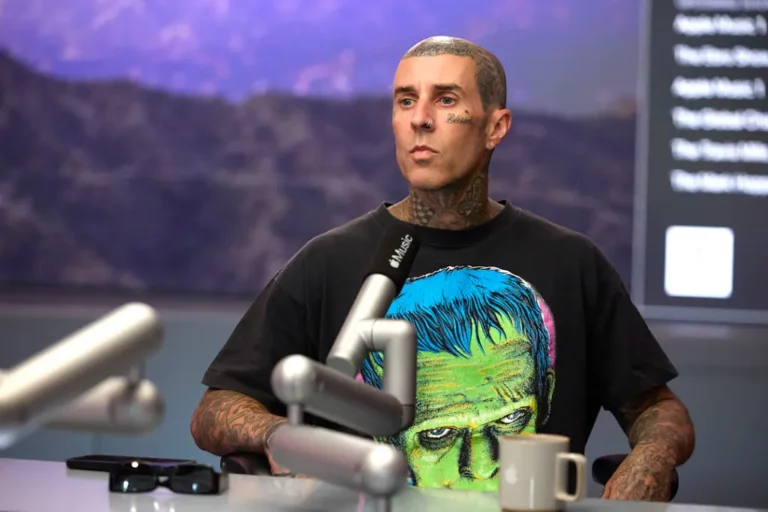
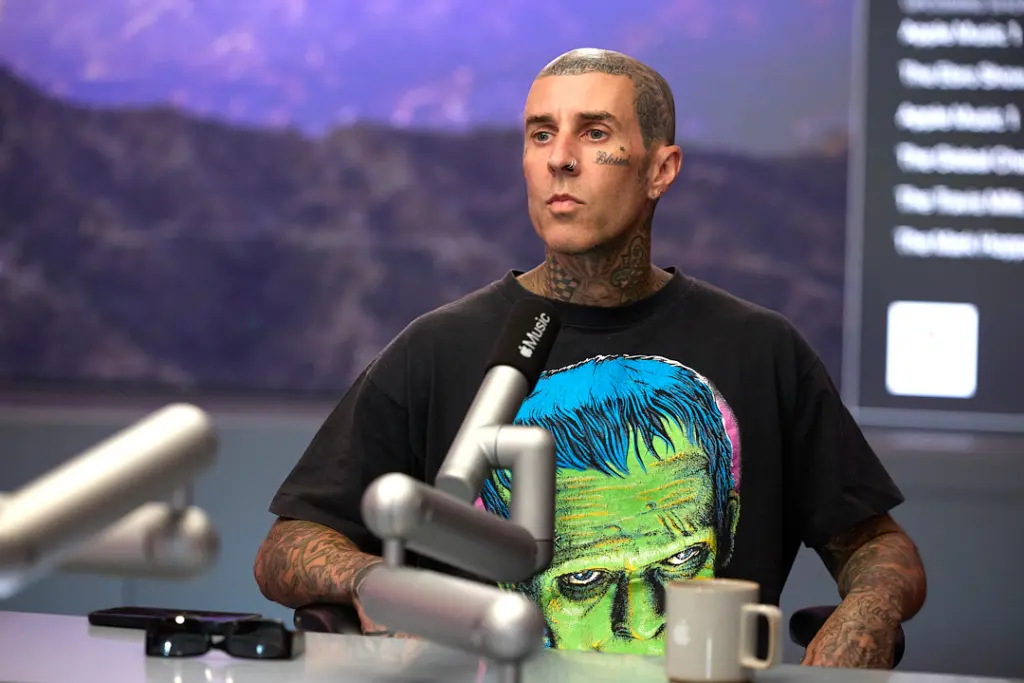
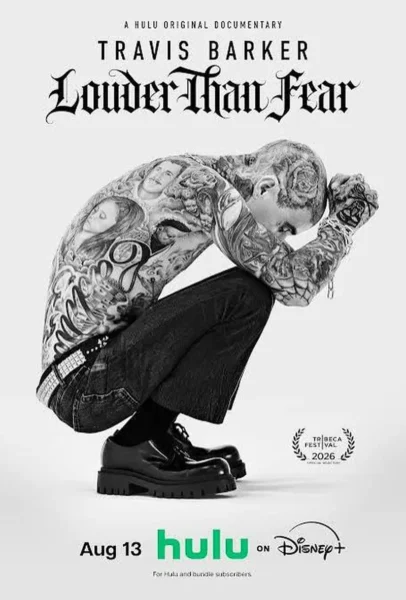
Travis Barker appeared on The Zane Lowe Show on Apple Music to talk about his documentary “Travis Barker: Louder Than Fear,” which took nearly 10 years to make.
During the conversation, Travis opens up about becoming a father and the importance of being a good dad, his relationship with drums and how it became therapy for him, his ongoing relationship with the fear of flying following his plane crash, how post-traumatic therapy helped him, quitting drugs, and his relationships with Blink-182.
THE INTERVIEW
Travis Barker on why he wanted to make his documentary “Travis Barker: Louder Than Fear”
It all started right after I finished my book, when it came out in bookstores. That was the beginning. I thought it would be nice to tell myself, especially since I came really close to not being here anymore. I said to myself, “It would be great to share my story with the documentary, doing it in an even more in-depth way than the book.” At that time my mentality was like, “Hey, I’m the only one left, I feel like I could leave at any moment.” I thought there were a lot of useful lessons to be learned from my documentary. I wanted to show that even if you come from a small town, your family has no money and you grew up with very little, you can still dream, achieve your goals and make it, as long as you keep pushing. And then there’s the story of pure survival: whether it’s my mother’s disappearance or my plane crash, you end up with a choice. You can curl up in a ball, give up and let the world overwhelm you, or you can fight and get back up even stronger than before.
Travis Barker on the importance of being a good dad
I had great parents. My mom and dad were amazing. It didn’t take me long to realize that I was a great dad and that I wanted to be the best dad I could and be as close to my kids as my mom and dad were to me. So I just lived for that. It was the most important thing in my life once I had kids. I’ve never looked back. If anything, it was really difficult. I almost had an identity crisis once I had my kids because I was this person who didn’t care and just went on tour and smoked and did drugs and took pills, or whatever. And then I have kids and I’m like, “Oh, I have to change things now because all I want to do is be alive for them and be healthy for them.
Travis Barker on his relationship with drums and how it’s therapy for him
I can say it’s a form of therapy. It’s therapeutic for me. When I go to play, if I play every day — even just 30 minutes a day — I feel so much better. I feel like I’ve communicated or expressed myself in a way that I can’t with words, even with my wife or kids. And it’s something really special. It’s really a different form of communication and an alternative way of expressing oneself… For me it’s an extension of my body, without it I feel almost naked. I don’t know if you’ve ever read or listened to Tim Grover and his book Relentless, but he explains that some people have to wear a mask or persona to go on stage or face the audience. I’m the exact opposite: I have to put on a mask to stay away from the drums, to come here, to go get coffee or to go anywhere without my drumsticks. When I’m on the drums, however, it’s the opposite: I don’t have to fake anything and I don’t need to get drunk before playing. That’s my home, that’s where I feel really comfortable.
Travis Barker on overcoming his fear of flying after plane crash
I hadn’t confided this to anyone, but my real goal was to fly again. I wanted at all costs to overcome this enormous obstacle that exercised such power over me; I just didn’t know how or when I would do it yet. But I had the firm intention of doing it. Whoever sees the documentary will discover it: for 10 or 15 years I never took a plane. I made six transatlantic crossings to go to Europe — which then meant taking a 10-day ship from New York to London — or I only traveled by bus. In the long run, all this took a very heavy toll. Every time I went on one of those endless journeys, it was like a constant reminder of how much that fear was affecting me… Then, when I started my relationship with Kourtney (Kardashian), I started to open my eyes. One day I said to her, “If there’s a trip you want to take that we can’t get to by car or boat, tell me. Just give me at least 24 hours notice and I’ll get on that plane.”
Travis Barker on quitting drugs after plane crash
Let’s say that my story is interesting… I would like to think that sooner or later I would have come to that decision anyway and that I would have found a path on my own. I’m pretty confident I would have made it, considering how my life has evolved with my family and all my beautiful children. But my real ‘detox’ and rehabilitation were the plane crash and the six months I spent in the burn center. I went from recreational substance abuse to being admitted to a burn center where the doctors couldn’t even adjust my drug therapy, precisely because I had been taking painkillers for so long recreationally. I suffered. I was awake for every operation. I woke up punching the doctors who were saving my life. I had no control over this. So after that experience, when I got out, I never wanted to do drugs again. It was the very last thing I wanted to think about. I couldn’t even take my medications. It seemed like whatever I took had to disappear. And all my doctors were very supportive… and tried to convince me by saying, “There’s nothing wrong with taking these medications,” or whatever, yeah, pain meds, bipolar meds, whatever, because I was struggling a lot with survivor’s guilt and just the trauma of the accident. But I stopped everything and only did post-traumatic therapy, trained a lot and played the drums, most importantly, after I got to a point where I could do it. From then on it was like: I’m done.
Travis Barker on post-traumatic therapy
I think there were several aspects to address. On the one hand there was accepting the losses, the people I had lost in the accident and everything that had happened. On the other hand there was that kind of person we always talk about, the one always running, always moving: the one who says “I do this, I play three shows a day, I play here with DJ AM, I play there with Transplants”, whatever… And then suddenly you find yourself in an accident and the doctors tell you: “We might have to amputate your foot, you have 70% of your body burned, your two friends are dead, the two pilots are dead”. I was completely overwhelmed. I had a great trauma doctor in the hospital, and he was a huge help, because there were times when I had suicidal thoughts and was literally going crazy.
I also became very close to the head of the burn center, Dr. Grossman: an amazing man. And then, as soon as I got to see my kids again, that was absolutely the best post-traumatic therapy I could have had, because it just gave me something to live for. But I still continued to go to therapy for years after the accident.
THE TRAILER
WHERE TO WATCH IT
https://www.disneyplus.com/it-it/browse/entity-fd373a84-b79f-4dc3-93e3-29a6d6d5ec95