Annual fee of $4,000, tickets up to $1,000: In New York’s private clubs, house stars like ANOTR play in front of 250 people. From Chez Margaux to Soho House, which invites Alanis Morissette for the first New York edition of her festival, these closed circles are banking on concerts, when the average price of a ticket has jumped by more than 30 percent in the United States between 2019 and 2024.
Under a red and orange glow, an elegant basement room in the Meatpacking District, the trendy neighborhood of New York, is teeming with people. It’s a little after midnight: women are dancing on velvet benches, men are doing two-steps on a plush merlot-colored carpet, and everyone is moving from one table to another, iced martini in hand, while “Talk to You”, a house track full of groove, resonates through the sound system.
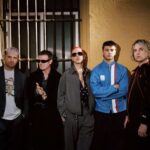
This is one of the latest tracks from ANOTR, a DJ duo from Amsterdam who timed the release of this euphoric anthem for summer. And before these highly sought-after producers flew to Cannes and Ibiza to begin their tour of European evenings, they made a stop, without the slightest announcement, right here, in this members-only club: Chez Margaux.
There’s something surreal about seeing some of house’s most coveted artists perform in front of 250 people, rather than the thousands they usually attract to festival stages and international dates. Imagine the Foo Fighters playing at Irving Plaza before a world tour, or Justin Bieber performing at a tech conference, fresh off the stage at Coachella where he headlined. “We are targeting the top 1 pc of the top 1 pc in terms of DJ and musical talent”entrusted to WECB Riccardo Ambrosio, club events and partnerships director.
Rüfüs Du Sol, Black Coffee, &ME Or PAWSA have already performed in this European-inspired lounge-restaurant, during private and paid concerts of the same type, organized approximately twice per quarter. And the jet-set clientele, accustomed to their European summers, were able to find ANOTR during a pop-up evening organized by the club in Saint-Tropez. But without being a member of Chez Margaux, and without paying a $4,000 annual membership fee as well as a one-time $3,000 entry fee, you would never have known anything about it.
In a world where a $15,000 entry fee is nothing new, exclusive, high-end musical experiences are emerging as the latest way to attract and entertain deep-pocketed members in the increasingly competitive world of private clubs.
The rise of New York’s private clubs
The concept of a members club is nothing new. In New York alone, prestigious academic institutions such as the Harvard Club, the Explorers Club, which focuses on science, or the Union Club, a den of old money predating the American golden age, are still standing. But since 2003 and the arrival in New York of Soho House, from London (its rooftop swimming pool even made an appearance in Sex and the City), we are witnessing the rise of younger private clubs, with catchy names like Maxime’s, ZZ’s or Crane Club, which are flourishing in the wealthiest and liveliest neighborhoods of the city. (The market is so saturated that Vogue has designed a handy guide to determining which club best fits each person’s personality.)
Business at these establishments is booming, and hospitality specialists predict that the popularity of private clubs will only accelerate: in New York alone, applications jumped 42 percent last year, according to Zack Bates, industry expert and marketing strategist.
These clubs have always sought to stay ahead of their competition by recruiting award-winning chefs, hosting hand-picked events, and adorning their interiors with millions of dollars worth of artwork. However, increased competition is now pushing them to specialize to the extreme. Moss, an address dedicated to well-being near Bryant Park, offers heated thermal pools. New York Vintners, in Tribeca, is a well-kept secret among wine lovers and New York Knicks players: its three levels serve as an ultra-confidential storage cellar, performance hall and dining room. KITH, a cult urban fashion brand, has launched KITH Ivy, dedicated to sport, a “luxury padel brand and club” with $25 Erewhon smoothies and a boutique.
Take Zero Bond, a popular members-only hangout for former New York Mayor Eric Adams and billionaires Jeff Bezos, Kim Kardashian and Michael Rubin: the club has created Disco Bébé at its new Las Vegas outpost, a scaled-down version of the city’s multi-story mega-clubs. On opening night, Doja Cat sang before the Chainsmokers performed a DJ set in front of a few hundred people, compared to the thousands they would attract elsewhere on the Strip. “These clubs have gone from 2,000, 3,000 to 6,000 people”explains owner Scott Sartiano, who counts New York institutions 1 Oak and Up & Down to his credit. “(They) grew, grew, grew. It doesn’t suit everyone. We said to ourselves: “What can we do that is good for Zero Bond and its members, and that gives them that feeling that they are looking for?” »
On October 3, Soho House, a historic pillar of the world of private clubs, is organizing its music festival for the first time in New York, a long-standing event. Led by Alanis Morissette, this day, whose $450 ticket is reserved for members and their guests, will bring together an indie rock bill with retro accents with the Flaming Lips, MGMT, Santigold, Questlove and friends, as well as Justine Skye, Pauli the PSM and Hamilton Leithauser. The brand’s clubs across the country also offer discounted concert tickets, intimate conversations led by a moderator and concerts within the clubs themselves, with artists like Norah Jones, 50 Cent, Leon Bridges, The All-American Rejects and Ja Rule. “We have clearly noticed a real thirst among our members… people are really thirsty for these moments to experience”explains Dominique Bellas, head of the group’s member events on a global scale.
Members of Aman New York can enter its Jazz Club, a chic underground room reserved for guests of this five-star establishment. Over the past year, they’ve been treated to a special set by Diplo, and Jack Harlow stopped by to play a stripped-down version of his latest album, Monica. Subject to availability, the general public can also reserve a table to see, among others, Mike Yung, metro singer who became a revelation ofAmerica’s Got Talentthe critically acclaimed jazz drummer and composer Terri Lyne Carrington, or the performer April Varner. There is also a series of residencies, inaugurated by Black Thought of the Roots, whose almost regular evenings “One of Those Nights at The Jazz Club” each time welcome new surprise guests.
Finally, the new Stylus, designed like a “music sanctuary”will be a one-of-a-kind venue built around a state-of-the-art listening room on the Lower East Side in early 2027. For a $10,000 annual membership fee and $5,000 entry fee, the club will feature a high-fidelity audio system designed by Devon Turnbull and offer sound and light therapy sessions at 40 hertz.
The All-American Rejects at Soho House
More and more expensive concerts
This proliferation of exclusive musical events comes as the concert sector reaches a critical point, between exorbitant prices and hyper-commercialization. This summer, for example, at Pacha New York, you had to pay up to $600 per place to ensure access to the “VIP Zone”, separate from the general area which can accommodate more than 5,000 people. And depending on the DJ on the bill (recently Rampa, Black Coffee and ANOTR), a reserved table for a dozen people can require a minimum drink of more than $10,000.
Erika, who asked to be identified only by her first name, says she happily paid more than €1,200 for two tickets to see Rampa take to the slopes of Courchevel, in the French Alps, for an après-ski set organized by Chez Margaux earlier this year.
Of course, exclusivity comes at a high price, but costs are increasing everywhere. Between 2019 and 2024, the average price of a standard concert ticket in the United States rose by more than 30 percent, according to Billboard. Fans must battle dealer bots for tickets, while small independent venues are closing at an alarming rate. If megastars like Harry Styles, Olivia Rodrigo, Noah Kahan or Taylor Swift easily fill stadiums, “blue dot fever” (when a sea of blue dots on online ticketing platforms indicates hundreds of unsold seats) has pushed artists like Kid Cudi, the Pussycat Dolls or the Black Keys to scale back their concerts, or even cancel their tour altogether, citing disappointing ticket sales.
View this post on Instagram
Subscription, accessible version
Some New York nightlife venues have tried to find a happy medium by launching membership packages that focus less on exclusivity than on the desire to go to concerts often. Baby’s All Right sells a necklace adorned with a No. 8 billiard ball that serves as an annual membership for $250, with free admission to all concerts. Subscribers to Nowadays’ Patreon (starting at $5 per month) are guaranteed entry to every party and can skip the line. In Brooklyn, venue Elsewhere has launched several membership tiers: The highest-end season pass, at $45 per month, offers the member and one guest unlimited free admission to concerts, spots on the VIP guest list and invitations to private events.
As concerts increasingly transform into giant spectacles backed by high-profile sponsors, some private clubs see a card to play in the opposite direction: private sets and concerts in reduced format, for those who can afford them.