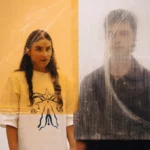
Constant worker.
Cristian Quirante, Alizzztalks about his double life between production and his solo career, why he has always worked with people close to him instead of as a mercenary, and the closing of the cycle of Reckless Driving that brings to Mexico.
Cristian Quiranteknown as Alizzzis one of the most influential producers of music in Spanish of the last decade: his work behind the consoles helped define some of the most important albums of contemporary Iberian pop, before building his own solo career that has now spanned six years. Alizzz He moves between those two worlds with uncommon discipline, dividing his energy in turns between studying for others and performing on stage for himself. On October 23, it is presented at the Sports Palace Pavilionwhich will be the finishing touch to the tour Reckless Driving.
Indie Rocks!: I would like to start by talking about Cristian as a producer. How do you work, what is a day like for you, what have you been up to lately?
Alizzz: What being a producer has meant to me has changed a lot over time. From making songs with headphones like I could at home learning, to making music from home with a little more resources but sending it to people, and currently I don’t do anything if it’s not in the studio with someone. I don’t do work at home for others, I try to be practically always on site because that’s where things happen. When you have a lot of volume to do things you try to optimize it, and nothing ever turns out the same as when you are with someone in the studio.
So there I am, working on records, traveling a little too. The typical thing when you’re working on records is that you can never say anything until the artist tells it, but I’m working on important things.
GO!: I like that evolution, from being with headphones at home to working in a studio. How do you think this change of team has transformed your way of producing or your artistic output over the years?
TO: I have also experienced changes directly in how music is made, what type it is made, what people are looking for. Before I did everything, absolutely everything that was in a song I did with the computer, with little things that I had around. But I think music and trends have been analogized a bit, and now I record a lot of guitarists, pianists, strange things, field sound, more particular things that I didn’t do before. My way has changed a little and I have learned a lot. Nobody has taught me, but I was always attentive to how things were done, and you open up new ways of working. But I think you don’t need anything at all to make music on a computer: you have everything to do almost whatever you want.
GO!: To close this topic, what would you recommend to someone who is starting to produce today? Anything you know now that you wish you knew when you started?
TO: I think it’s something personal, it’s difficult for what works or inspires me to work for someone else. But one of the things that I see around me and that I have experienced is that working with very close people and growing projects is more enriching, easier, and the relationships are simpler. When you have a bond that is not simply going to Los Angeles one day to do a session here and another with the other, but working with people you trust and making a project grow, I think it is one of the best ways to grow as a producer and to be part of projects in which you believe.
There are very good producers who have decided to pursue a career that is a little more mercenary, many projects at the same time, working with people you don’t know. Especially those in the United States have a lot of problems dividing up the songs, getting paid, everything is a drama. I have been able to save myself that: in general I have always worked with very close people.
GO!: I think it is something very valuable, not being mercenaries. Music is about connections and an art, and sometimes we forget. Even for a pragmatic issue it is easier to do it this way, and it is better for mental health. Now moving on to Alizzz, the artist, how do you intersperse between that facet of producer and that of musician? What are the differences between Cristian in the studio for someone else and Cristian in the studio for Alizzz?
TO: The same thing happens to me again. Although it may seem like a short time ago, it’s been six years since I started my solo career, and I’ve also been changing. At first I tried to do both things at the same time, 100% as a producer and 100% as an artist. I saw that it was impossible, and I also began to do very well as an artist, so I focused a lot of my energy on that. When I go down the processes of releasing a record, turning and starting to go down until you release the next thing, that’s when I get back into production. I notice that I need to focus, no longer for enjoyment, but for something almost pragmatic: focus on this, finish it, enjoy it. At first I tried to do everything, and now I try to give time to each thing, because I don’t want to stop doing either of them. So they’re taking turns right now.
GO!: I see that you are very strategic with timing, and it is rare in artists, where the stereotype is that they are a mess with it.
TO: Yes, my life is very fragmented and I need to have a minimum organization to survive, basically. I have never looked for production projects, they always come to me and I filter them. There are things that I want to do but, since I have a tour and I have to push my solo career, I have to put them on hold. I usually find space for production in the valleys, between tours especially, and between albums when I notice that the cycle is over. As is happening now, I am reaching the end of the cycle of Reckless Drivingwhich is why I do the concerts in Mexico: they are the culmination of the tour, the last ones I’m going to do this cycle. And I’m just growing a lot in studio work as a producer.
I’m also envisioning an end to that production cycle. I’m a little in the middle, but I see that next year I’ll probably lose a little, and I want to get into making my songs and focus again on the solo project.
GO!: It would be great, I think an album of yours would be very nice next year.
TO: It would be very good for me and I really want to do it, but I envision it not for next year. Maybe I’ll make a little pill, hopefully. But next year I think it’s a year of making music more than playing or teaching.
GO!: Tell us about this flourish in Mexico. What do you have prepared? Guests, setlist?
TO: I have quite a few friends in Mexico. When I was there the first time it was Jesse Baezwas Santi of Little Jesus. I remember being introduced to Technicolor Fabrics when they were starting to make music, they were introduced to me as being the Next Big Thingand just like that: they have done incredible. I remain in contact with them. I have people there and I would like to bring friends, have them go out or at least come to the concert and have a few beers, but if they can go out and sing, too.
And I bring the format that we have rotated in the last year, year and a half, made for theaters. Normally I did big venues in Spain, Barcelona and Madrid, and occasionally a big city like Bilbao, and then festivals. But I had always had the thing of doing small venues and being able to tour throughout Spain, and this format has allowed me to do that. It is perfect for traveling far and presenting it in Mexico, who have not seen it either. It is a format that, even if you had seen the concert before, you could see a completely different one. Lots of energy, very close. I think it’s going to be very fun.
GO!: For someone listening to you for the first time, what song do you recommend starting with?
TO: The song that I have listened to the most of the ones I have made, that I can listen to today because it is very difficult for me to listen to what I have already released, and my favorite, I would say is “Sunrise” with Rigoberta Bandiniwho was also recently in Mexico and I know that he has a good fanbase.
GO!: If you were a wrestler entering a ring, what song would you enter with?
TO: I was remembering the Ibai eveningI don’t know if they see it in Mexico. An entry song always sounds like it has to be epic to me, but I see it as kind of ridiculous. I don’t know if I would try to do something else to get into a ring instead of playing a song.
GO!: If you suddenly have time for your fighter phase, it would be interesting. And finally: if you could describe yourself in just three words, what would they be?
TO: I don’t know, maybe a constant worker, and never anything related to creativity. I always believe that I have been better at working hard and paying attention to opportunities that arise, rather than my talent. Well, there is talent too, but I am a worker. That’s all.
GO!: I thank you very much for your time. See you in a month here in Mexico, and good luck in your production projects and in your solo career.
TO: See you very soon. Goodbye, have a good night.