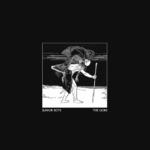
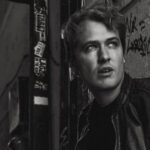
With Soft Apocalypsehis first album, Filip Clements affirms his musical identity after years spent searching for his path. Alongside his father, Magne Furuholmen, member of a-ha, he looks back on his journey, his quest for independence and their relationship to creation. A cross-talk on transmission, artistic freedom and musical heritage.
The French public will be able to discover him on stage on April 1, 2027 at the Trianon, in Paris, opening for the Wombats.
Growing up surrounded by music does not necessarily mean wanting to make it your career. For Filip Clements, son of a-ha member Magne Furuholmen, it was even the opposite for a long time. Eager to build his own identity, he moved away from music, explored other paths and sought to lead a life not determined by his father’s name. But music eventually caught up with him.
Soft Apocalypse is the fruit of this journey. The album brings together songs born from several years of experimentation and marks a turning point in Filip Clements’ way of working. After having written, recorded and produced practically alone for a long time, the musician surrounded himself with collaborators who gave his compositions a broader, organic and cinematographic dimension.
Among them, Martin Terefe and Catherine Marks, two Grammy Award-winning producers, but also Tord Øverland Knudsen, bassist of The Wombats. For Clements, this experience marked his entry into a professional environment where he had to learn to defend his ideas while listening to those of others, without losing sight of the fact that this album remained his.
“I tried to find my own identity,” Filip explains of his younger years. Being the son of a famous musician created expectations that were hard to escape: “Everyone expected me to make music. People asked me: “So, are you going to do some too?” » He therefore chose to distance himself, even if music already occupied an important place in his life.
However, it was this distance that finally brought him back to her. During his military service, he discovered a piano in a church and began spending his nights playing and writing. For Magne, this moment marked the start of a personal journey.
“We try to run away from something, to get as far away from it as possible, and then… it’s a natural process,” Magne remembers. “Everyone must follow their own path. I believe that when you are ready, you are ready. »
Finding your voice far from the family shadow
Filip’s story is not just that of a musician born into a family of musicians. It is also that of a young man who needed to prove, above all to himself, that he could build an independent artistic identity.
Magne recognizes that his son had to go through this stage. Unlike Filip, he never had to grow up in the shadow of someone close to him who had already made a career in music. He therefore understands why his son felt the need to distance himself and discover for himself what he wanted to do.
The irony is that after years of trying to escape music, Filip returned to precisely what he had wanted to escape: a piano, songs, and the desire to make them something of his own.
Initially, his approach was almost artisanal. For years, Filip Clements worked as a true one-man band: he composed, sang, played instruments and produced his songs himself. Magne remembers listening to dozens of them and recognizing in this way of working something from his own youth.
But Soft Apocalypse changed the situation.
Filip first began collaborating with Tord Øverland Knudsen, with whom he claims to have written around sixty songs, before working with Martin Terefe and Catherine Marks. These collaborations have profoundly changed his approach to creation. He gradually focused more on lyrics, letting other musicians contribute production and arrangements.
“It pushed me to write better, because I was surrounded by such talented people,” he says.
The sound of Soft Apocalypse
One of the particularities of the album lies in this meeting between very personal writing and a collectively shaped sound. During his interview with WECB en EspañolFilip Clements particularly emphasizes the contribution of the musicians who accompanied him in the studio.
Drummer Karl Brazil, who has worked with Robbie Williams and James Blunt, and bassist Tord, from The Wombats, helped give the songs an organic dimension, without sacrificing their spontaneity.
“I tried to express what I wanted,” Filip explains. “As we progressed, the songwriting felt cohesive and natural to us. »
For his part, Magne was able to measure the extent of this development. After seeing his son work almost exclusively alone for years, he discovered him in a radically different environment: a large studio, experienced musicians, recognized producers and so many opinions to take into account around each piece.
In this context, we had to learn to make concessions on certain points, while knowing how to defend our choices on others.
Filip admits that the exercise was not always easy, but that it proved particularly educational. “It’s completely different to work alone and make all the decisions,” he explains. He also emphasizes that his collaborators were not content with providing their know-how: they sought above all to help him get the best out of his songs.
“Million Miles Away,” written with Martin Terefe and Catherine Marks, illustrates this experience particularly well. For Clements, working on this track meant confronting imposter syndrome firsthand: walking into a professional studio for the first time and finding himself surrounded by Grammy-winning producers.
But this insecurity also became material to exploit in the song itself.
“It was good to start with that song. It was a way of approaching the subject straight away and channeling it through art,” he explains.
Little by little, his relationship with the producers relaxed and Clements gained confidence, until he felt comfortable enough to defend his own ideas.
When a song changes the course of an album
Some songs from Soft Apocalypse played a decisive role in defining the musical universe of the record. This is particularly the case of the piece which gives it its title.
For Filip Clements, “Soft Apocalypse” opened up a darker and more cinematic dimension. “Million Miles Away” also marked a milestone, pushing the sonic boundaries established with early compositions worked alongside Tord, including “Weightless” and “Corners.”
The challenge was no longer just to build good songs, but to manage to bring them together into a coherent whole, capable of taking the listener from one piece to another.
“How can we make the album feel like a real journey? “, they asked themselves during the recording.
This reflection has largely contributed to shaping the identity of Soft Apocalypse.
The Legacy of “Take On Me”
It’s difficult to chat with Magne Furuholmen without bringing up a-ha. And it’s hard to talk about a-ha without getting to “Take On Me”.
Released in 1985, the song became one of the great pop classics and its success far exceeded that of the group itself. More than forty years later, Furuholmen still meets people of all generations who immediately recognize the song.
What strikes him today is that “Take On Me” no longer really belongs to a-ha.
“We felt that she was heady and that she would open the doors to our universe,” he remembers. But none of the members of the group had imagined that it would become “a kind of universal, intergenerational anthem”.
For Furuholmen, this is one of the peculiarities of popular culture: certain songs end up escaping their creators to enter the lives of others.
“This song doesn’t belong to us at all anymore. It’s just there, somewhere, and it belongs to everyone,” he says.
He acknowledges, however, that the success of “Take On Me” gave a-ha the opportunity to continue his career and build a repertoire which, he believes, contains many other songs deserving more attention.
Father and son: two musicians, two paths
If music ultimately became a meeting point between Magne and Filip, the two men never sought to build a career together. Their musical relationship even seems to be based on respect for each other’s independence.
They met a few times in the studio, especially at the start of Filip’s career, but never developed a real joint project as composers or producers.
The conversation takes a funny turn when Filip points out to his father that they haven’t worked together “since I became good.”
“Now I will try to revive my career thanks to your success. The roles have reversed,” replies Magne.
Behind the joke, this role reversal pretty well sums up their relationship around Soft Apocalypse. Magne is not that father producer who seeks to open doors for his son. He prefers to observe, listen and give his opinion when asked by Filip.
“Filip is in charge,” he explained earlier.
His role is more that of an interlocutor with whom to exchange than of a mentor wishing to impose his vision. A distance which seems to have allowed Clements to build his career without depending on his father’s heritage.
The next step
This studio work has already found its extension on stage. During the spring and summer, Filip Clements went on a short tour, passing through London, several cities in the United Kingdom and Norway. He has also performed at festivals, notably at the Parken Festival, in front of some 5,000 people.
The musician is now expected in France: he will open for the Wombats on April 1, 2027 at the Trianon, in Parison the occasion of the tour celebrating twenty years of the British group’s first album, A Guide to Love, Loss & Desperation. A new step for Clements, who notably collaborated with their bassist, Tord Øverland Knudsen, on Soft Apocalypse.
For Magne, there is already a moment that alone sums up the journey taken by his son: the first time he saw him play in front of an audience, at a festival.
He remembers his nervousness, but above all what he felt when discovering him on stage: “It’s really good, and I’m very proud. »
After years spent searching for who he wanted to be away from music, Filip Clements seems to have finally found his place. Soft Apocalypse does not only mark the release of his first album: it also testifies to a learning experience, that of knowing when to move away from a heritage and when to return to it to make something personal.
And, from the next room, his father seems to be enjoying the process.
By Martin Toro
>>> Listen/Order the album