Bulgaria won with Dara, or rather they won. End of the easy story, start of everything else.
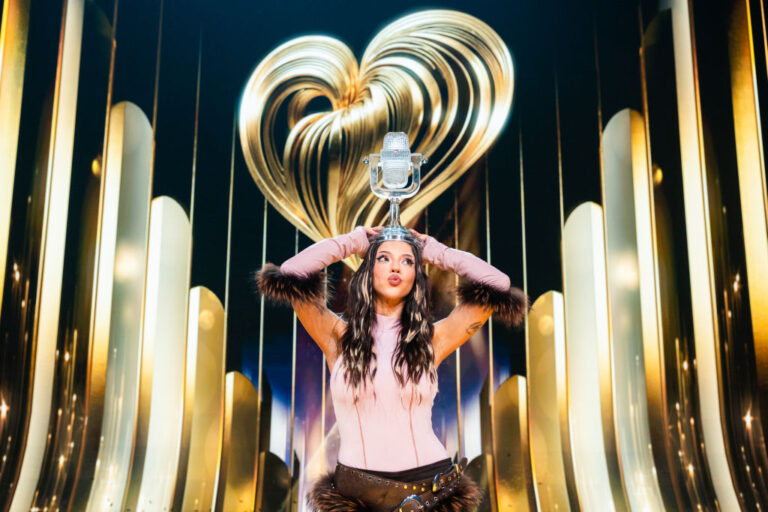
Dara, born Darina Nikolaeva Yotova, a twenty-nine year old from Varna who grew up on X Factor Bulgaria and The Voice, took home the seventieth edition of the Eurovision Song Contest with 516 points and a song called “Bangaranga”. Dance-pop built on Balkan folk, obsessive choreography, an important physicality and a chorus that gets into your head with the same delicacy of a drill.
Both the jury's votes and the televoting agreed, as rarely happens. These things don't happen by chance, they happen when an artist manages to do something that Eurovision, in its most successful format, is able to reward better than any festival, the perfect synthesis between television show and song that works on its own.
Bulgaria had never won before. In 2017 Kristian Kostov finished second with 615 points, an all-time record at the time. This time he closed the accounts. Sofia will host the 2027 edition.
All this happened in the Wiener Stadthalle in Vienna, on an evening that had many other interpretations even without the Bulgarian victory.
Israel came second. I can't imagine what would have happened if he had won. Noam Bettan, French-Israeli singer with the song “Michelle”, collected 343 points with the support of 22 national juries out of 34 and 220 points from public televoting. In the midst of a historic boycott, five countries absent: Ireland, Spain, the Netherlands, Slovenia, Iceland and protests inside and outside the arena, he finished second. The mathematics of European televoting, as already in 2024, has done what it does.
Sarah Louise Bennett / EBU
Alexandra Căpitănescu's Romania with “Choke Me” came third, a song preceded by controversy over the title, saved by public televoting. Fourth Delta Goodrem for Australia with “Eclipse”, an orchestral power ballad which represented the best Australian result in years. Italy is fifth.
There was a certain expectation around Italy, in Vienna. Sal Da Vinci had won Sanremo 2026 with “Per Semper Sì” and was bringing to Vienna something that went beyond the song, he was bringing Neapolitan melody in the full sense to Eurovision, with that musical tradition that still has a huge audience in Italy and which over the decades has resisted every fashion.
The result was 281 points, fifth place, with 134 points from the juries and 147 from televoting. A solid placing, in the sense that no one ends up fifth by chance. Albania awarded him 12 points both from the jury and from televoting; Malta also rewarded Da Vinci with the maximum audience, but not everyone rewarded us. Neighboring Switzerland zero votes and Austria few crumbs.
Yet fifth place, if you are in Italy and you were convinced that the evening could end differently, has the specific flavor of a missed opportunity. Not due to the singer's demerit, Sal was loved by everyone and made the international press dance and applaud, something that generally works as a thermometer of how much an artist knows how to communicate even outside the official scenography. The problem was structural, not executive.
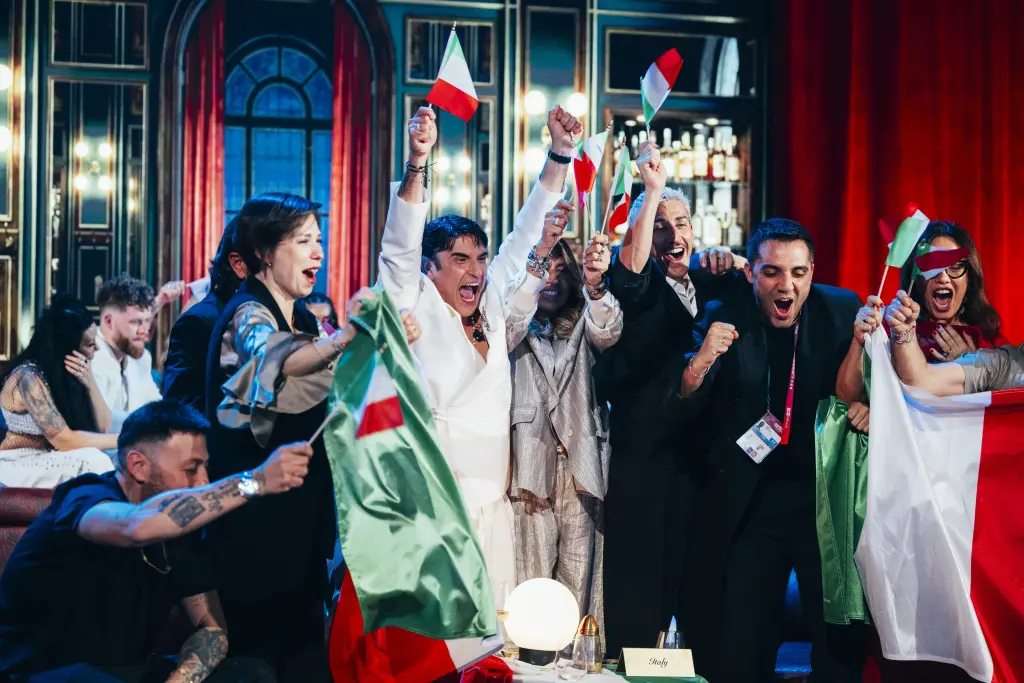
The Neapolitan aesthetic code, elegant, romantic, built on the idea of a great song, functions differently than the language that European televoting rewards with more continuity: the event-song, the stadium anthem, the proposal that is consumed in three minutes with the strength of an advert. Da Vinci brought something more refined and more complicated to sell to an audience that votes in twenty seconds on an app. Fifth place, in light of all this, is a good result. But the approaching thought, that Italy has the tradition and often the votes, and that victory remains out of reach, that remains.
Just one point. From Ukraine, via jury. Zero from the European public.
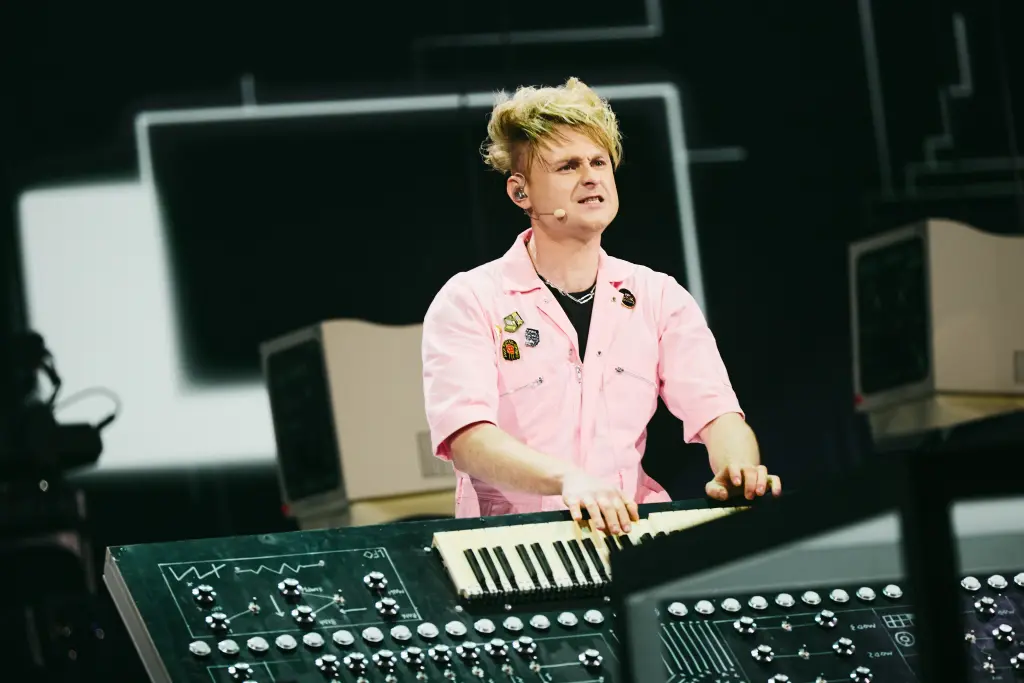
Sam Battle, aka Look Mum No Computer, an independent musician known for his home-made analog synthesizer builds, represented the UK with “Eins, Zwei, Drei” — a synth-pop track sung partly in German, with Battle in a hot pink tracksuit squirming around the stage. He did what he could do. The European public did not respond. Yet again.
It's the fourth year in a row that writers on Eurovision in the UK have faced a meltdown. Since 2010, Great Britain has made the top 10 only once. Since 2020, it has finished at the bottom of the rankings three times. The speech is repeated with a regularity that should embarrass not Battle, but those who built and perpetuated the system that sent him to Vienna.
The BBC reported today the lucid analysis of the problem: No established UK artist wants to touch Eurovision, because the British music industry has over decades developed a culture of contempt towards the contest which works as a preventative deterrent. Will Young, who refused to represent the country in 2015, had used the image of the “poisoned chalice”. It's still that. When someone with a higher profile accepts, like Olly Alexander in 2024, that he had even taken out debts with his label to finance the staging the result is an 18th place with 46 points and the subsequent declaration that the experience had been “brutal”, with the advice to future participants to “find yourself a good therapist”.
This is not Sam Battle's problem. Battle has made an artistic choice consistent with his identity, he builds synthesizers in his studio, he has a YouTube channel with millions of views, he works exactly as independent musical craftsmanship works. The problem is structural: the British selection mechanism does not attract either established artists or professional song-writers oriented towards the European market, and therefore produces candidatures that start out already weakened in the perception of the continent's voters.
To understand what goes wrong with the British model, it is worth looking across the continent.
After Lordi's victory in 2006, Finland experienced fifteen years of Eurovisual anonymity: no top 10, seven eliminations in the semi-finals. A silent crisis, one of those that accumulate without anyone intervening because the competition is treated as a folkloristic appendage of television programming. Then something changed.
Katariina Kähkönen, journalist for MTV Uutiset, describes the attitude of the time with a phrase that sounds familiar: “For many years we were pessimistic. People always said: Finland will never win.” The turning point did not come from a single winning artist, but from a change of mentality in the selection. Matti Myllyaho, producer of the show for Finland and head of UMK — the national selection format active since 2012 — attributes the transformation to Erika Vikman, the singer who in 2020 redesigned the imagination of what it means to participate in Eurovision with artistic credibility and awareness of the format.
From there on: Käärijä with “Cha Cha Cha” second in 2023, a metal-pop song with Angus Young's jacket and a stadium chant, which became one of the most viral moments in the competition's history. This year, Linda Lampenius and Pete Parkkonen finished sixth with “Liekenheiten.” Finland doesn't go to Eurovision by chance and it doesn't go there with the attitude of someone doing the organization a favor. He goes there because he has built an internal ecosystem – a television selection format that works as a showcase, which creates public engagement even before the final – and because he has stopped considering the competition a minor issue.
The parallel with the United Kingdom is embarrassing. The BBC has resources, it has history, it has the advantage of the Big Five which takes it to the final automatically without having to go through the semi-finals. And he continues to waste all of this.
Dara won with 312 points from televoting and 204 from the juries. Romania third with 296 total points, “Choke Me” by Alexandra Căpitănescu which had attracted controversy before even arriving on stage for the title but the European public decided to ignore it.
These two positions on the podium say something precise about the current identity of Eurovision televoting. Bulgaria brought a song that is a “fever dream” — dance-pop with Balkan folk influences, obsessive choreography, a chorus that doesn't stop. Romania brought alternative rock with a provocative title. Both belong to that register that works in the TikTok era: not necessarily the best song, but the one that captures attention in the five seconds in which a voter decides who he is impressed by.
This is not a criticism. It's simply the grammar of competition. Eurovision has never rewarded complexity: it rewarded memorability. ABBA's “Waterloo” was a hit in 1974. “Ne partez pas sans moi” by Céline Dion in 1988 was a ballad built to leave its mark. Loreen's 2012 “Euphoria” was stadium dance pop. The common denominator is not the genre, it is the ability to occupy the listener's head without having decided to. “Bangaranga” succeeds. The title itself functions as a sonic meme.
The tension between this type of song and what professional juries tend to reward is measured exactly here: the professional juries put Bulgaria in first place with 204 points but also reward Australia with 165 and Denmark with 165 — choices of more calibrated taste, more attentive to the construction of the song. Televoting, on the other hand, amplifies exactly where the song is already strong in the competition format. When the jury and televoting converge on the same winner, as happened this evening, the victory is not contestable.
Finally, a consideration on Austria. There is something particularly cruel about the fact that Austria finished the evening with just one point from the judging panel tied with the United Kingdom, in last place while the ORF athletes ran the backstage and kept the production of one of the most complex televised events in the world going.
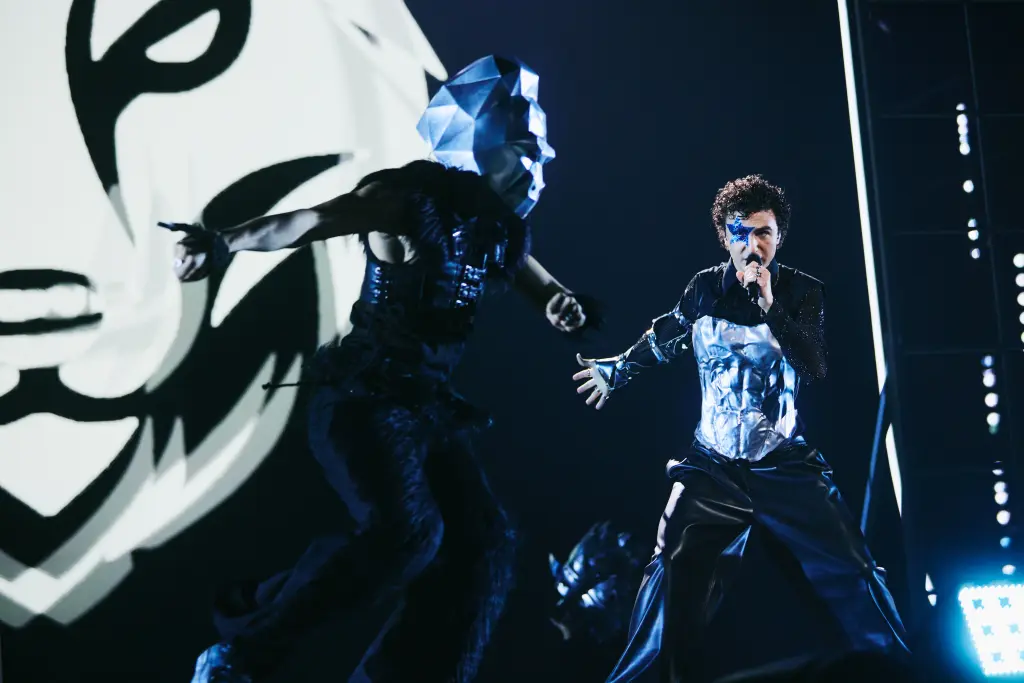
Cosmó, alias Benjamin Gedeon, had brought “Tanzschein” a song that a Euronews reporter had described as “a mix of Eurovisionist kitsch and dark pop” with animal masks, something deliberately strange, in the camp-weird register that in different years (Lordi in 2006, Verka Serduchka in 2007, Hatari in 2019) worked. It didn't work. One point from the jury, zero from the European public: the Austrian version of the worst possible evening, with the host country ending up where the country that got it all wrong normally ends up.
Hosting Eurovision does not protect against internal flop. The history of the competition teaches this. But doing it while your arena is the arena, while your presenters are on stage, while your city is broadcast worldwide for a week that makes more noise than normal.
Germany had a different but not much brighter destiny. The song wasn't bad that's the interesting thing. It wasn't the kind of entry that justifies a finish in the bottom third of the table. But Germany and Eurovision have had an unresolved relationship for at least fifteen years: the internal selection produces applications that do not find the right code to communicate with the European televoting electorate, and the professional juries do not compensate enough. The Big Five guarantee Germany an automatic final, but that guarantee is worth nothing if the song doesn't cut through the noise.
The seventieth edition of the Eurovision Song Contest ends with a victory that no one had predicted, a second place that sparked controversy that will not die down before Sofia 2027, and a last British place that no longer surprises anyone and this is the worst problem.
Musically, Eurovision offered nothing special. An average low level in the style of the competition made up of pop, electro excesses and over-produced ballads : you can find the report cards here.
In the end Bulgaria won. The rest are still open.