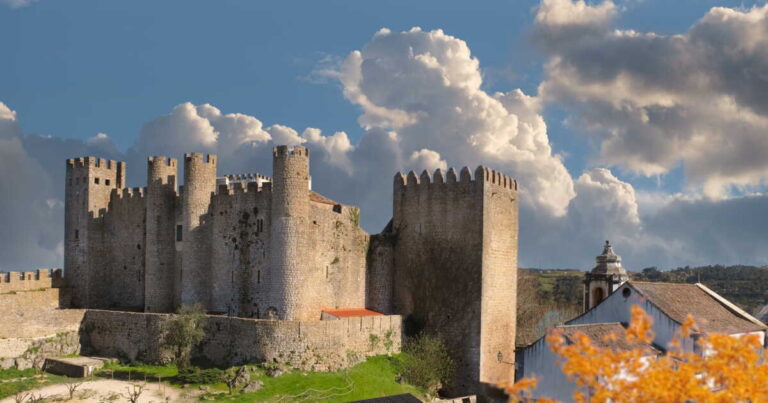
Castles tend to stir up images of gallant knights, grand feasts and stone walls glowing in torchlight. What we rarely picture is the far less glamorous side of daily life: basic bodily needs. Yet for all their grandeur, medieval strongholds still had to deal with the same universal problem every household faces. And without modern plumbing, they relied on systems that were both ingenious, surprisingly practical and occasionally a bit unpleasant.
How medieval castle latrines actually worked
Medieval sanitation often centred around what were known as projecting or overhanging latrines. These structures, built from wood or sometimes stone, jutted out from the castle walls in much the same way as defensive galleries. Unlike their martial counterparts, however, these little cubicles were devoted entirely to one purpose.
The principle was beautifully simple: you sat, gravity did the rest, and the waste dropped into a pit or natural drop zone below. No pipes, no water pressure, no complicated mechanisms — just basic human need met with straightforward medieval engineering. These latrines were popular from the Middle Ages all the way into the nineteenth century, a testament to their effectiveness.
What made these suspended privies so unique?
Though humble in design, they were built with practicality and safety in mind. Some were reserved for nobles and guests, others for staff, craftsmen or soldiers. Their placement along outer walls kept smells at bay and offered some privacy, while also protecting users from rain and wind.
During a siege, these facilities were designed to prevent attackers from taking advantage of structural weaknesses. Lower openings were often reinforced so that enemies couldn’t shoot arrows or slip weapons upward through the gap. Many latrines included wooden lids to reduce odours and small ventilation slits that created a natural airflow — a remarkably effective system long before the age of mechanical ventilation.
In their own earthy way, these spaces echoed the same blend of practicality and defensive thinking that shaped the rest of castle architecture.
Who cleaned the toilets in the Middle Ages?
Naturally, someone had to deal with what built up beneath the privies. Once a year — sometimes more, depending on the size of the household — pits were cleared of accumulated waste. This task fell to professionals known as maîtres Fifi, a name that carried a certain unfortunate reputation, given the nature of their work.
These workers formed a real medieval profession, responsible not only for emptying pits but also for scraping and clearing areas that could not easily be drained. As castles evolved and hygiene practices changed, their trade gradually disappeared. But in their time, they played a vital role in keeping homes and fortresses habitable.
Medieval ingenuity behind everyday life
It is easy to romanticise castle life, but understanding something as mundane as the latrine makes the past feel more human. Behind the stone walls and heroic legends were ordinary people trying to live comfortably and safely within the tools available to them. Their solutions — though primitive by modern standards — were often efficient, well adapted and cleverly thought out.
Next time you tour a castle and admire its battlements, consider the small wooden room hanging quietly over the edge. It tells a story every bit as fascinating as the armour in the great hall: a tale of survival, resourcefulness and the unglamorous realities of medieval life.