Davina Michelle builds AFTERPARTY around a contradiction that pop often tends to remove: you can dance while everything around you falters.
In AFTERPART1, the party becomes an existential choice, a way to affirm life precisely when its fragility becomes impossible to ignore. Freedom, identity, desire and self-acceptance coexist with the awareness of precariousness, without transforming pain into a pose.
The album, out on August 28, is the first part of AFTERPARTY, a project divided into two chapters that focuses on freedom, identity, self-acceptance and awareness of the fragility of existence. The party, in the Dutch pop star’s vision, is not an escape from reality, but a way to face it: dancing, celebrating, desiring and living become acts of awareness.
On the eve of her longest European tour, Davina Michelle tells WECB about the genesis of AFTERPARTY, the relationship with vulnerability, female identity, the political value of freedom and the possibility of tackling profound themes without giving up the immediate pleasure of a pop song.
THE INTERVIEW
The album talks about freedom, identity and self-acceptance, but also about the awareness that life can be fragile. How much has your way of writing changed since you started dealing with this fragility?
I think I’m less afraid of saying exactly what I think. As you become more aware of how fragile life really is, you also realize how much time we waste worrying about things that, ultimately, don’t really matter. Of what others think of us, of whether or not we feel part of something, of whether we are living our life in the “right” way.
I think that’s why my writing has become more direct. I want to talk about the things that really make me feel something, even when they’re uncomfortable or chaotic.AFTERPARTY is about exactly this: life isn’t perfect and it isn’t infinite, so as long as we’re here, we might as well actually live it.
You have defined “AFTERPART1” as your most personal work. Does being more personal necessarily mean being more vulnerable, or have you discovered that vulnerability can become a form of artistic strength?
Definitely the second. For a long time, vulnerability felt like something that meant exposing a part of me that I probably should have protected.
Today, however, I think it is one of the most powerful tools I have as an author. The more I allow myself to be specific and sincere, the more people seem to be able, in some way, to recognize themselves in what I tell.It’s the funny thing about songwriting: sometimes the most personal song becomes the most universal.
In What A Woman address the theme of female identity. How much do you feel the need, today, to question the expectations that still surround the public image of a pop woman?
It’s very important. What A Woman it’s basically my celebration of the many different ways you can be a woman. There is still this strange contradiction where women are asked to be strong, but not too intimidating; sexy, but not too sexual; confident, but at the same time pleasant and reassuring. It’s exhausting.
I don’t want to tell women what a woman should be. The point of the song is precisely that freedom looks different for each of us.
Still Champagne seems to condense the AFTERPARTY philosophy well: don’t drink to forget, but toast to the awareness of the present. What does “celebrate” mean to you when you know life isn’t perfect?
It is precisely in those moments that celebrating takes on meaning for me. Still Champagne comes from a painful moment, but the song isn’t really about sadness. It’s about choosing to celebrate life even knowing it won’t last forever.
Celebrating doesn’t necessarily mean pretending everything is fine. This idea became very important for the whole album.
AFTERPARTY is conceived as a story divided into two chapters. Why did you need to separate the party from the moment the party ends?
Because they are two completely different moods and I wanted to give both of them the necessary space.
AFTERPARTY is the party. She’s loud, impulsive, celebratory and sometimes even a little reckless. It celebrates being a woman, friendship, freedom, sex, life, even those things we don’t traditionally think we need to throw a party for.
Sooner or later, however, the music stops. Everyone goes home. And suddenly you are left alone with your thoughts. That’s where the second chapter begins. It’s the next morning, when you start to wonder what everything that happened really meant.
I love this contrast because I think life is constantly moving between these two places.
There is a particularly interesting phrase in the project presentation: “dancing can be a form of survival”. When did music have this role in your life, even before it became your job?
Music has always been the place where I could turn something I didn’t understand into something I could feel. Even before it became my job, I used music to escape, process what was happening to me, or just change my mood for three minutes.
The European tour will take you to countries with very different audiences and musical cultures. How much does Davina Michelle change when she walks into a room full of people who don’t necessarily share the same cultural background?
I don’t think the cultural differences between various audiences will change me much as a performer. In the end, the music crosses borders quite well and I will go on stage as the same person, wherever we are.
The size of the room will probably make a much bigger difference. My presence on stage naturally changes based on capacity and distance from the audience. A small, intimate show in Paris has a completely different energy than a larger concert in the Netherlands, where I am at home and where the audience already knows me.
The pop industry tends to transform artists into instantly recognizable images. How hard is it to protect the person you are when success begins to build a public version of you?
I think it’s important to remember that the public version of you is only a small part of who you really are. People see the performances, the interviews, the photographs, the numbers, the clothes and naturally build an image around all of this.
But the moment I get home, that world disappears pretty quickly. I have a lot of animals and they definitely help keep me grounded, haha.
AFTERPARTY seems to reject the idea of having to choose between lightness and depth. Why do you think pop still needs to be justified when it wants to talk about something serious through a song that makes you dance?
I honestly don’t know, because some of the greatest pop songs ever written do exactly that. There’s this idea that something has to sound sad in order to be profound, and I don’t agree with that at all.
I like to play with the idea of writing sad lyrics over happy melodies. It makes the songs unpredictable and maintains a certain balance.
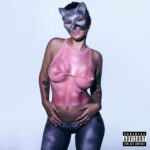
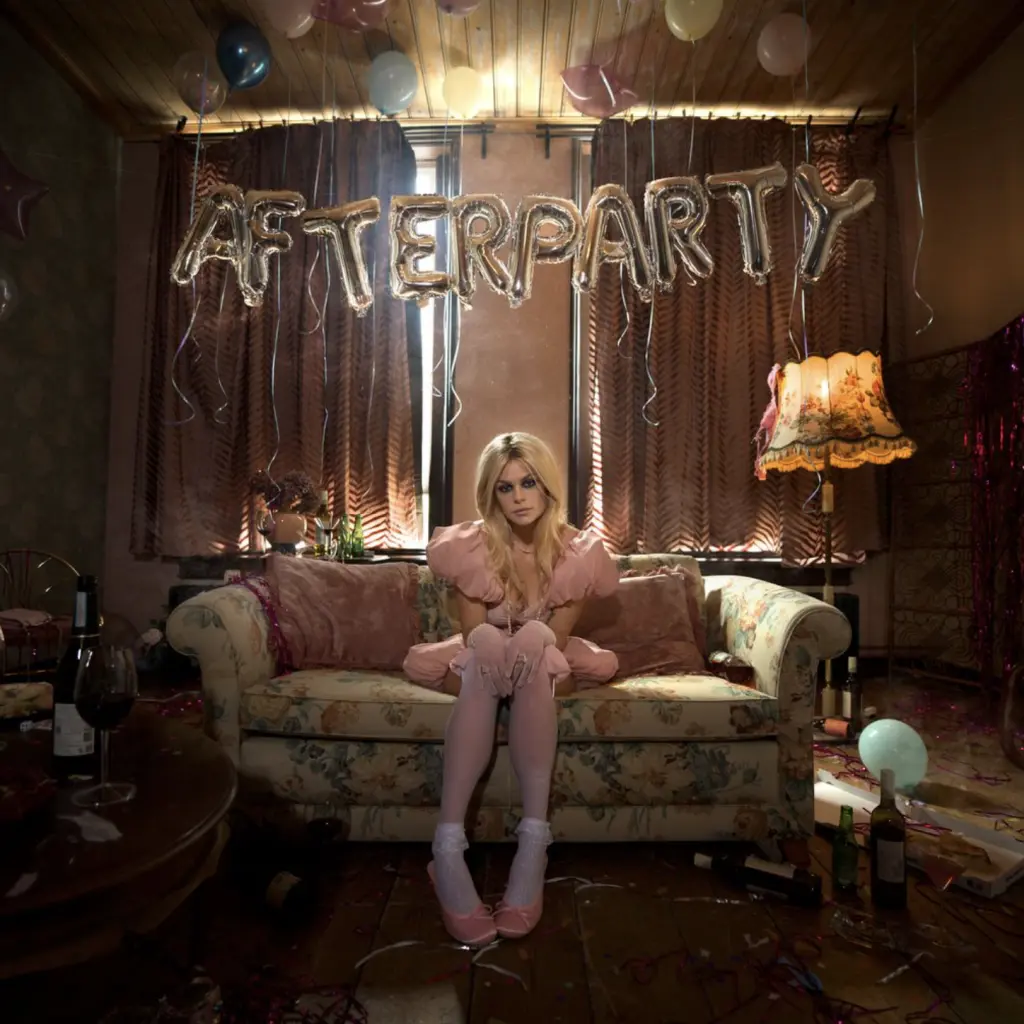
How did the idea for the album cover come about? How does that image convey the contrast between the festive and more reflective dimensions of the album?
The entire visual universe of AFTERPARTY was born from the idea of the morning after a party. I didn’t want the glossy version of the celebration, with perfect champagne glasses and impeccable decorations. I wanted evidence that something had happened: the mess, the smoke, the bottles, the objects left behind.
The party is still visible everywhere, but the feeling has changed. It’s both celebratory and slightly melancholy, and that’s exactly where these two chapters meet.
Do you know Italian music? Is there an Italian artist you would like to collaborate with?
I definitely know some Italian music! I also had the opportunity to make an appearance during Eros Ramazzotti’s concerts and sing with him, which was a really fun experience. It was special to share the stage with such an iconic Italian artist.
And an afterparty question, when the lights are already on: when all the noise around Davina Michelle disappears, what remains?
Big mess, haha. Joke. Probably just remains Michelle. A very normal and imperfect woman who likes animals, makeup and intense lyrics.
ABOUT DAVINA
Few artists have managed to leave such a lasting impression in such a short time as Davina Michelle. With her unique voice, powerful live performances and empowering songs, she has become one of the most successful Dutch artists of her generation, and is now rapidly conquering the international scene.
Since its debut in 2017, Davina Michelle she became one of the most successful Dutch artists of her generation, achieving a record in the Dutch Top 40 with her version of Glen Faria’s Duurt Te Lang: eleven consecutive weeks at number one, five platinum albums and the title of the most successful female artist in the history of the Dutch Top 40.
Since then, she has released numerous hits, performed at the Eurovision Song Contest and the Zandvoort Formula 1 Grand Prix, and shared the stage with artists such as P!NK, Robbie Williams, Maroon 5 and Armin van Buuren.
With over 850 million streams, a rapidly growing international fanbase and the Afterparty Tour 2026, Davina Michelle once again takes a big step towards a lasting international career.
WEB & SOCIAL
https://shop.davinamichelle.com/
https://www.instagram.com/davinamichelleofficial/