
Cinema is heard in Flies.
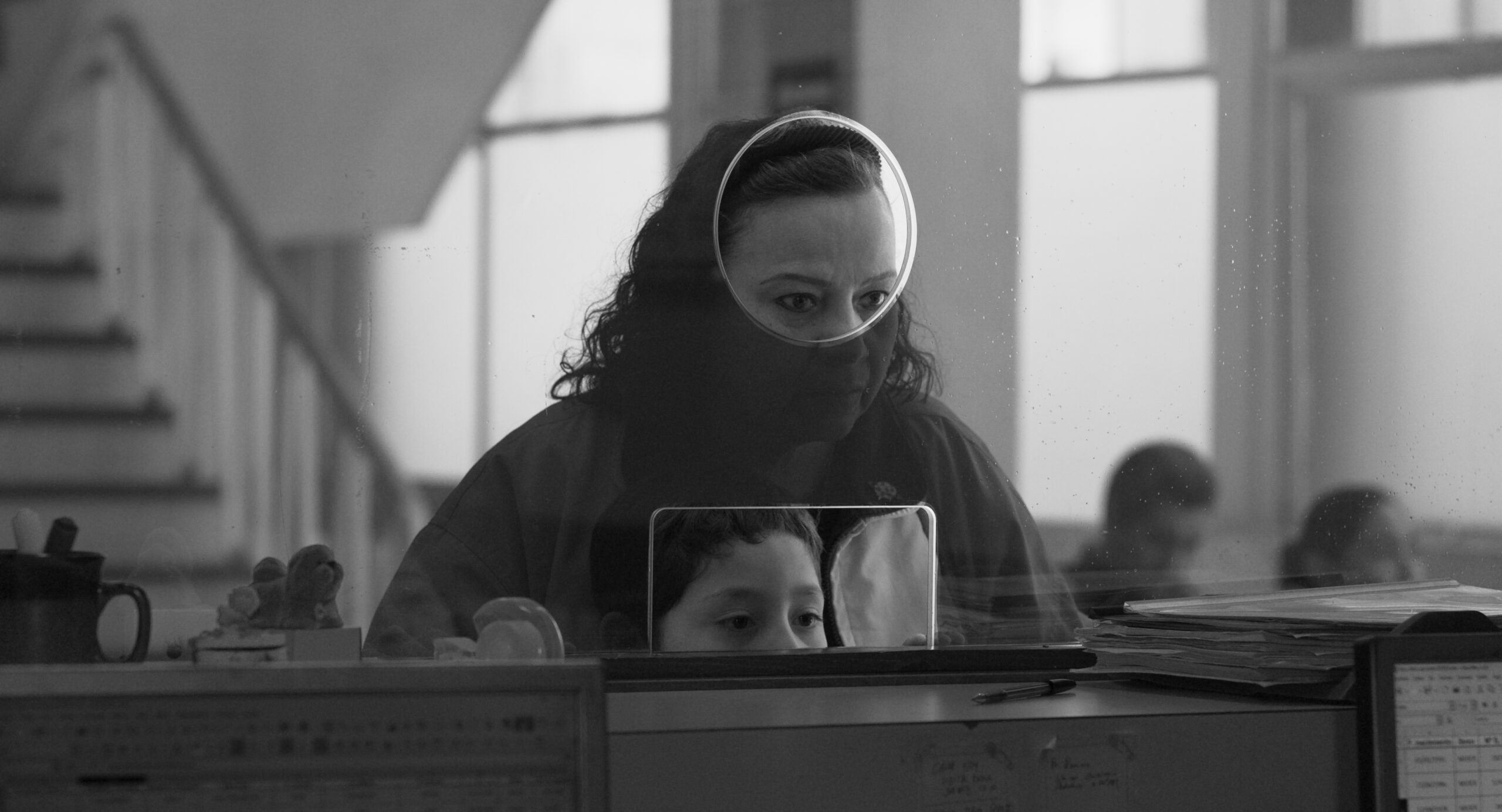
This July it premiered Fliesthe most recent work of the Mexican filmmaker Fernando Eimbcke. It is a feature film celebrated by international critics in the 76th Berlin Film Festivalwhich was part of the Official Selection of the 41° Guadalajara International Film Festival and had a notable presence in the 79th Cannes Film Festival.
In an interview we spoke with Camilo Larawho made the soundtrack for this film, about his relationship with cinema, the mix between being a musician and producing for other works and his perspective on Mexico and cinematographic products.
Indie Rocks! Magazine: To open this conversation, we want to talk about your relationship with cinema, not from a professional perspective—since we know that you have extensive experience in the industry—but from a more personal place. What is your first memory related to cinema? What were the first films that marked your approaches to cinema?
Camilo Lara: Yes, well, the first memories I have are of my parents. I am a southerner from Coyoacán and my parents bought a ticket to go to the international exhibition. So, at the Cineteca, in Coyoacán, we would go for a full month to each show of things. And my parents, in that sense, were very modern and very progressive, something that perhaps today it would be very frowned upon to take a child to see. Clockwork Orange or see a film from Hermosillo, or see films that marked me and that were very powerful as a child. I saw Holy Bloodof Jodorowskythings like that that were very exciting.
That on the one hand. Then, on the other hand, I saw things that one sees on TV and things that one sees in movies, like Ferris Bueller’s Day Off which I love and which seems to me to be one of the films that fundamentally marked me. So, I kind of was fortunate to be able to have both sides, right? Very commercial things; I love Indiana Jonesthings like that; or things that, perhaps because they had parents who were researchers of the UNAM and they were a little more curious, because they took me to see things Kurosawa and more interesting things, things that weren’t necessarily on the radar and that you had to see at the Cineteca.
GO!: I like that you also highlight the importance of these spaces. In that sense, how relevant do you consider the existence of theaters, circuits and exhibition spaces where this type of films are projected, as well as distributors that support them? Now, from your professional experience, how do you experience the reality of this cinema—or this “other cinema,” in quotes—within the industry?
CL: Yes, incredible. Look, 25 years ago it premiered And Your Mom Too and it was the first film that I had to work on as part of making the music.
So, there have been a lot of films, projects, things, and it has always been like, when I get bored of making music, I get bored of producing or something like that, there is always cinema, which gives me something else. Cinema gives me a totally different meaning from what I regularly do with my music. When I play and make my own records, I make them for myself and I don’t consult or have many opinions.
And when I do music for films, yes, I am part of a team. That’s right, just like an illuminator is or a photographer is or an editor is; We are all there as for the movie and for the movie. In other words, you remove this individual from the center and put in a larger product, which is made up of a lot of heads, right?
GO!: Continuing with that idea, how do you perceive the differences between your own musical project – in which you compose for yourself, for your audience and for those who follow your work – and a project linked to cinema, in which the music is at the service of a film and a specific narrative?
CL: Yes, in the movie, who is your boss is the scene, it is what you want to demonstrate in a scene. There are times when you need to be very evident and very supportive; There are times when you have to be very subtle, and there is a lot of discussion. Each scene is a world and there you have to find what to do.
And then, the second boss is the director, who is the director, who is a bit like the captain of the ship who tells everyone what to do to find their own vision. And it’s very exciting; The truth is that being a film director, I believe, is one of the most stressful, difficult and complex things. There are a brutal number of variables so that things do not turn out the way you think they should.
So, the truth is, I have a lot of respect for them. When you make music, you control very well and it is very easy, because there are few elements. But when you add images, sensory things and such, it becomes very complex and they deserve a lot of my respect.
GO!: When we talk about live music, it is usually easier to identify what we expect from a concert: that people have fun, enjoy the experience and connect with the artist. However, when you compose a soundtrack for a film, what do you seek to provoke in the viewer? What emotions, sensations or states do you want to awaken through sound in someone who sits down to watch a movie?
CL: Well, I think it’s part of a more complex emotion. You are just another player; An actor has to give you the feeling, but the lighting also gives it to you, and the costumes also give it to you, and the music gives it to you. So I think to some extent you have to learn to be able to measure the power of music. Music can oversell an emotion and make you fall into emotions very easily.
I think it’s more exciting to think that music can be contained and can help you discover the emotion. And I think, to me, that’s the ultimate level of power for a person who makes music for films: to have the music take you to a conclusion.
GO!: Incredible. Sometimes music can even anticipate what is about to happen, it gives us spoilers. It makes perfect sense that, since sound was incorporated into cinema, the two are inseparable.
CL: Totally, yes. It’s very powerful and it’s very exciting to build that. And especially with directors who like to use music and who are interested in music as another narrative element.
GO!: We are also talking about a time in which cinema is giving a lot of focus on soundtracks, a lot of attention to who is behind scoring the scenes. We already saw it even with the awards for The Sound of Metaljust also with the anniversary of Love Dogs and the vinyl version that they released of the songs that make up the soundtrack. So you, also from this perspective as a musician, at what moment would you say that we are standing still in Mexican cinema in front of music?
CL: Well, it’s difficult, isn’t it? Talking about Mexican cinema is very complex because I think they are creative waves. Cinema is not made with one person or one director. It is done with a group of creative people; There are scriptwriters, there are photographers, there are people who are challenging themselves and creating a generation.
So, there have been very good generations of Mexican cinema. There have been others who have had more difficult times being able to do what they wanted. What is true is that Mexican filmmakers have had, I couldn’t say the advantage, but having such a difficult ecosystem to generate art, that when they do it they are very powerful and become very important because it is not a country that is very kind to creation.
And, above all, with cinema, right? It takes so much money to make a movie that it is difficult to get it. Music, well you can go to your studio and get it out and that’s it, right? But cinema is a more complex thing. So, I think there are incredible people, there are very talented people and I think that, through the generations, they have been helping each other.
And well, I guess there will continue to be an incredible generation of people because there are a lot of talented people.
GO!: I really like what you mention because, historically, we know the great filmmakers who have taken our country’s cinema to different parts of the world. However, it is also interesting to think about the new generations of filmmakers, young people who are promoting new ways of making and understanding cinema.
To close, there is a character from the movie Flies with which you particularly identify. And, if so, what makes you feel close to that character?
CL: Yes, well the boy, the main character, speaks to me a lot. I was that child who ran away from home and started playing video games and found a tremendous inner world in video games, right? For me, the moment to think about things, to find myself, was through some video games. And I think that this character, well, speaks to me a lot. It’s very exciting to think that the video game is another actor in the movie and that, suddenly, a machine has so much emotion, right? Something that, by definition, is programmed and always does the same things, but, in this case, the machine gives you, well, the drama and it is very important.
I don’t want to spoil the plot for you, but yes, the video game and the boy are the ones that speak to me the most in the film.
Flies is now available in theaters in Mexico, give it play to the trailer here: