He pain like passenger.
Kelsey Lu talks about seven years of recording silence, about the song that was born after four Guinness in a pub London and why “So Help Me God” It is a reckoning with oneself.
Seven years is a long time. For Kelsey Lumultifaceted artist who debuted in 2019, that period was not silence but transformation: soundtracks for cinema, collaborations, performances for museums and fashion galleries, and in some point between all that, a record that He was building at his own pace. So Help Me Godavailable from June 12 via Dirty Hit and produced next to Jack Antonoff and Yves Rothman, arrives accompanied by a short film filmed in Lanzarote, intimate shows in he BlueNote from New York and Los Angels, and performance GLOOM in he Palazzo Diedo of Venice.
Kelsey talked about the process creative behind the album, about write songs that are more channeled that are made up and about learning to treat pain not as a driver of ship, but as a passenger.
Indie Rocks!: First of all, thank you very much for the time. Let’s start for the most immediate: how do you feel when releasing a new album after so long? Do you have a perspective different about making music now?
Kelsey Lu: Yes, it feels so good. It feels so good to throw again music.
It’s been a transition uncomfortable, too. It took seven years make this album and during those seven years she has been existing in her own time. It has been like a hermit, isolating herself in many senses, although at the same time it has very active status: making bands sound for cinema, collaborating with artists, making presentations for fashion brands, museums, galleries. But the transition to releasing new music has been uncomfortable at times because Forgot what it’s like. And it has also changed; in the last seven years social and other demands have arrived things.
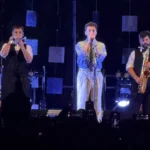
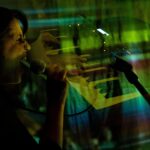
In the studio it is you, or you are with your collaborators, and you just make the music and you finish. Then there’s a limbo waiting to present it live. She is interpreter, has always been an interpreter, and I think that This is what excites him the most: play it live. could do eight shows in the BlueNotein New York and Los Angeles, and it was very special because he played the full album before that no one had heard it. In that moment only two songs they had left: “Running to Pain” and “Portrait of a lady on Fire”. He really wants to play it once everyone has listened to the album and can connect and find your favorite songs. She’s more ready than she’s ever been. never, I think.
GO!: How was it the process of work: the elaboration of the letters, the sound of each song and production general?
KL: Lyrically, many of the songs were not written in the sense conventional; just be they interpreted. He calls it channeling. “American Sonnet” came out in the first take. “Better Than “That”with Samphait was not written; happened in the first take.
Then He lived in London and shared the study of Damon Albarnhe Gorilla Studio in the west of the city. Much of the album was written and produced there. One night I was in study, a little frustrated for not being able to discover what wanted to do, and went out to walk. He entered a pub where there were just a few people and no one under 60 years of age, full of old records and dusty papers. Took like three Guinness, maybe four, and ended up speaking a long time with a man called Charles on the life and love. Then he came back staggering to the studio and “Better Than That” HE spilled That’s how it happened.
““Reaper”the first album song, originally It lasted 20 minutes. No wrote nothing; everything simply came out. When it was finding out how structure it, was deciding what letters made sense and how give it shape. For her it is told in three acts: the first is a conversation between God, death and she; the second is a liminal dream space where the subconscious floats wondering if he’s going to return to earth or if he goes to heaven, or hell, where is it going?; and the third is to find faith in life again, jump in again, have hope.
“Portrait of a Lady on Fire” he made it after watching the movie, in his first relationship lesbian, feeling a lot of lust and longing, that tug of war fantasize about a relationship that maybe it doesn’t work but for which still you long for something that maybe it doesn’t exist.
Each song has its history. seven years It’s a long time; it’s a journey of many different relationships. HE she talks a lot to herself, realized. When I thought he was talking about an ex, actually I was talking to her same. The album is about dealing with faith, a profound transformation, a settling accounts with a same. Enter the shadow, find the beauty within that, the beauty in mix of pain and happiness. All these emotions, anger, whatever runs on everyone us: none is incorrect. And instead of let the pain drive the ship, make him a passenger.
GO!: In the singles that are already available there is an interesting contrast: folk sounds in one, more metallic sounds in another. How do you build the sound of each song? And how do you decide the order of the tracks in the tracklist?
KL: She is a narrator and takes a lot of inspiration from cinema. Much of his production and compositions are cinematic. When you think about the emotion or story of a song, everything happens in images.
“Running to Pain”for example, is about the push and pull of your relationship with pain. Instead of running away from it, run towards it, through it. How a relationship can be all that: At first it can feel really fun and then it can suddenly get really scary and become toxic. It can be a love relationship or the relationship you have with yourself. Within the production of that song, it starts with a very urgent synth, like you’re running towards something. There are many voices, it sounds lush. Then there is a moment when everything drops, the production becomes quieter and you become more reflective. And then it comes back strong. I wanted that to be part of the story, to reflect that emotions are not constant; the only constant is change.
“Portrait of a Lady on Fire” He did it during the pandemic. He had his cello, which is what he usually starts writing songs with, and it was very instinctive to layer the cello and create a lush palette of strings. That deep feeling of longing inspired by the film asked only for strings and fretless bass, with that back-and-forth between notes, oscillating between longing for someone and the awareness that perhaps it’s not meant to be.
I could go on and on, but you’re getting tired of talking so much.
GO!: What do you have planned after the launch? More live performances, more visuals, maybe a book about this album?
KL: A short film is coming out with the album launch, filmed in Lanzarote, where they also filmed all the visuals. Worked with Savannah Leafwho directed Earth Moma film that she scored. The short film begins with “Running to Pain” and takes you on a journey through the different songs. There is a moment when a song that is not on the album plays, something that Kim Gordon and she did in the studio during the process; some of the guitars from that composition were removed and put into “Reaper”in that liminal act I was talking about.
There will probably be a book too. Yuna Larashiwho did the cover art, documented the entire filming process and also the performance GLOOM in Venice, which was a very elaborate production and presentation. The book will be made from that performance.
And then there will be a tour in the fall, of course. She is very excited to start performing it live.
GO!: So we have a lot ahead of us. That’s all from us. Thank you very much for the time, for the sincerity and for sharing all this. Much success with the launch and with everything to come!
KL: Thank you so much. Have a good day. Also, goodbye.