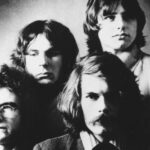
With Giles, Giles and Fripp, the trio he formed with his brother Peter and Robert Fripp, Michael Giles had laid the foundations of a sound that would transform progressive rock. Drummer and singer, he then co-founded King Crimson and participated in the recording ofIn the Court of the Crimson Kinga founding album of the genre, released in 1969. He died on Monday November 23, at the age of 84.
Michael Giles, drummer, singer and co-founder of King Crimson, died Monday November 23 at the age of 84. The news was announced by DGMthe group’s label, which did not specify the causes of his death.
“Michael’s originality, his musical curiosity and his uncompromising commitment to creative freedom have challenged conventions and inspired generations of musicians around the world”salutes the label. “He leaves behind an extraordinary musical legacy, and his unique contribution to the evolution of progressive music will never be forgotten. »
It all began in 1967, in Bournemouth, in the south of England. Michael Giles founded a trio there with his brother Peter and guitarist Robert Fripp: Giles, Giles and Fripp. Modest beginnings, at least in terms of what King Crimson would become. The group’s only album, The Cheerful Insanity of Giles, Giles and Frippreleased in 1968, is steeped in psychedelia: scintillating organ, melancholy vocals and relatively sedate drums, with marching accents, where jazz only surfaces at moments. A simple and direct pop-rock, in which we can already distinguish the outlines of the extravagant and powerful musical explorations in which King Crimson would engage a year later.
In November 1968, Peter left the trio to become a clerk in a law firm. Michael and Fripp intend to continue the musical adventure. They founded King Crimson with Greg Lake, former bassist of the Gods, and multi-instrumentalist Ian McDonald. Peter Sinfield completes the training as lyricist and lighting manager. Together, they imagined an album that would help define the sound of progressive rock in the early 1970s: In the Court of the Crimson Kingreleased in 1969.
The opening track, “21st Century Schizoid Man”, seven minutes long, became a hit on FM radio despite its abrupt changes of rhythm and its long exchanges between bass and saxophone. This stylistic shift pushes Giles to surpass himself and develop a more melodic drumming style, sometimes matching McDonald’s saxophone lines, sometimes making the rhythm surge in waves over the main riff. With “The Court of the Crimson King”, a ten-minute musical fresco, the group takes the stripped-down rock of Giles, Giles and Fripp and enriches it with flute, Mellotron and choral harmonies. On this piece, Giles’ playing is reminiscent of musical expressionism: each strike accentuates the dramatic intensity of his partners’ interventions. Later, he cited among his influences Elvin Jones, who had accompanied John Coltrane. Pete Townshend described the album as “disturbing masterpiece”.
The group gave their first concert in April 1969. In July, they performed in front of several hundred thousand spectators as the opening act for the Rolling Stones in Hyde Park, London. But the adventure is cut short. During an American tour, while Fripp took an increasingly prominent place in the group’s leadership, Giles and McDonald decided to leave to form a duo. Their first album, McDonald and Gilesappeared in 1970, in the musical continuity of King Crimson. While the band threatened to implode, Fripp nevertheless managed to convince Giles to return as guest drummer on his second album, In the Wake of Poseidonalso released in 1970. Apart from the live album Epitaphlater released from concert recordings from 1969, Giles’s collaboration with King Crimson ends there. At the beginning of the 2000s, however, he joined the 21st Century Schizoid Band, a formation bringing together several former members of the group, without Fripp.
After King Crimson, Michael Giles recorded with Leo Sayer, Kevin Ayers, Roger Glover, Neil Sedaka and Bryan Ferry. He also collaborated on the solo albums of his former comrades Greg Lake and Ian McDonald, and founded his own group, the Michael Giles Mad Band, which published albums in 2009 and 2011. In 2001 appeared Progressa solo album recorded in 1978, followed in 2026 by Shadows/Soloa collection of recordings made at different periods of his career.
In 2019, in an interview with WECBhe looked back on the legacy of “21st Century Schizoid Man.” “I knew we were doing something different, maybe even unique, by bringing together rock and jazz”he confided. “Maybe it was closer to some Frank Zappa songs, I don’t know. But the combination of Greg’s voice, Pete Sinfield’s lyrics, heavy rock and free jazz gave something truly unique, very different from everything that had come before and from what we heard in 1969.”
Also read on WECB UK : the death of Peter Sinfield, first lyricist of King Crimson.
By Kory Grow