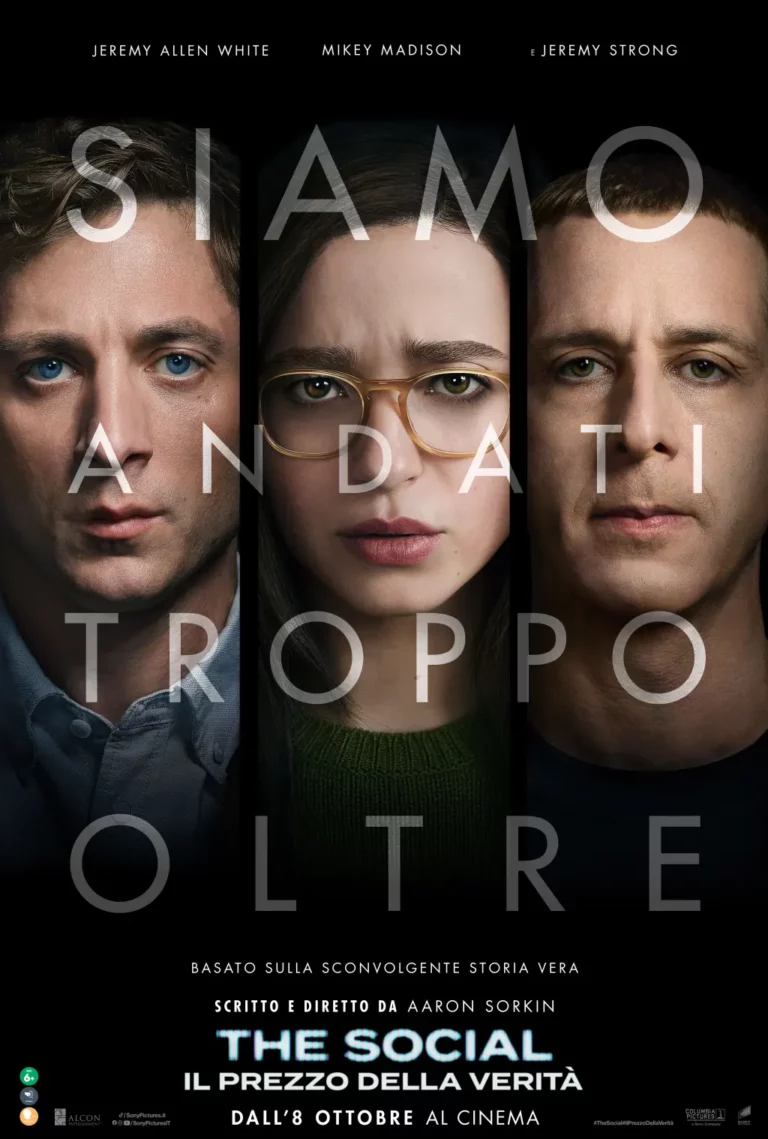
The Social: The Price of Truth by Aaron Sorkin recounts the Wall Street Journal’s investigation into Facebook, including algorithms, disinformation, economic interests and social consequences
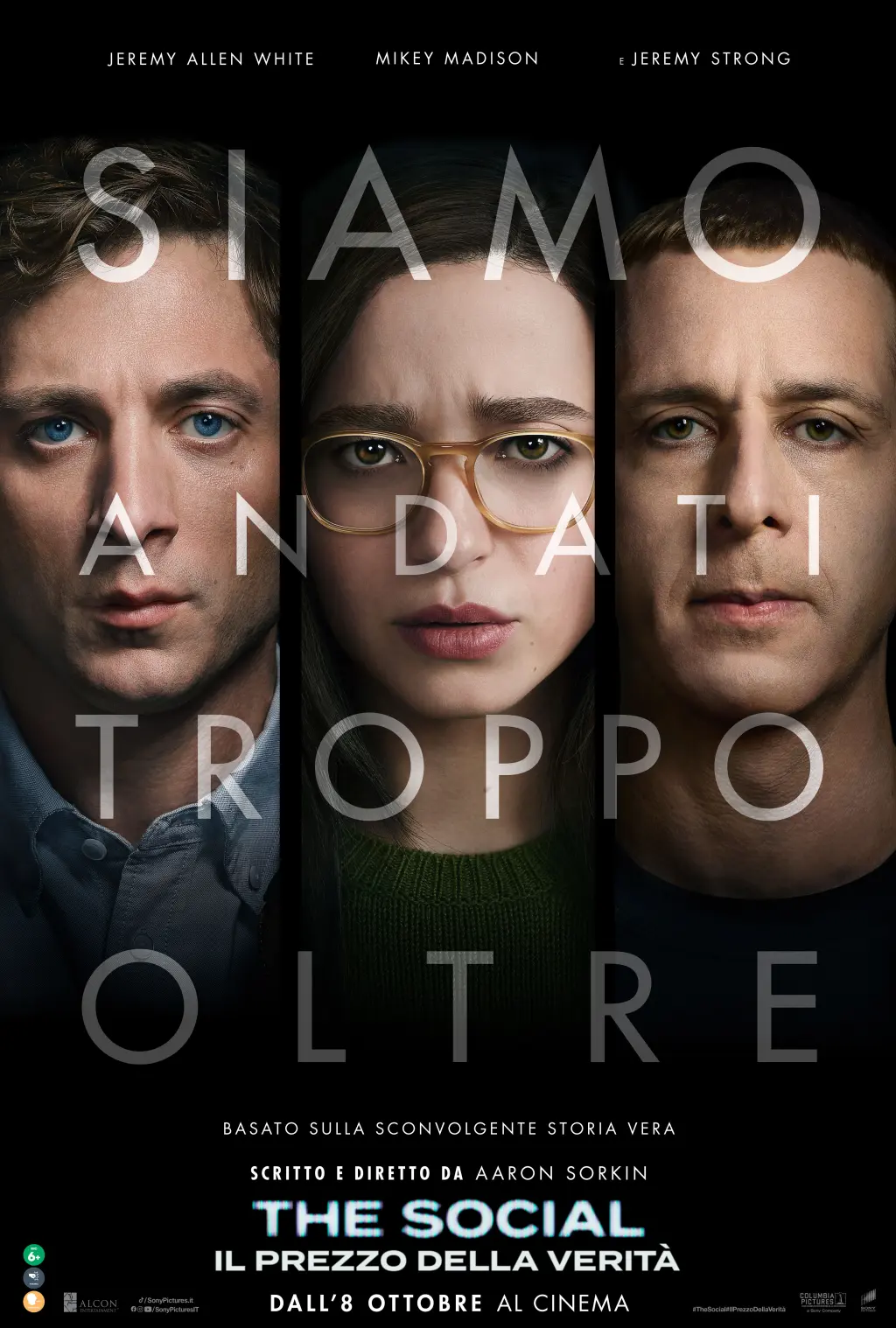
The-Social-film-poster.
The Cambridge Analytica case years ago showed everyone how and with what consequences digital communication tools can influence public opinion, politics and social life.
The film The Social: The Price of Truth, released on October 9th, shows how the problem is more relevant than ever and how, over time, Big Tech must come to a reckoning on this front (AI permitting).

The film based on real events, written and directed by Aaron Sorkin, in a lucid and extremely clear manner, also regarding complex IT and marketing issues such as the functioning of the Meta network algorithm and its engagement, recounts the famous 2021 investigation by the Wall Street Journal on Zuckerberg’s social network.
The investigation carried out by Jeff Horwitz (played by Jeremy Allen White) thanks to the revelations of Frances Haugen (Mikey Madison) reveals the secrets and behind the scenes of Facebook regarding the social impact and influence of the network.
These are repercussions that concern politics and extremist groups, but also young people, including crime and the mafia. Hot topics, for a tool spread across the world which, as much as it wants to, struggles to remain neutral and not ruthlessly follow the business interests dictated by the listing on the stock exchange to the detriment of those of the users.
In David versus Goliath style with some ironic touches, the film also tells the story of common sense against digital exasperation at all costs.
At the same time it turns into a journalism lesson, demonstrating how investigation is the most powerful tool available to reporters in our era of black editorial crisis, but also a method with many pitfalls and difficult to handle.
Overall, The Social is a perfect analysis of the current world of information and its problems with the protagonist Frances who at a certain point asks the journalist whether his desire to get the scoop is more dictated by a desire for justice or revenge for a digital tool that stole his work.
He responds by saying that he’s not so concerned about social media informing people, but about “making it really bad,” a whole world wrapped up in a single sentence.
The characters are well characterized, the plot flows while remaining very realistic, the only less credible interpretation is that of Jeremy Strong in the role of Mark Zuckerberg.
The film is able to interest a truly transversal audience, even the younger ones who are historically less connected to Facebook, but who will be able to find themselves both in the social mechanisms with which they experience every day, and in those relating to the world of work.