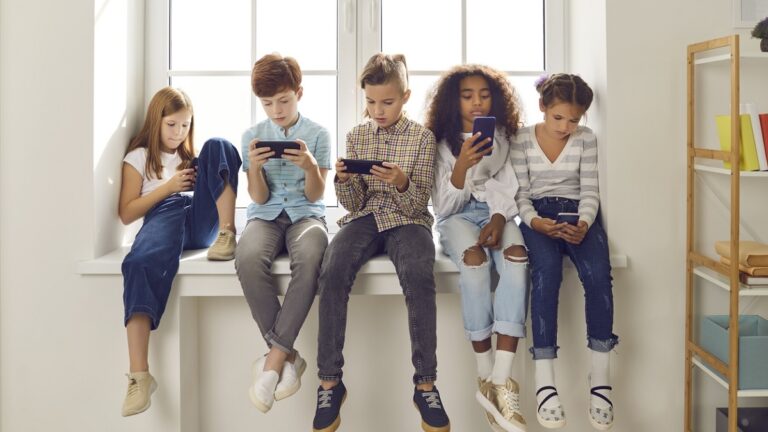
Children under 13 are not supposed to be regular social media users on many platforms, yet the reality at home often tells a different story. Between smartphones, video apps, group chats, and influencer content, younger kids are finding their way online earlier than many parents expect. The real question is not only whether they are online, but what they are actually doing there.
Children are logging on earlier than expected
Despite age restrictions, 71% of children under 13 regularly use at least one social media platform, according to the Born Social 2023 study. That figure is striking, especially when you remember that many services officially set 13 as the minimum age.
It becomes less surprising when you consider another number: 83% of 12 year olds now own a cellphone. Once a child has a phone in their pocket, social apps are never very far away.
Most parents know the scene. A child says they are watching one quick video, and suddenly twenty minutes have vanished. Frankly, adults are not always much better.
YouTube is the clear favorite
For children under 13, YouTube comes out on top. The platform is their favorite place to watch videos, follow creators, and keep up with content that mixes gaming, challenges, humor, and entertainment.
Creators such as MrBeast and gaming personalities attract huge young audiences because their videos are fast paced, colorful, and easy to understand. For children, it feels less like traditional television and more like a never ending playground.
The American Academy of Pediatrics recommends that families create a ‘family media plan’ to set healthy boundaries around screen use. That advice feels especially useful when video platforms are designed to keep viewers clicking.
What kids are really doing online
Most children are not using social media in the same way adults do. They are not usually posting polished holiday photos or debating the news. Their online habits are often built around:
• Watching videos and shorts
• Following influencers and gamers
• Messaging friends
• Discovering trends
• Playing along with challenges
• Sharing funny clips
This can be harmless and even social, but it also raises concerns around screen time, privacy, and exposure to unsuitable content.
UNICEF has warned that children need support online, not just restrictions, because digital spaces are now part of their everyday lives.
The risks parents should not ignore
Social media can bring entertainment and connection, but it can also expose children to bullying, personal data risks, and pressure to compare themselves with others.
One in four children reportedly admits feeling too glued to their smartphone. Even more concerning, the number of children under 13 who say they want more screen time has risen sharply since 2022.
That says a lot. The issue is not simply access. It is attachment.
Some apps are losing ground
Interestingly, not every platform is growing among younger users. Snapchat, Instagram, TikTok, and WhatsApp have reportedly seen a decline in use among this age group compared with the previous year.
BeReal is the exception among 11 and 12 year olds, with 5% registered in that age range. Its appeal may come from its more spontaneous style, though even there, parents still need to understand how the app works.
What parents can do now
The answer is not panic, and it is probably not pretending children can be kept offline forever. A more realistic approach is calm supervision.
Parents can talk openly about online safety, check privacy settings, agree on screen limits, and ask children what they enjoy watching. Those conversations often work better than sudden bans.
Children are growing up in a digital world. The goal is not to scare them away from it, but to help them move through it wisely, with enough freedom to learn and enough protection to stay safe.