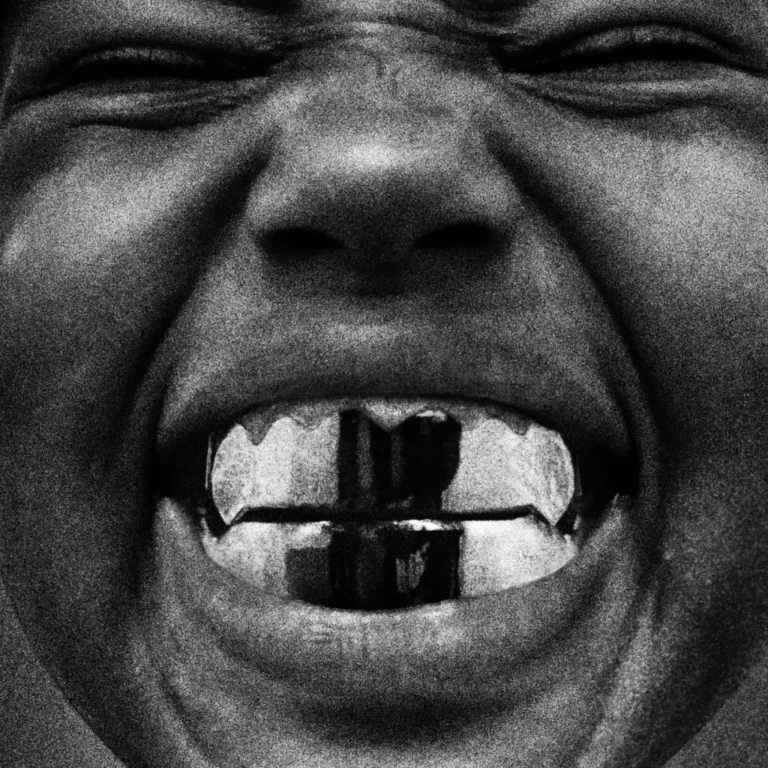
“BULLY” is Ye's twelfth studio album.
A record like all his latest long-awaited records and existing in two versions: a physical edition and a streaming version which appeared a few days later with new songs and the completely rewritten title track. This is the news.
Everything else that revolves around this new release by Ye or Kanye, as you prefer to call him, is contemporary mythology.
Kanye West's problem in the last decade is well known: music has stopped being the center. Much more noise around than inside the records.
Hateful utterances, anti-Semitic statements, controversies in defense of Nazism, delays, proclamations, public short circuits, gossip.
What's missing is that work that forces you to say “what a bomb”. Too many attempts, often clumsy, rarely solved.
Here he continues to chase an idea of perfect inheritance, but he does so from a fragile position. After months and disastrous months, marked by toxic rhetoric and a use of AI that was more provocative than fertile, “BULLY” sounds like an attempt at a comeback. Not a redemption, rather an adjustment.
At first reaction it's a billionaire bully record. But when he lights up and puts his passion to the ground you can still feel the talent.
The problem is that it happens intermittently. Kanye could still be huge, if only he decided to really focus and take away all that spoiled superstar infrastructure he's built over the years.
The limits are obvious. The obsession with status remains and art often becomes a narcissistic extension. From that perspective, everything falls flat on a materialist imagination. The tracks are short, broken, often little more than notes. The lyrics reduced to the bare bones, almost sacrificed in favor of structure and sampling.
Yet the sound weighs. It's dense, introspective, layered.
Aesthetics are the real glue: dark, ambiguous, foggy, distorted.
Opening with “King” works.
The time is now, right now
This is the hour, this is the new dawn, this is the new day
Now is the time, for nature and all her glory have named you her king
She has named you the king
King, king, king
Named you the king
A gospel preacher introduces an almost ritualistic atmosphere, then the synthesizers come in and take everything, dark and contagious. It is one of the moments in which Ye seems to remember how to build a beginning.
In “I Can't Wait” “You Can't Hurry Love” by the Supremes holds up the entire song, even if Diana Ross' voice is missing, it is slowed down and mystified. Similarly, in “White Lines” “They Long to Be (Close to You)” by the Carpenters is bent to the point of breaking.
“Mama's Favorite” is the emotional high point. There is a real calm in his voice. The outro, with the mother's voice, strikes without the need for rhetoric. Even “Preacher Man”, despite the various versions with audio deepfakes generated by artificial intelligence, shows a clarity that is missing elsewhere.
When he faces his controversies, he does so without weight. No real assumption of responsibility, no articulated defense. Rather a light, almost functional use. In “Whatever Works” he dismisses everything with ease: changes his mind, archives, moves on. It is a writing that touches, does not dig.
The featurings do their thing. Travis Scott makes an impact, CeeLo Green remains a solid and authoritative presence, André Troutman adds, Don Toliver passes without leaving too much, Peso Pluma opens a Latin window that works more as a suggestion than as a direction.
“BULLY” remains an unfinished album. More ideas than visions, more fragments than structure.
But still I expected worse. And it is surprising to be able to say, without enthusiasm and without cynicism, that I am moderately satisfied.
SCORE: Score 7.00
TO LISTEN NOW
King – Bully – Last Breath (feat. Peso Pluma),
TO BE SKIPPED IMMEDIATELY
All the Love – This One Here