“Zefiro”, TÄRA's debut EP, arrives as a record that is built and understood as you listen.
TÄRA presents it as a work born from a continuous geographical and internal movement, in which the songs become points of passage rather than points of arrival. Inside there are the origins, the relationship with the family, the distance from places and people, but also a broader reflection on identity and belonging.
The sound follows the same logic: it does not stabilize, it mixes different references and sensitivities without transforming them into evident citations. The writing moves between autobiography and observation, with a cultural and political component that emerges in a direct but never didactic way. The result is a project that holds biography and context together, without closing the questions it opens.
We met TÄRA and tried to enter “Zefiro” with her through writing, memory and visual construction of the project.
INTERVIEW
“Zefiro” seems to be constructed as an internal journey even before a musical one. What does this wind that gives the project its title represent for you?
“Zefiro” is the wind that comes from the West, but for me it is above all a double movement.
It is a return and at the same time a continuous movement. In a certain period of my life it meant exactly this: a transport, but also an interior crossing.
As if I were traveling inside myself, moving from one phase to another.
Each song is a different stage of this journey, from the initial duality to the relationship with my family and my origins, up to a suspended closure, almost in apnea, as if something were yet to come.
The lyrical writing has a very strong weight in this work, almost as much as the musical part. How much of a personal testimony process was it?
It was all very intertwined. There is certainly an idea of roots, of belonging, but also the opposite feeling, that of never feeling completely inside any place. From there many other reflections arose. It's not just a story, it's also a form of comparison with what surrounds me and with what I can't define.
A more explicitly political and cultural dimension also emerges in the album, linked to Palestine. How does this aspect fit into the project?
For me it all starts from culture. I believe that today, in many cases, ignorance is also a choice, but it is true that it depends a lot on where you grow up and what surrounds you.
It's not about blaming, but about becoming aware. If you want to change something, you must also show who you are, your language, your history, your culture. That's where the rest comes from.
In songs like “Yafa” you work on family memories. What does that track really say?
“Yafa” is not a direct memory of mine, but a set of stories from my grandmother, who is originally from there. I took his memory and turned it into a song.
It's a way to keep alive a story that would otherwise risk being lost. It is a broadcast rather than a personal story.
“Mezzaluna” is one of the most emotionally exposed songs on the album. Where did it come from?
It comes from distance. I grew up far from my extended family, therefore with an intermittent relationship with grandparents, uncles, cousins. I rarely saw them and this always creates a gap: as you grow, they also change, and sometimes you lose pieces along the way. It's a reflection on what it means to feel at home when you belong to multiple places at the same time.
Have you recently returned to the places of your origins?
My grandparents now live in Jordan, after moving from Palestine. I was there a few months ago. It is a place that today still allows a certain stability, but the connection remains complex, stratified.
From a sound point of view the album has an international scope, but it doesn't seem to adhere to a single tradition. What were your main influences?
I never start from wanting to replicate something. I listen a lot and in a very different way. I definitely grew up with Fairuzwhich was fundamental to my imagination, together with Shakira. Then over time they also arrived Adele, Michael Jackson And Ariana Grande. They are not direct references, but elements that have stratified in my way of thinking about music.
And Italian music? Did it play a role in your education?
I discovered it later. Not having that background it wasn't natural listening for me, even though at home my father introduced me to artists like Baglioni or Giorgia.
At the beginning I was the one who couldn't get close to it, then over time I understood the depth of that tradition and learned to really appreciate it.
How important is the visual dimension of the project for you?
It's fundamental. I work a lot on creative direction, so the visual part is not separated from the music. It is a single language.
Without that component I wouldn't be able to fully explain myself.
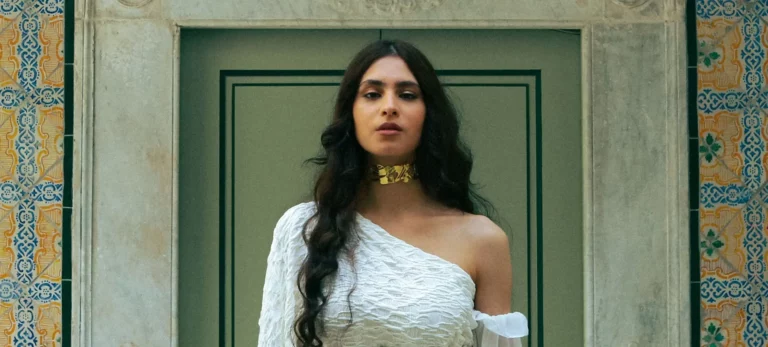
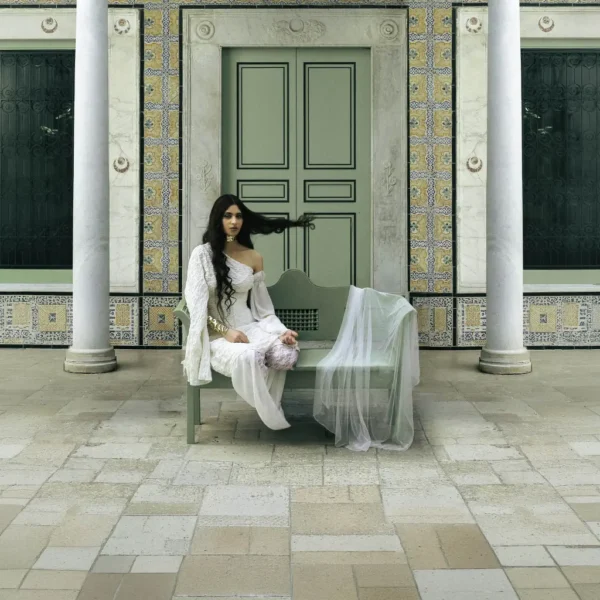
How was the cover of “Zefiro” born?
We did the shooting in Tunisia. It wasn't a built set, but an existing location that we chose together with my creative team. It was a very shared work, in which I tried to visually translate what I had in my head.
What will the live show bring compared to the album?
I'm about to start a tour between Italy and Europe. It will be a new formation, with a more physical and percussive component, therefore also more linked to an almost ethnic dimension of sound. The idea is to take the record to another level, not just play it.
Will there be covers in the setlist?
Yes, definitely one. That's it for now and we'll see if we can add more. But the heart of the live show remains my repertoire.
In what direction do you feel this project will go after “Zefiro”?
I don't know yet. “Zefiro” is already a passage, not a point of arrival. It's more of a suspension than a conclusion.
LISTEN TO THE RECORD
VIDEO
ABOUT
TÄRA, born Tamara Al Zool, born in Italy to Palestinian parents, has transformed the social challenges linked to her origins into a bridge between worlds, an authentic dialogue between tradition and modernity, which makes her a symbol of representation for second generations in Italy. After a strong impact on social networks, in 2024 she was chosen by Spotify as the cover artist of the Fresh Finds Italia and Anima R&B playlists. In the same year she became part of Spotify Italia's EQUAL program “Women at full volume”, being recognized among the new female protagonists of Italian music and subsequently included in the Best of EQUAL Italia 2024 collection. At the same time, she participated in the selections of X Factor Italia 2024, bringing her cultural mix and a message of social awareness to that stage for the first time. 2025 represents a year of growth and consolidation, with the Araba Fenice Tour and with the release of the single “Mezzaluna” at the beginning of this year, which anticipates the release of her recording project scheduled for 2026. At the end of March, TÄRA appeared as the only feat in “TERRE RARE”, the new Subsonica album, collaborating on the song “Straniero”: a carefully chosen collaboration, symbol of the desire to mend the deep lacerations of recent years and reaffirm, through music, a shared sense of humanity. And after last year's debut, TÄRA will once again be among the protagonists of MI AMI 2026, performing on May 21st at the Idroscalo in Milan.
WEB & SOCIAL
@tarawave