Create, resist and exist in a changing industry.
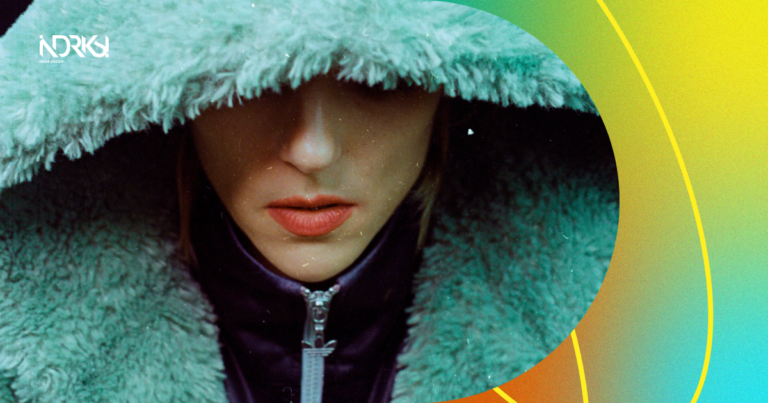
Between scenarios shared with Deftonesnew collaborations and reflections on the present of music, Jehnny Beth traces the map of an artist who does not stop.
Regarding his return to Mexico and after a series of recent releases, Jehnny Beth He talks to us about the drive behind his live shows, the creative process of his new songs, and the reality of a music industry riddled with algorithms. Between films, DJ sets and future projects, the French artist reaffirms her place as a restless and deeply contemporary voice.
Indie Rocks!: How do you prepare before a powerful show like the one you did with Deftones?
Jenny Beth: It all came about because we played at the festival Crown Capital in Mexico. A few hours before going on stage, they asked us to change our schedule, so we played earlier on the main stage, around seven. It was a really incredible show. Instead of playing in a small tent, suddenly we were in front of 20,000 people. It was a challenge to achieve, but it worked and it was a spectacular concert.
I think that from that show, the promoter saw us, also the agents, and the band Deftones was playing at the same festival. So, as they were about to announce or had already announced their new show in Mexico for March, they asked us if we wanted to open for them. It was a happy coincidence: we were there, so were they, the teams were talking… it just happened.
Plus, we love playing in Mexico. It's one of the best places in the world to play rock today. The energy of the public is incredible. I have a great history with Mexico City, playing there has been something very important and transformative for me. So it was totally worth coming back to open it to Deftonesbecause of the public, but also because we are big fans of the band.
And also, the new album New Heartbreaker U It has sounds that connect with that 90s era, with that crossover between hardcore and shoegaze, so it felt like a perfect combination.
GO!: And I think the Mexican public enjoyed it a lot. I was there and it was incredible. That combination really worked.
JB: Yes, it was like that for me too.
GO!: I would like to ask you about your latest single. Can you tell us about the production and what plans you have for the future? Will there be an album?
JB: Good question. He track “Look at Me”with Mike Pattoncame out about a month ago. Mike and I had been wanting to collaborate for years. Since the time of Savages We tried several times, but it never worked out. I even recorded vocals for him at one point, but it didn't work out.
When we were working on “Look at Me” with Johnny Hostilehe made the music and the beats. I found the voices for the second part, closer to hip hop and distorted, but the first part had no voice and I felt like it needed someone else. Then I remembered Mikebecause I knew I could take the song to another level.
Besides, You Heartbreaker You it was done by listening a lot to Faith No More. The vocal technique of Mike It's incredible: it can do everything from whispers to screams, it has a brutal range. For me he is one of the best singers of his generation. Luckily he said yes right away. It was like: “finally.”
And well, we also agreed that I could collaborate on one of his projects later.
As for the future, we have been writing and recording since the beginning of the year. But beyond creating music, we are also thinking about what we want to say, what the next chapter is. That takes longer than writing songs.
I'm also exploring more electronic versions for my DJ sets, because Johnny He is a great producer in that field and we want to bring out that side as well.
GO!: You also have many facets: DJ, soloist, actress… what is there outside of music for you?
JB: Right now music takes up most of my time, but I've also been acting. This year there are two films in which I participated: a Franco-Brazilian one, something like a Rosemary's Baby queer, and another French with Adèle Exarchopoulos.
I love acting because it's very collaborative, like music. Creating a character is a team effort. And to be honest, sometimes I do it for money too. The music industry is very unstable, so you have to diversify.
Nowadays it is more common to see artists with multiple careers, and I think that comes from curiosity. I am a very curious person, it is difficult for me to say no to things.
GO!: Just talking about the industry, how do you experience this reality dominated by TikTok, algorithms and platforms?
JB: It has completely changed. When I started in 2007 there was already talk of the “end of the industry” due to mp3. I never knew that golden age.
Today is like the world in general: 1% make a lot of money and the rest struggle. It's a capitalist system where they make you believe you can make it, like a lottery. And that is mentally complicated, because you feel part but also exploited.
The concerts are still real, the connection with the audience does not change. But to even get there, you now need visibility on platforms like TikTok.
The problem is that this digital success does not always translate into real life. And in the end, to build a solid career, you need investment, time, and people who believe in you.
I also feel that in music there is not enough organization to defend artists. There is not enough pressure towards platforms to pay better. In cinema there are unions, in music not so much.
I don't have the solution, but we definitely need something like this.
GO!: Completely. In closing: if you had to describe yourself in three words, what would they be?
JB: French, artist, bisexual.